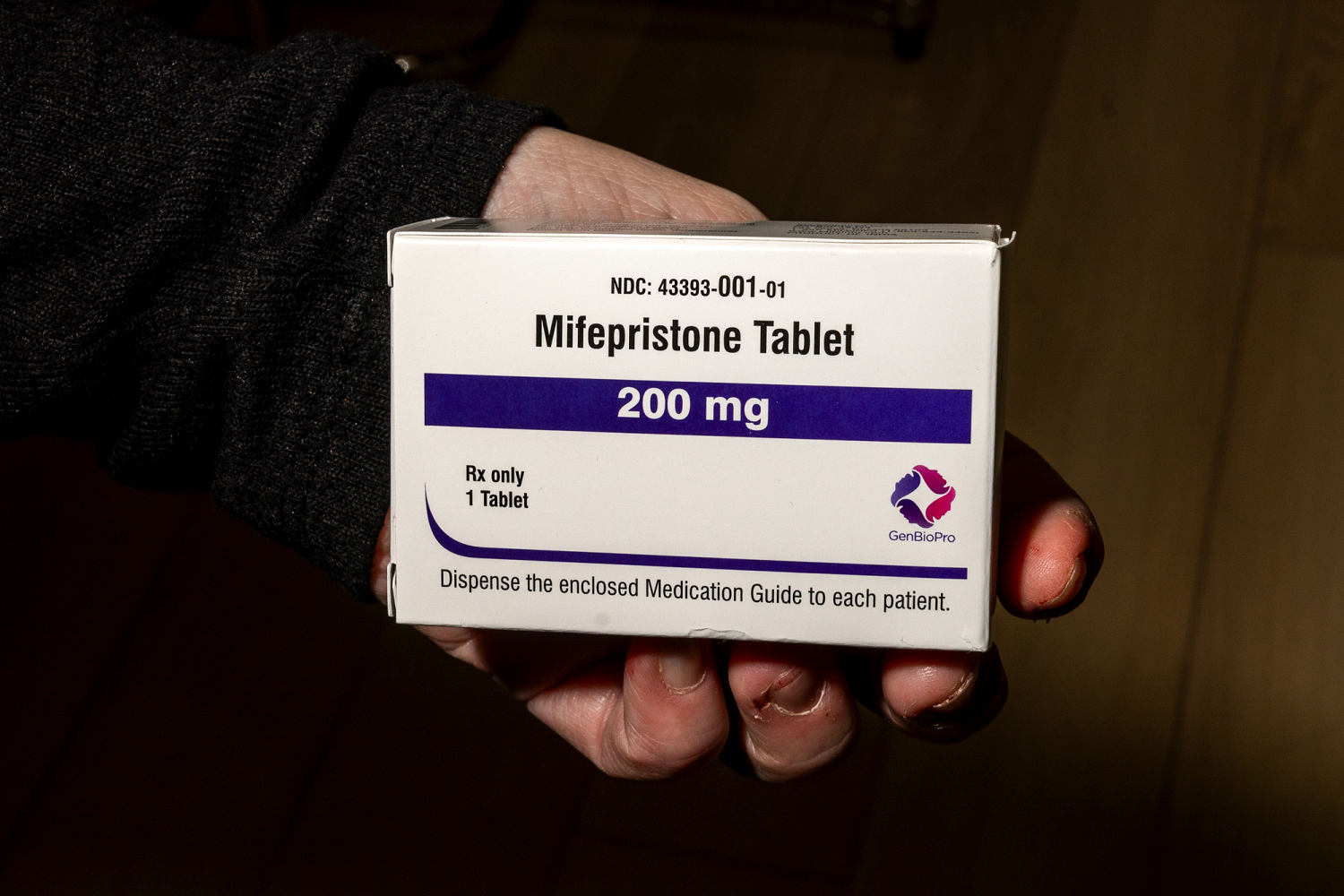
The white padded envelope sits on a laminate kitchen table in a town where the nearest clinic is a three-hour drive past rolling hills and silent silos. To the person sitting across from it, this isn't just a delivery. It is a lifeline, a heavy secret, and a testament to a legal battle fought in marble halls hundreds of miles away. It is Mifepristone.
For months, the fate of that envelope hung by a thread. The legal system, usually a slow-grinding machine of precedent and procedure, suddenly felt like a pendulum swinging over millions of medicine cabinets. The question wasn't just about a pill; it was about whether a group of doctors who never used the drug could reach across the country and pull it off the shelves of people they had never met.
The Weight of Standing
In the sterile, echoing chamber of the Supreme Court, the debate didn't start with the ethics of medicine or the autonomy of the body. It started with a technicality that sounds boring until you realize it is the only thing keeping the gates of the legal system from bursting open. Standing.
To sue, you have to be hurt. That is the bedrock of American law. You cannot walk into a courtroom and demand a change simply because you dislike a policy or a product. You must show a "concrete injury." The Alliance for Hippocratic Medicine, the group challenging the FDA’s decades-old approval of the abortion pill, argued that they might one day have to treat a patient suffering from complications, and that this might cause them distress or divert their resources.
Justice Brett Kavanaugh, writing for a unanimous court, didn't buy it. He looked at the law and saw a bridge too far. The court ruled that "federal courts are not public forums for airing general grievances about the government’s conduct."
The doctors lacked a seat at the table because they weren't the ones being regulated. They weren't being forced to prescribe the medication. They weren't being harmed by its existence on the market. In a rare moment of total consensus, the justices decided that "sincere legal, moral, ideological, and policy objections" do not equal a lawsuit.
It was a victory for the status quo.
The Logistics of a Small Box
Consider Sarah. She is a hypothetical composite of the thousands of women who live in "maternal care deserts." Sarah works two jobs. She doesn't have a car that can reliably clear state lines. When she discovered her pregnancy, the panic wasn't just about the future; it was about the immediate, crushing logistics of the present.
Before 2021, Sarah would have had to make multiple trips to a clinic, often mandated by state law to include "counseling" and waiting periods. She would have had to find childcare, take time off work, and navigate a gauntlet of protesters.
Then, the FDA changed the rules. They allowed mifepristone to be prescribed via telehealth and sent through the mail.
This shift transformed the landscape of reproductive health. Suddenly, the healthcare provider wasn't a building with a brick facade and a security guard; it was a face on a glowing smartphone screen. The pharmacy was a mailbox. This wasn't a loophole. It was a calculated decision based on twenty years of data showing that mifepristone is, statistically, safer than Tylenol or Viagra.
The Supreme Court’s decision to maintain this access means that the mailbox remains a pharmacy. It means Sarah doesn't have to choose between her rent and a three-day journey.
The Science Under the Microscope
The heart of the challenge against the FDA wasn't just about who could sue, but about whether the agency itself could be trusted. The plaintiffs argued that the FDA had been reckless in loosening restrictions. They painted a picture of a "dangerous" drug being sent into the wild without oversight.
But science has a way of being stubborn.
Mifepristone works by blocking progesterone, the hormone necessary for a pregnancy to continue. It is usually followed by a second drug, misoprostol, which empties the uterus. Since its approval in 2000, more than five million people in the United States have used it. The complication rate is less than one percent.
When the court dismissed the case on standing, they avoided a direct ruling on the FDA's scientific judgment. However, by leaving the mail-order system intact, they effectively deferred to the experts. They allowed the data to stand.
The drug remains available for use up to ten weeks of pregnancy. It remains available via mail. It remains a central pillar of reproductive healthcare, now accounting for more than sixty percent of all abortions performed in the United States.
The Invisible Stakes
If the court had ruled the other way, the ripple effect would have been a tidal wave.
Imagine the precedent. If a group of doctors could sue to ban a drug because they morally disagreed with it, what would stop a group of activists from suing to ban vaccines? Or contraception? Or psychiatric medication?
The pharmaceutical industry, usually a quiet titan in legal matters, filed briefs in this case that were uncharacteristically urgent. They warned that if judges could start overturning FDA approvals based on ideological objections, the entire billion-dollar engine of drug development would grind to a halt. No company would invest years and billions into a new cure if a single lawsuit in a remote district could vanish that investment overnight.
The stakes were never just about one pill. They were about the integrity of the regulatory state. They were about whether we trust a centralized body of scientists to determine what is safe, or whether we want that power handed to anyone with a law degree and a grievance.
The Silence After the Storm
When the news broke, there were no parades. There was mostly a collective exhale.
In the offices of telehealth providers, the phones kept ringing. In the warehouses where these medications are packed, the labels kept printing. For the person sitting at the kitchen table, the white envelope stayed where it was.
But the silence is deceptive.
The Supreme Court didn't say that the mail-order abortion pill is a "right" that can never be taken away. They didn't rule that the FDA's decisions are beyond reproach. They simply said that these particular plaintiffs weren't the ones to bring the fight.
Other challenges are already simmering. Other states are looking for different legal avenues—perhaps arguing that the 19th-century Comstock Act, a long-dormant "chastity" law, forbids the mailing of "lewd" or "indecent" materials, including medication.
The legal battle has moved from the sprint of the Supreme Court back to the marathon of lower courts and state legislatures.
The Reality on the Ground
We often talk about the law as if it is a series of chess moves played by people in robes. We analyze the "swing votes" and the "originalist interpretations." We focus on the high-altitude maneuvers of the powerful.
But the law is a physical thing. It is the distance between a patient and a doctor. It is the cost of a bus ticket. It is the ability to sit in your own bathroom, in your own home, and make a decision about your own life without the world watching.
The Supreme Court’s decision didn't expand access; it merely prevented it from shrinking. It held the line. For now, the mail will continue to run. The envelopes will continue to arrive. The laminate tables across the country will continue to hold the weight of these tiny, consequential squares of compressed powder.
The storm hasn't passed; it has merely changed direction, leaving a fragile, paper-thin peace in its wake.