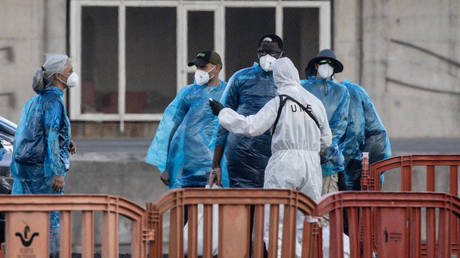
The containment of high-consequence pathogens within maritime environments represents a unique intersection of epidemiological risk and logistical friction. While public discourse often centers on the visual aesthetics of "quarantine room tours," the actual mechanics of infectious disease management on a cruise ship are governed by three rigid variables: airflow dynamics, waste stream isolation, and the biological vector of the specific pathogen. In the case of Hantavirus—a rodent-borne viral family typically associated with hemorrhagic fever with renal syndrome (HFRS) or Hantavirus Pulmonary Syndrome (HPS)—the shift from terrestrial exposure to cruise ship isolation reveals a fundamental misunderstanding of viral transmission versus operational optics.
The Mechanistic Profile of Hantavirus Transmission
Hantavirus is not a standard respiratory pathogen in the vein of influenza or SARS-CoV-2. Its primary transmission engine is the aerosolization of excreta from infected rodents. To analyze the threat within a cruise vessel, one must evaluate the Viral Loading Threshold.
- Environmental Persistence: Hantavirus remains viable in the environment for several days depending on temperature and humidity. On a ship, the HVAC systems are designed for comfort and efficiency, not biosafety level (BSL) containment.
- Aerosolization Dynamics: The virus enters the human host when dried materials containing the virus are disturbed. In a cabin environment, this risk is localized unless the ship's maintenance tunnels or food storage areas suffer from an active infestation of Peromyscus or Rattus species.
- Human-to-Human Limitation: With the notable exception of the Andes virus variant in South America, Hantavirus lacks a robust human-to-human transmission pathway. This creates a logical tension: the "quarantine" of a passenger is often less about stopping an outbreak and more about liability management and symptomatic monitoring.
The Infrastructure of Maritime Quarantine
When a passenger is placed in isolation, the room becomes a closed system. However, most modern cruise ships utilize recirculated air or partial fresh air intake systems that do not meet the HEPA-filtration standards found in hospital isolation wards.
The Airflow Bottleneck
Effective containment requires negative pressure. In a standard cabin, the air pressure is generally neutral. When a door is opened for meal delivery or medical checks, a pressure exchange occurs, potentially venting internal air into the corridor. Without a dedicated "Antechamber Model" for donning and doffing Personal Protective Equipment (PPE), the transition zone between the "Hot Zone" (the cabin) and the "Cold Zone" (the rest of the ship) becomes a point of systemic failure.
Waste Stream Management
Biological waste in a Hantavirus context involves significant risk during the cleaning phase. The virus thrives in organic matter. Standard maritime housekeeping protocols are designed for gastrointestinal outbreaks like Norovirus, which require heavy chlorine-based disinfection. Hantavirus requires lipid-envelope disruption. If the crew uses pressurized sprays or dry-brushing techniques, they inadvertently increase the viral load in the air, transforming a localized surface contamination into a respiratory hazard.
Quantifying the Economic and Operational Friction
The decision to quarantine a passenger is a cost-benefit calculation that weighs the Loss of Cabin Revenue against the Systemic Risk of Port Denial. If a vessel is flagged as carrying a Class A or B infectious disease, the maritime authorities in destination ports may deny docking rights.
The cost function of a single quarantined passenger includes:
- Inventory Opportunity Cost: The immediate loss of the cabin's per-diem value.
- Labor Reallocation: Requiring dedicated medical staff and specialized cleaning crews reduces the ship’s operational efficiency.
- Brand Equity Erosion: Viral content—such as "room tours"—creates a perception of danger that often exceeds the clinical reality, leading to booking cancellations.
The disconnect between the clinical risk of Hantavirus (low human-to-human transmission) and the intensity of the isolation suggests that cruise lines are optimizing for regulatory compliance rather than biological necessity. By treating a Hantavirus case with the same protocol as a highly contagious respiratory virus, the industry defaults to a "Maximalist Containment Strategy."
Biological Realities vs. Perceived Threat
Hantavirus has an incubation period ranging from one to eight weeks. If a passenger tests positive or shows symptoms mid-voyage, the exposure event likely occurred long before they boarded. This lag time renders shipboard quarantine largely reactive. The primary objective is no longer prevention—which should have occurred at the supply chain and rodent-control level—but rather the mitigation of acute Hantavirus Pulmonary Syndrome, which has a high mortality rate (approximately 38%).
The clinical progression of HPS involves:
- Febrile Phase: Fever, chills, and myalgia lasting 3-5 days.
- Cardiopulmonary Phase: Rapid onset of pulmonary edema and hypotension.
- Diuretic Phase: Rapid clearance of edema if the patient survives the acute stage.
On a ship, the transition from the febrile phase to the cardiopulmonary phase is a critical failure point. Shipboard infirmaries are equipped for stabilization, not long-term intensive care involving mechanical ventilation or extracorporeal membrane oxygenation (ECMO). Therefore, the quarantine room is a temporary holding cell until a medical evacuation (MEDEVAC) can be coordinated.
Strategic Pathogen Mitigation Framework
To move beyond the performative nature of cabin isolation, maritime operators must implement a Source-Point Exclusion Model.
- Supply Chain Sanitization: Rodent ingress occurs most frequently during the loading of dry stores and produce. Integrating ultrasonic deterrents and thermal imaging into the loading bay protocols reduces the primary vector entry.
- HVAC Segmentation: High-risk zones (medical bays and designated isolation cabins) must be hard-wired into independent ventilation loops with dedicated exhaust ports that bypass the general circulation.
- Digital Symptom Tracking: Instead of waiting for a passenger to report to the infirmary, wearable tech or app-based health checks can identify the early-onset febrile phase through heart rate variability (HRV) and temperature spikes, allowing for isolation 24-48 hours earlier than current standards.
The current reliance on visible isolation measures serves the purpose of public relations but ignores the underlying biosecurity gaps. A robust strategy treats the ship not as a series of luxury cabins, but as a biological ecosystem that requires strict barrier management at the point of entry, not just at the point of infection.
Operators must shift their focus from the "quarantine tour" aesthetics to the engineering of the vessel itself. This involves the installation of UV-C light arrays within the ductwork to neutralize lipid-enveloped viruses and the adoption of hydrogen peroxide vapor (HPV) systems for rapid room decontamination. These technical interventions provide a measurable reduction in viral titers, whereas cabin isolation without negative pressure provides only a psychological buffer for the remaining passengers.
The maritime industry's long-term viability in a post-pandemic era depends on this transition from reactive hospitality to proactive biosafety engineering. Failure to modernize these sub-surface systems ensures that the next zoonotic spillover will result in the same chaotic, localized containment efforts that prioritize liability over logic.