The United States is no longer drifting toward a confrontation with Iran; it is now fully submerged in one. On March 2, 2026, President Donald Trump confirmed that what began as a series of surgical strikes has evolved into "large-scale combat operations." This campaign, dubbed Operation Epic Fury, has already resulted in the death of Supreme Leader Ali Khamenei and the systematic dismantling of Iran’s conventional naval and missile infrastructure. While the administration publicly projects a timeline of four to five weeks for completion, the reality on the ground suggests a much more volatile and open-ended engagement.
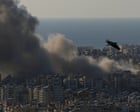
The primary objective is the total neutralization of Iran's nuclear and ballistic capabilities. For decades, the specter of a nuclear-armed Tehran has dictated Middle Eastern diplomacy. That era ended last Saturday when U.S. and Israeli forces launched a massive air and sea offensive. The White House claims the mission is "substantially ahead" of schedule, citing the destruction of ten Iranian naval vessels and the decapitation of the Islamic Revolutionary Guard Corps (IRGC) leadership. However, as smoke rises from Tehran and Isfahan, the strategic "why" behind this sudden escalation reveals a calculated gamble to force a regime collapse from within.
The Mechanism of Modern Attrition
This is not a repeat of the 2003 invasion of Iraq. The Pentagon, under Defense Secretary Pete Hegseth, is employing a doctrine of high-intensity standoff strikes combined with targeted assassinations. By removing the Supreme Leader in the opening hours, the U.S. effectively shattered the Iranian command-and-control hierarchy before a cohesive defense could be organized.
The technical backbone of this operation relies on the unprecedented integration of stealth platforms and autonomous systems. U.S. F-35s and Israeli F-35Adir jets have reportedly operated with near impunity, despite Iran’s deployment of Chinese-made YLC-8B long-range anti-stealth radar. The failure of these defensive systems to prevent the strike on the IRGC headquarters in Tehran underscores a significant technological gap that the administration is now exploiting.
- Naval Annihilation: The U.S. Navy has prioritized the destruction of the Iranian Navy to prevent a total blockade of the Strait of Hormuz.
- Missile Silo Neutralization: Targeted strikes have focused on the Fattah-2 hypersonic missile sites, which the administration identified as an "intolerable threat" to U.S. bases in the region.
- Infrastructure Degradation: Beyond military targets, the strikes have crippled the domestic power grid and communication networks used by the security forces to suppress internal dissent.
The Internal Fracture and the Power Vacuum
The death of Khamenei has plunged Iran into an unprecedented political crisis. An interim leadership council, including President Masoud Pezeshkian and Ayatollah Alireza Arafi, has been formed, but its authority is contested. Across the country, the "2026 Iran massacres"—the brutal suppression of protesters earlier this year—have left a population more inclined toward rebellion than nationalistic defense.
Trump has publicly called for the Iranian people to "take their destiny into their own hands," effectively betting on a popular uprising to finish what the B-2 bombers started. This is the "Venezuela Scenario" the President has frequently referenced: a collapse of the regime's middle-management and security apparatus through a combination of external force and internal exhaustion. It is a high-stakes play. If the IRGC remains loyal to the remaining hardliners, the U.S. faces the "yips" of a ground intervention—a prospect the President has pointedly refused to rule out.
Regional Fallout and the Risk of Contagion
The conflict is already bleeding across borders. Iranian proxies, including Hezbollah and the Houthis, have been activated, though their effectiveness has been hampered by preemptive Israeli strikes in Lebanon and Yemen. More concerning is the "friendly fire" incident in Kuwait, where three U.S. F-15E Strike Eagles were reportedly shot down by local defenses in the chaos.
The geopolitical map is shifting in real-time.
- Gulf Allies: Countries like Bahrain, Qatar, and the UAE find themselves in the crossfire as Iran targets U.S. assets on their soil.
- European Hesitation: While the UK under Keir Starmer eventually allowed the use of British bases, the delay highlighted a deep rift in NATO regarding the legality of "preventative war."
- The Oil Factor: Global energy markets are bracing for a prolonged closure of the Persian Gulf. Even with U.S. naval superiority, the threat of "suicide boat" swarms and sea mines makes commercial transit a deadly gamble.
The Legal and Domestic Battleground
Domestically, the administration is facing a fierce constitutional challenge. Congressional leaders, led by Senator Tim Kaine and Representative Thomas Massie, are pushing for a War Powers Resolution. They argue that the initiation of "large-scale combat operations" without a formal declaration or even significant prior notification to the "Gang of Eight" is a flagrant abuse of executive power.
The administration’s counter-argument is rooted in Article 51 of the UN Charter—the right to self-defense. They contend that the failure of the Muscat negotiations in February 2026 left no choice but to act before Iran could achieve a "breakout" nuclear capability. This logic suggests that the war was not a choice, but a delayed necessity.
Whether this campaign lasts five weeks or five years depends on the resilience of the Iranian state and the patience of the American public. Trump is banking on a quick, decisive victory that avoids the "endless war" trap of his predecessors. But in the Middle East, the transition from "large-scale combat" to a stable peace is a path seldom found. The "last best chance" to hit Iran may have been taken, but the cost of that strike is only beginning to be calculated.
Reach out if you need a breakdown of the specific munitions being utilized in the Isfahan theater.