The air in eastern Saudi Arabia usually carries a heavy, saline scent—a mixture of the Persian Gulf’s humidity and the faint, metallic tang of industrial ambition. On a typical night at the Ras Tanura refinery, the rhythmic hum of the stabilization plants acts as a heartbeat for the global economy. It is a sound so constant that the residents of the nearby worker colonies stop hearing it entirely.
Then came the silence. Then, the roar.
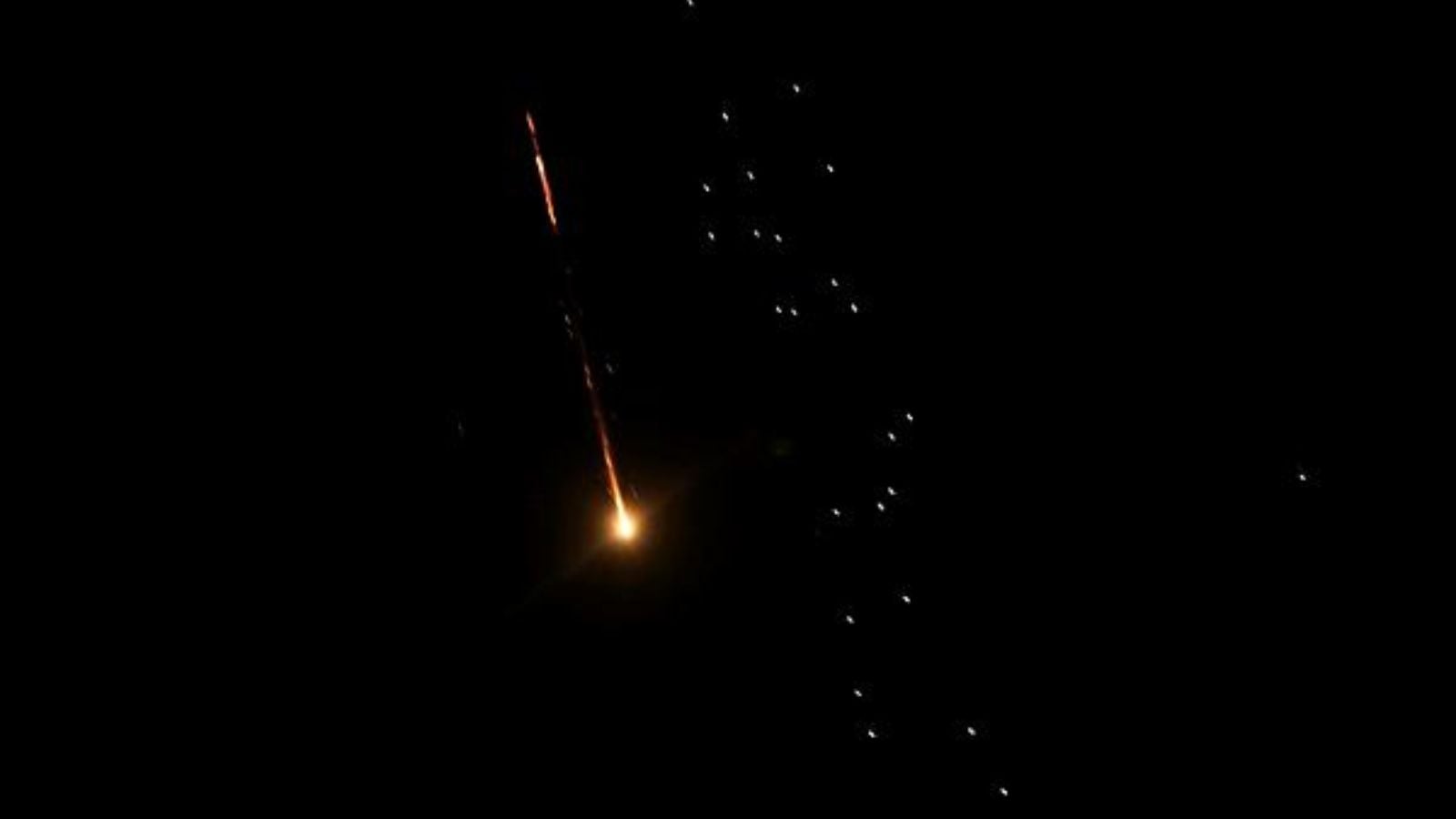
When the drones and missiles arched across the horizon toward the world’s largest offshore oil loading facility, they weren't just targeting steel pipes and storage tanks. They were aiming at a delicate, invisible web that connects a gas station in Ohio, a manufacturing plant in Shenzhen, and the heating bill of a family in Berlin.
The Weight of a Single Spark
To understand why a few charred patches of desert in Saudi Arabia sent shockwaves through the marble halls of global finance, you have to look past the ticker symbols. Imagine a man named Khalid. He is a third-generation technician at Aramco, a man whose grandfather helped clear the sand for the first derricks. To Khalid, Ras Tanura isn't a "strategic asset" or a "geopolitical flashpoint." It is the place where he ensures the pressure gauges remain within a hair’s breadth of safety so he can return home to his daughters.
When the explosions rocked the perimeter, Khalid felt the vibration in his teeth before he heard the sound. This is the human reality of a regional power struggle. While analysts in Washington and Tehran debate the efficacy of "asymmetric warfare," men like Khalid are the ones standing next to millions of barrels of pressurized volatile liquids.
The attack on Ras Tanura, attributed to Houthi rebels but widely viewed as a sophisticated chess move by Iran, exposed a terrifying truth. The world’s energy heart is protected by the most advanced missile defense systems money can buy, yet it remains hauntingly vulnerable to a swarm of low-cost technology.
The Invisible Infrastructure of Your Life
We often treat oil as an abstraction. We see it as a number on a digital sign at the corner of the street. But oil is the ghost in the machine of modern existence. It is the plastic in your medical IV bag. It is the fuel that brought the avocado to your grocery store.
When Iran-backed forces strike a Saudi refinery, they are effectively squeezing the carotid artery of global trade. Saudi Arabia produces roughly one out of every ten barrels of oil consumed on this planet. Ras Tanura alone can handle over 6 million barrels a day.
Consider the mathematics of a disruption. If the supply drops by even 5%, the price doesn't just rise by 5%. It leaps. This happens because the "just-in-time" delivery model of the modern world leaves no room for error. We live on a knife's edge.
The strike wasn't a random act of frustration. It was a demonstration of reach. By hitting the "Sea Island" loading platforms and the tank farms, the attackers signaled that no matter how many Patriot missile batteries are stationed in the dunes, the flow of energy can be choked at will.
The Quiet Escalation in the Sand
For years, the tension between Riyadh and Tehran was a cold war fought through whispers and proxies. It was Yemen. It was Lebanon. It was Syria. But the rules changed when the fire started falling directly on Saudi soil.
The Saudi government finds itself in a precarious psychological position. They must project an image of absolute stability to keep foreign investors from fleeing, yet they must also acknowledge the severity of the threat to secure international support. It is a tightrope walk over a pit of fire.
The internal situation in Saudi Arabia is equally complex. Crown Prince Mohammed bin Salman is currently attempting to pivot an entire civilization away from oil dependency through his Vision 2030 plan. It is a massive, expensive gamble. To fund a future without oil, he needs the current oil to sell at a premium price, and he needs the world to believe that Saudi Arabia is a safe place to build cities of the future.
Smoke rising from a refinery is a PR nightmare that no amount of glossy marketing can erase. Every drone that penetrates the airspace is a reminder that the kingdom’s greatest strength—its vast sea of black gold—is also its most glaring weakness.
The Ripple Effect
When news of the Ras Tanura hit reached the trading floors in London and New York, the reaction was a frantic, choreographed chaos. But the real story isn't the "green" or "red" on a screen. It’s the logistics manager at a trucking company who suddenly realizes his margins have evaporated. It’s the airline executive who has to decide whether to hike ticket prices or cut routes.
The "country’s current situation," as the dry headlines put it, is one of high-stakes atmospheric pressure. Saudi Arabia has spent decades as the "swing producer," the reliable hand on the thermostat of the global economy. If they lose that perceived invincibility, the world starts looking for alternatives faster.
The irony is thick. The very attacks intended to weaken the Saudi state might actually accelerate the global transition to renewables. When a commodity becomes a liability due to its geopolitical baggage, the incentive to move toward wind, solar, and nuclear becomes a matter of national security rather than just environmental concern.
The Ghost of 1973
History has a long memory in the Middle East. The elders in Riyadh remember the oil embargo of the 70s, a time when the desert kingdom realized it could bring the West to a standstill. Today, the tables have turned. The kingdom is no longer the one holding the world hostage; the world’s reliance on the kingdom has made Saudi Arabia the hostage of anyone with a drone and a grievance.
This shift is fundamental. The "Ras Tanura situation" is a symptom of a world where the old boundaries of war have dissolved. You don't need a navy to blockade a port anymore. You need a basement, some fiberglass, and a GPS guidance chip.
The response from the international community has been a predictable chorus of condemnations. But words are hollow compared to the sound of a refinery's emergency sirens. The reality is that the U.S. and its allies are hesitant to get dragged into another desert quagmire, leaving the Saudis to bolster their own defenses with increasingly expensive and unproven technology.
The Shadow of the Next Strike
Walking through the streets of Dammam or Al Khobar, life seems normal. People drink coffee, shop in gleaming malls, and go about their business. But there is a new, quiet awareness. Everyone looks at the sky a little differently now.
The threat from the north—and the south—is no longer a theoretical exercise for military academies. It is a lived reality. The Iranian strategy of "maximum pressure" is designed to make the cost of the status quo unbearable for the House of Saud.
Is there a way out? Diplomacy is a slow, grinding process that often fails when the parties involved believe they have more to gain through kinetic action. For now, the "current situation" is a stalemate written in soot and shrapnel.
The refinery at Ras Tanura was repaired. The smoke cleared. The oil began to flow again, pulsing through the veins of the earth to power a world that is largely oblivious to the cost of its own convenience.
But the scars on the storage tanks remain. They serve as a reminder that the light we use to read by, the fuel that drives us home, and the very stability of our financial systems are all tethered to a few vulnerable points in the sand.
As the sun sets over the Gulf, casting long, golden shadows across the refineries, the hum continues. For now. But in the quiet moments between the shifts, the workers listen. They aren't listening for the sound of the machines. They are listening for the sound of the wind, wondering if the next thing it carries will be the scent of salt or the sound of an approaching engine.
The world moves on, but the orange glow on the horizon hasn't truly faded; it has just moved into the subconscious of everyone who knows how easily the lights can go out.
Would you like me to analyze the specific economic impact on global shipping routes following these regional energy disruptions?