In a quiet corner of the United Arab Emirates, where the desert sand meets the meticulously manicured industrial zones of the future, the "Cloud" is not a metaphor. It is a physical, humming reality of steel, concrete, and silicon. It is a fortress of data. But on a Tuesday that began like any other, the fortress proved it was not invincible to the world outside its gates.
The air in these facilities is always the same: a steady, chilled breeze designed to keep thousands of processors from melting under the weight of the world's digital desires. Engineers walk the aisles like high priests of a silent religion, monitoring the steady blink of green LEDs. They are the guardians of our photos, our bank records, and the infrastructure of modern life.
Then came the impact.
The Fragility of the Invisible
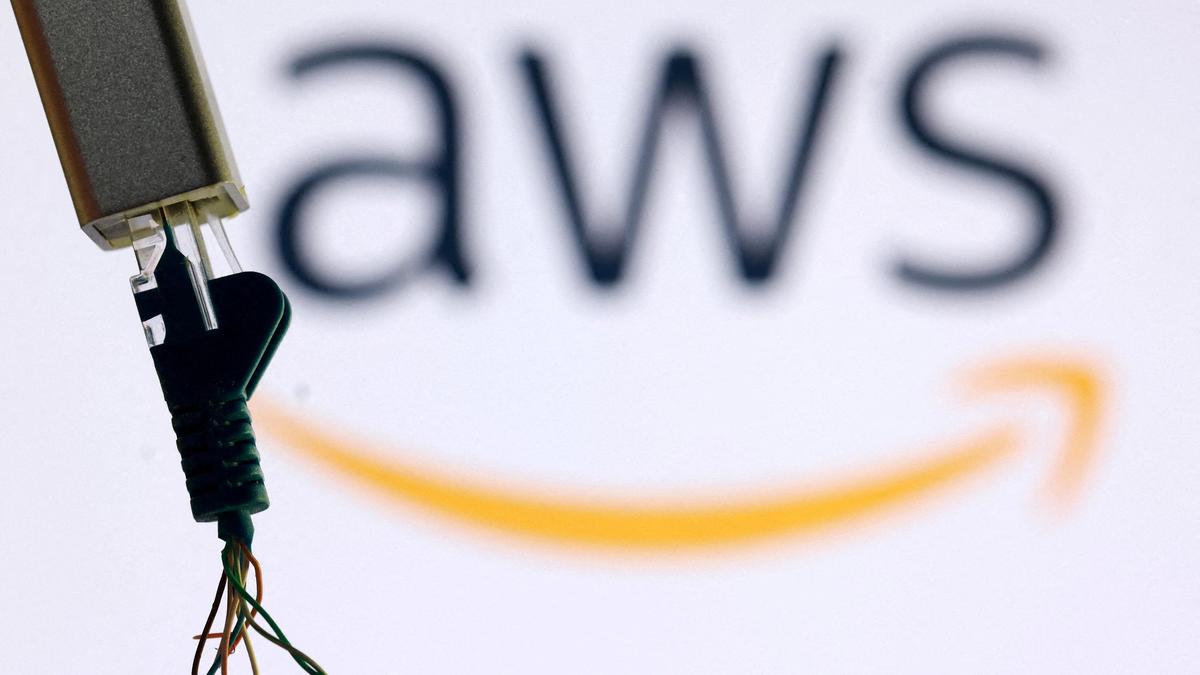
When news broke that Amazon’s cloud unit—the global juggernaut known as AWS—suffered a fire at a UAE data center, the reporting was clinical. "Objects hit the facility." "Small fire reported." "Minimal impact." These are the words of corporate damage control. They are designed to soothe shareholders and prevent panic.
The reality on the ground is far more visceral. Imagine a technician, perhaps someone we will call Omar, who has spent his career ensuring that the "five nines" of uptime are never compromised. Suddenly, the sterile silence of the data hall is shattered. Not by a software bug or a cyberattack, but by something physical. Something heavy. Something falling from the sky.
A fire in a data center is a nightmare of unique proportions. It is not just the flames; it is the smoke. Standard smoke is toxic, but the smoke from burning server racks is a corrosive cocktail of plastics and heavy metals. More importantly, the very tools used to fight a fire—water or chemical suppressants—can be just as destructive to the delicate circuitry as the heat itself.
When the Physical Brushes Against the Digital
We have spent the last decade convinced that our data lives in a nebulous, ethereal space. We talk about "uploading" things as if they are ascending to a higher plane of existence. We forget that every "Like," every transaction, and every streaming video requires a specific physical location.
The incident in the UAE serves as a sharp, painful reminder that the digital economy is tethered to the geography of the real world. When physical objects strike a data center, the abstraction of the internet evaporates.
The UAE is a hub of rapid expansion. It is a place where drones, construction cranes, and intense weather patterns share a crowded airspace. While the official reports remained vague about what exactly "hit" the facility, the implications are clear: the perimeter of the digital world is no longer just a firewall. It is a roof. It is a wall. It is the physical space between a falling object and a rack of servers.
Consider the stakes. If that fire had spread, it wouldn't have just been Amazon’s problem. It would have been the problem of the local government agencies that store their records there. It would have been the problem of the startups whose entire business models are built on the back of AWS. It would have been the problem of the family trying to access their digital memories, only to find the door locked because a piece of debris fell in the wrong place at the wrong time.
The Illusion of Total Redundancy
The gospel of the cloud is redundancy. If one server fails, another takes over. If one building loses power, a backup kicks in. If one "Availability Zone" goes dark, the traffic is rerouted. It is a beautiful, logical system.
But redundancy is an expensive insurance policy that humans are wired to underestimate. We see the green lights and assume they will always be green. We build these cathedrals of data in regions of the world that are prone to geopolitical tension, extreme heat, and rapid industrialization.
The fire in the UAE was small, according to Amazon. They handled it. The systems, for the most part, held. But the event strips away the veneer of total safety. It forces us to look at the "Cloud" for what it truly is: a collection of vulnerable boxes sitting in the heat, waiting for the world to interfere.
The cost of this interference is rarely measured in the price of the hardware. A server rack can be replaced. The true cost is the erosion of the belief that our digital lives are disconnected from the messy, physical reality of gravity and fire.
The Ghost in the Machine
There is a specific kind of dread that comes with a data center alarm. It is a sound that signals a breach between the logic of code and the chaos of the elements. In the UAE, that alarm wasn't triggered by a hacker in a dark room; it was triggered by the physical world asserting its dominance.
The engineers who responded to the fire weren't fighting a virus. They were dragging hoses and donning masks. They were dealing with the heat of the desert amplified by the heat of the machines.
We often think of tech giants as untouchable entities, but in moments like these, they are just groups of people trying to keep the lights on against the odds. The "Cloud" didn't stop the fire. People did. People who understand that the invisible world we all inhabit is actually quite heavy, quite hot, and entirely dependent on the integrity of a roof in the desert.
The Weight of Gravity
This incident is a whisper before a shout. As we pack more of our existence into these centralized hubs, the target—not just for malice, but for accident—becomes larger. We are building the most complex civilization in human history on a foundation that can be compromised by a falling object.
There is a profound irony in the fact that the most sophisticated technology on the planet can be brought to its knees by the oldest laws of physics. Gravity doesn't care about your uptime. Fire doesn't care about your encryption.
We will continue to build. We will continue to move our lives into the racks and the wires. But we should do so with the understanding that the Cloud is not above us. It is right here on the ground, sharing the same air, subject to the same stray sparks, and just as fragile as the glass in our hands.
The lights in the UAE facility are back to their steady, rhythmic green. The soot has been cleaned. The debris has been cleared away. But the silence in the aisles feels different now. It is a silence that knows the sky can fall.