The air in Budapest usually carries the scent of chimney cakes and diesel, but on this particular Sunday, it tasted like static. For sixteen years, the city had grown accustomed to a specific kind of gravity—the heavy, unmoving weight of Viktor Orbán’s presence. It was a constant. Like the Danube or the Parliament’s limestone walls, it felt structural.
Then came Peter Magyar.
He didn't arrive on a white horse or with the polished machinery of a career diplomat. He arrived with a microphone and a grudge that mirrored the collective exhaustion of a nation. To understand why Hungary shifted, you have to look past the spreadsheets of the polling data and into the kitchens of the VIII District. Imagine a grandmother, let’s call her Ilona, who has spent over a decade watching her grandchildren move to London or Berlin because the air at home felt too thin to breathe. For Ilona, the election wasn't about "geopolitical pivots." It was about the empty chair at her Sunday dinner table.
The silence of those empty chairs finally became louder than the state-controlled radio.
The Man Who Knew Too Much
Peter Magyar was an insider. That is the detail that changed everything. He wasn't a radical from the fringes; he was a man who had sat in the velvet chairs of the elite. He knew where the wires were buried because he helped lay them. When he turned, it wasn't just a political defection. It was a structural failure.
Think of a massive, ancient dam. For years, the water builds. The engineers tell you it’s fine. They paint over the cracks. But then, one of the engineers walks out to the town square and points. "The cracks aren't just paint," he says. "The water is coming."
Magyar became that engineer. He spoke with the cadence of someone who had nothing left to lose, and in doing so, he gave a voice to a population that had forgotten how to shout. His rise wasn't built on a traditional platform. It was built on the shock of recognition. When he played the secret recordings of government officials, it wasn't just news. It was a mirror. Hungarians looked into it and realized they weren't crazy for feeling the weight of the last sixteen years.
The Architecture of a Long Reign
Sixteen years is a long time for a single vision to hold a country. To put it in perspective, a child born when Orbán took power is now old enough to vote. They have never known a world where the billboard campaigns didn't feature a singular enemy of the state. They have never known a news cycle that wasn't dictated from a central office.
Orbán’s "Illiberal Democracy" was a masterpiece of political engineering. It didn't rely on the crude violence of the 20th century. Instead, it used the law as a scalpel. It reorganized the judiciary. It bought the media through a network of loyalists. It made it so that staying in power wasn't a struggle; it was the default setting.
But there is a fatal flaw in perfect systems: they become brittle. By removing all friction, the government lost the ability to feel the ground shifting beneath its feet. They mistook the silence of the people for consent. They assumed that as long as the pensions arrived and the borders were "protected," the hunger for something else—something fresh—would remain dormant.
They were wrong.
The Tipping Point of the Mundane
History isn't usually made by grand ideological shifts. It’s made by the accumulation of small indignities. It’s the price of eggs. It’s the teacher who quits because they can no longer afford rent. It’s the doctor who tells you the wait for surgery is three years.
In the final months leading up to the election, the "Economic Miracle" that had been promised started to feel like a ghost story. Inflation wasn't a number on a chart; it was a physical obstacle at the grocery store. While the government focused on abstract cultural wars, the people were looking at their bank accounts.
Consider a hypothetical young couple, Gábor and Eszter. They don't care about the intricacies of the European Union’s legal battles with Budapest. They care that their combined salaries can’t secure a mortgage in the city where they were born. For a decade, they stayed quiet. Then, they saw Magyar—a man who looked like the people who ignored them—suddenly saying that Gábor and Eszter were the ones who actually mattered.
The spell didn't break all at once. It cracked, then shattered.
A Sea of Red, White, and Green
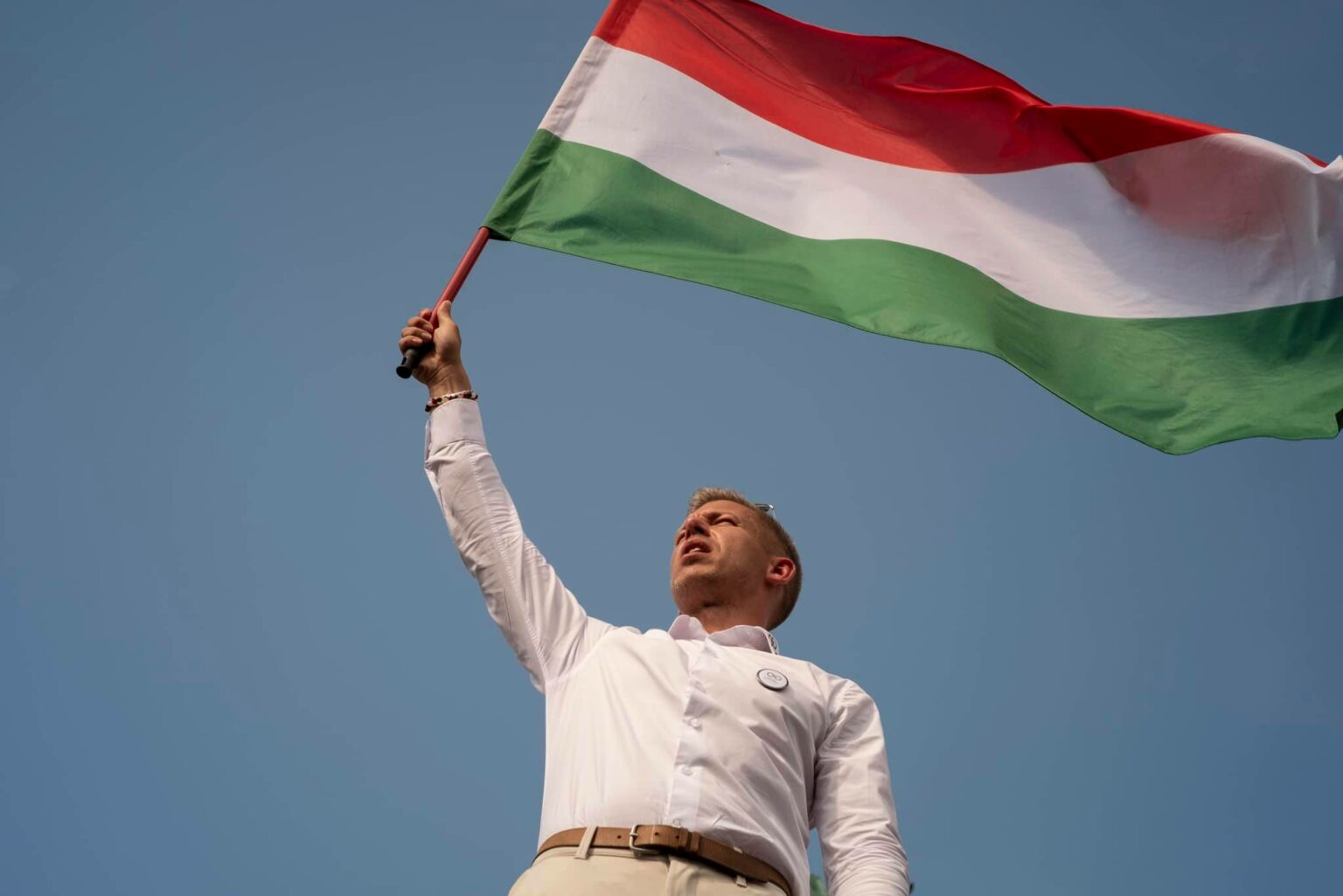
The rallies were different this time. In previous years, opposition protests felt like wakes—somber affairs for a cause that was already lost. Magyar’s rallies felt like a festival. People didn't just bring flags; they brought their children. They brought their neighbors. There was a sense of permission. For the first time in nearly two decades, it felt safe to be hopeful.
The government’s response was a reflex. They reached for the old playbook. They called him a traitor. They called him a tool of foreign powers. They flooded the airwaves with warnings of chaos. Usually, this worked. Fear is a powerful preservative for the status quo.
But this time, the fear didn't stick. The accusations felt like a tired movie that everyone had already seen. When the state media yelled "Wolf," the people simply looked at the man on the stage and saw a human being with a messy past and a compelling future.
The Night the Map Changed
As the sun set over the Danube on election night, the atmosphere in the Fidesz headquarters was uncharacteristically hushed. The early returns weren't just bad; they were impossible. Districts that hadn't seen an opposition victory since the turn of the millennium were turning blue and purple.
The rural heartlands, long considered the impenetrable fortress of Orbán’s support, began to wobble. The "Peace Marches" and the village-level patronage hadn't been enough to offset the sheer desire for a new chapter.
When the final numbers flashed on the screen, the silence in the room was absolute. Sixteen years. Four terms. One man’s vision for a nation.
Gone.
Magyar took the stage not with the roar of a conqueror, but with the weary smile of a man who had just finished a marathon. He didn't promise a utopia. He didn't offer a revolutionary manifesto. He offered something much more radical: normalcy. The right to disagree without being a traitor. The right to have a government that focused on the plumbing rather than the poetry of nationalism.
The Echo in the Streets
Walking through Budapest the morning after is an exercise in observing a city exhale. The heavy gravity has lifted.
The challenges ahead are immense. You cannot simply flip a switch and undo sixteen years of institutional molding. The judges are still there. The media owners are still there. The economy is still fragile. Peter Magyar isn't a saint, and the road to rebuilding a fractured democracy is paved with complications that a victory speech cannot solve.
But that isn't what matters today.
What matters is Ilona, who is calling her grandson in London to tell him that maybe, just maybe, he should think about coming home for Christmas. What matters is the student who realized that their vote isn't a scream into a vacuum, but a tool that actually works.
The era of the "Strongman" didn't end because of a foreign intervention or a military coup. It ended because the people decided they were tired of being characters in someone else’s epic poem. They wanted to write their own stories again.
As the trams rattle across the Margit Bridge and the city wakes to a new reality, the shadow of the last sixteen years is finally beginning to recede. The limestone walls of the Parliament building remain, but the man inside them has changed. For the first time in a generation, the future of Hungary doesn't belong to a single name. It belongs to the people standing in the cold morning air, blinking at a sun they haven't seen in a very long time.
The static is gone. The air is clear.