The water in the Miraflores Locks is a bruised, heavy grey. From the deck of a massive Neopanamax freighter, the concrete walls feel close enough to touch, a claustrophobic squeeze that carries $270 billion in trade every year. There is a specific sound here—the low, rhythmic hum of the "mules," the electric locomotives that tether these steel giants to the shore. It is the sound of global order being physically pulled through a needle’s eye.
But the hum is changing. It is becoming a grind.
For a century, the Panama Canal was the ultimate symbol of American engineering and unshakeable dominance. Today, it is something else. It is a choke point. As the shadow of the Strait of Hormuz falls over the Caribbean, the world’s most vital shortcut has transformed into a high-stakes chessboard where the United States and China are playing for the soul of the supply chain.
The Ghost of the Hormuz
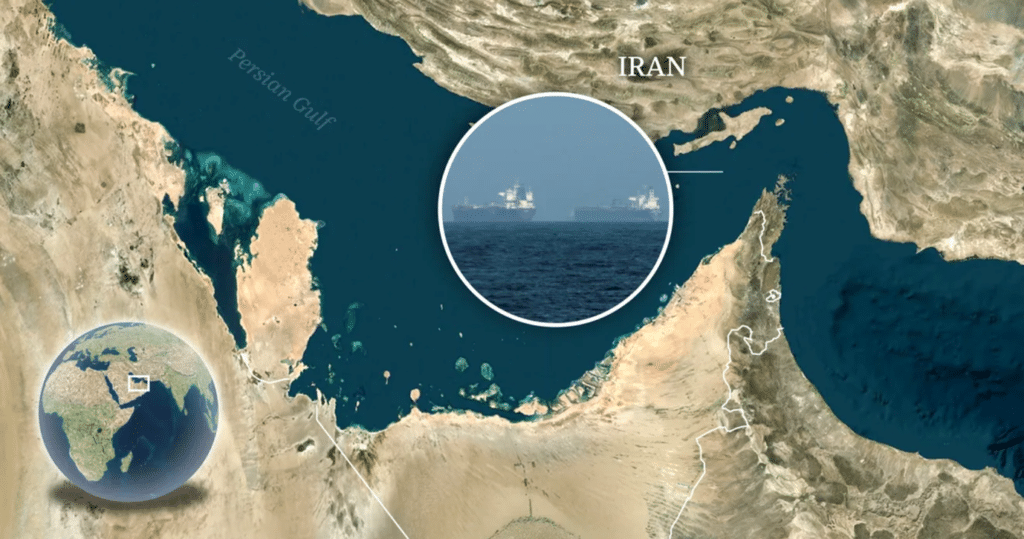
To understand why the jungle of Panama is suddenly vibrating with the energy of a cold war, you have to look 7,000 miles away to the Persian Gulf. In the Strait of Hormuz, the threat is kinetic—missiles, mines, and speedboats. In Panama, the threat is quieter. It is administrative. It is financial. It is existential.
Consider a hypothetical captain named Elias. For twenty years, Elias has moved liquified natural gas from the Gulf Coast of the US to the hungry markets of Japan. He used to view the Canal as a simple utility, like a toll road. Now, he checks the news before he checks the weather. He watches the water levels in Lake Gatun, which have plummeted due to unprecedented droughts. But more importantly, he watches the flags.
When a waterway is stressed by nature, the man who controls the repairs controls the world. China knows this. While the US spent decades taking the Canal for granted, Beijing spent them investing.
China is now the second-largest user of the Canal. More importantly, Chinese companies have built, bought, or managed the ports at both ends of the ribbon of water. They aren't just using the road; they are starting to own the gas stations and the parking lots.
The Invisible Grip
The tension isn't about an immediate blockade. That would be too loud. The real power lies in the subtle "Hormuz-ification" of the passage. This refers to the realization that a single geographic point can be used as a lever to move the entire planet’s economy.
If you control the infrastructure surrounding the Canal, you control the data. You know exactly what is on every ship, where it is going, and how much it cost. You can prioritize friends. You can slow-walk rivals. You can make the "smooth" experience of global trade suddenly feel very abrasive for anyone on the wrong side of a diplomatic spat.
Washington is finally waking up to the smell of the coffee, and the coffee is bitter. For years, the narrative was that the 1999 handover of the Canal back to Panama solved the "imperialism problem." In reality, it created a power vacuum. Into that vacuum stepped the Belt and Road Initiative.
The US response has been a frantic pivot. We are seeing a sudden surge in "near-shoring" and a desperate scramble to reinvest in Latin American infrastructure. But you cannot build a port overnight, and you cannot easily displace a partner who has been writing checks for two decades while you were looking the other way.
Thirst and Power
There is a cruel irony at the heart of this struggle. The Canal is a machine fueled by fresh water. Every time a ship passes through, millions of gallons of water from Lake Gatun are flushed into the sea.
Last year, the rains didn't come.
The lake bed began to show its bones. The Panama Canal Authority was forced to slash the number of daily transits. This is where the human element turns from strategy to desperation. Imagine being the owner of a small shipping firm. You have a cargo of perishable goods. The "big players"—the ones with deep pockets and state backing—can outbid you for the few remaining slots in the auction system.
Sometimes, those slots go for $4 million. That is just the fee to jump the line.
Who has that kind of liquidity? State-backed enterprises. This drought isn't just an environmental crisis; it is a filter. It filters out the independent, the small, and the Western-aligned companies that operate on thin margins. It leaves the waterway to the giants.
The Digital Canal
The battlefield has moved from the locks to the cloud. The modern Panama Canal is a masterpiece of logistics software. It manages the timing of every valve, the tension of every cable, and the scheduling of every hull.
If the hardware of the ports is Chinese-managed, and the software is increasingly integrated with global logistics platforms based in Shenzhen, the "physical" control of the water starts to matter less. Why bother with a naval blockade when you can simply have a "system glitch" that delays a specific fleet for forty-eight hours?
In the shipping world, forty-eight hours is the difference between a profit and a bankruptcy.
The US is attempting to counter this with "Clean Cable" initiatives and cybersecurity pacts with the Panamanian government. It is a digital fortification of a physical trench. We are witnessing the birth of a bifurcated world, where the very water beneath a ship's keel is partitioned by the code running the cranes on the dock.
The Weight of the Concrete
Walking through the Casco Viejo in Panama City, you see the layers of history. The French ruins, the American colonial architecture, and now, the gleaming towers of international banking. The locals know something that the strategists in D.C. and Beijing often forget: Panama isn't just a map coordinate. It is a country.
The people of Panama are caught in the middle of a "Goldilocks" dilemma. They need the investment from China to keep their economy afloat as the climate changes. They need the security and historical ties of the US to ensure they aren't swallowed whole by a new kind of debt-trap diplomacy.
The tension isn't a theory for them. It's the price of eggs. It's the reliability of the power grid. When the US and China ramp up tensions, the vibration is felt first in the streets of Colon and Panama City.
The Americans are worried about "maritime sovereignty." The Chinese are focused on "supply chain resilience." The Panamanians are just trying to make sure the lake doesn't run dry.
A New Map of the World
If the 20th century was defined by the opening of the world, the 21st is being defined by its narrowing.
We used to believe that globalization was an irreversible tide. We thought that once the world was connected by these great silver threads of trade, war and rivalry would become obsolete because they would be too expensive. We were wrong. Connectivity hasn't ended the rivalry; it has provided a new weapon.
The Panama Canal is no longer just a shortcut. It is a pressure point.
When you see a ship like the Ever Given get stuck in the Suez, or when you see the drought-stricken queues in Panama, you are seeing the fragility of our species. We have built a civilization that depends entirely on the ability to move massive amounts of stuff through tiny, vulnerable gaps in the earth.
The US and China aren't just fighting over a canal. They are fighting over the right to hold the world's pulse.
As the sun sets over the Pacific entrance to the Canal, the line of waiting ships stretches to the horizon. They sit there, dark shapes on a darkening sea, flickering with signal lights. They are waiting for permission to move. They are waiting for the gates to open. They are waiting to see who, exactly, is holding the key.
The water continues to flow out to sea. The lake continues to drop. The locomotives continue to hum. And in the silence between the heartbeats of global trade, you can hear the sound of the world getting smaller.