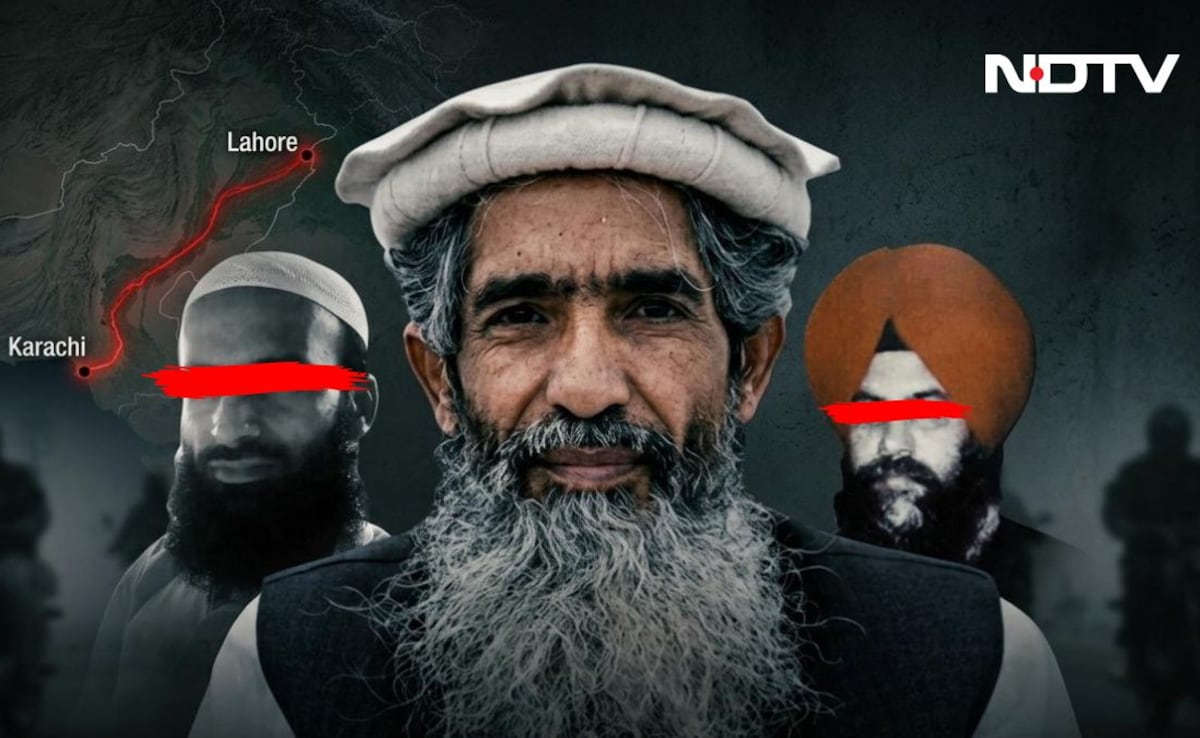
The mainstream media is obsessed with a ghost story. For months, headlines from Karachi to Lahore have screamed about "Unknown Gunmen" picking off high-value targets with surgical precision. The lazy consensus suggests these are rogue vigilantes or James Bond-style foreign operatives roaming the streets of Pakistan with impunity.
They are wrong. There is no such thing as an "unknown" gunman in a world saturated by signals intelligence, facial recognition, and persistent surveillance. If we don’t know who they are, it’s because we are looking at the wrong map.
The Death of the Lone Assassin Myth
The narrative is simple: a motorbike pulls up, a pillion rider fires a suppressed weapon, and a high-ranking extremist leader is dead. The press calls it a mystery. It isn’t. This isn't a collection of random hits; it is a manifestation of Kinetic Attribution.
In intelligence circles, kinetic attribution is the physical realization of digital tracking. We’ve spent two decades believing that war is fought with carrier groups and infantry divisions. It’s not. It’s fought through the exploitation of the "Digital Exhaust"—the metadata trail every human leaves behind.
When a target in a "safe house" in Lahore gets eliminated, it’s not because a spy followed him from a bazaar. It’s because his encrypted messaging app had a heartbeat that synced with a specific cell tower at 3:00 AM for six nights straight. The "gunman" is merely the final delivery mechanism of a massive, automated data funnel.
Why State Sovereignty is an Illusion
The outrage over these killings usually centers on the violation of national sovereignty. Commentators cry foul, demanding to know how foreign actors can operate in Pakistan’s heartland. This is a nineteenth-century complaint in a twenty-first-century reality.
Sovereignty died the moment we digitized our borders.
If you can reach into a country’s cellular network from a basement in Virginia or an office in Tel Aviv, you are already "in" that country. The physical act of pulling a trigger is just a formality. I’ve watched intelligence agencies dump millions into "border security" while their internal networks were as porous as a sponge.
The "Unknown Gunman" is a convenient fiction for both sides. For the victims' associates, it builds a myth of a supernatural enemy. For the host government, it provides plausible deniability. If they admit they know exactly who is doing the shooting, they have to admit they are powerless to stop it—or worse, that they are quietly nodding along.
The Mathematical Certainty of the Kill Trail
Let’s look at the mechanics. Most of these hits follow a specific pattern:
- Target Identification: Based on long-term SIGINT (Signals Intelligence).
- Pattern of Life Analysis: Determining when the target is most vulnerable (usually between the car and the front door).
- The Buffer Zone: Ensuring no local security response can intervene within a 120-second window.
Mathematically, the probability of "Unknown Gunmen" succeeding 20 times in a row without a single arrest is near zero—unless the environment is prepared.
In a high-density urban environment like Karachi, you cannot fire a weapon and disappear without a "Green Corridor." This is a cleared path where CCTV cameras "fail," police patrols are redirected, and traffic signals are synced. This isn't a mystery; it’s an orchestrated logistical feat.
The Fallacy of "Blowback"
Traditional analysts love the word "blowback." They argue that these targeted killings will radicalize the masses and create more terrorists.
This is the most tired trope in the industry.
The data suggests the opposite. Targeted decapitation of leadership structures doesn't create more terrorists; it creates Organizational Paralysis. When the mid-level managers of a terror cell realize that their predecessors were neutralized while buying groceries, they stop focusing on "the mission" and start focusing on their own shadows.
Paranoia is a far more effective counter-terrorism tool than an airstrike. A drone strike creates a martyr. A mysterious man on a motorbike creates a culture of suspicion. Who sold the location? Which "brother" turned informant? The organization eats itself from the inside out.
The Tech Gap: Why Conventional Police Fail
Why can’t the local police catch these guys? Because the police are playing a 2D game in a 3D space.
While a detective is looking for physical fingerprints, the operators are using Virtual MAC Address Spoofing and Burner Loop Networking. They aren't using the local grid; they are using satellite-linked communication that bypasses the domestic infrastructure entirely.
The "Unknown Gunmen" are likely using AI-driven route optimization to navigate Karachi’s chaotic traffic in real-time. Imagine a scenario where an operator receives a haptic pulse on their wrist telling them to turn left because a police checkpoint is forming two blocks away based on live radio frequency monitoring. You aren't chasing a man; you are chasing an algorithm.
Stop Asking "Who" and Start Asking "How Much"
The obsession with the identity of the shooters (Is it RAW? Is it the Mossad? Is it a rogue wing of the ISI?) is a distraction.
The real question is: What is the market rate for a silent assassination in a failed security state?
We are seeing the Uberization of Wetwork. In the past, you needed a deep-cover agent. Today, you can hire local proxies through encrypted darknet markets, provide them with a target, a time, and a dead-drop location for a weapon, and pay them in Monero.
The person pulling the trigger might not even know who they are working for. They are just a gig-worker in the global shadow economy. This isn't a "trail of terror"; it’s a supply chain.
The Brutal Reality of the Karachi-Lahore Axis
Lahore is the heart of the establishment; Karachi is the lungs of the economy. By hitting targets in both, the "Gunmen" are signaling that no sanctuary exists.
The traditional defense strategy of "strategic depth" is worthless when the enemy is already inside the house, and the house is made of glass. Every person reading this in a high-security zone believes they are safe because of the walls and the guards. They forget that their phone is a tracking beacon and their smart car is a potential coffin.
We need to stop treating these events as "incidents" and start recognizing them as the new baseline of global conflict. The era of the "Unknown Gunman" is actually the era of Total Visibility.
The guns are only unknown to those who refuse to see the digital reality. If you're still waiting for a police report to tell you what's happening, you’ve already lost the war.
Throw away the detective kit. Start looking at the data packets.