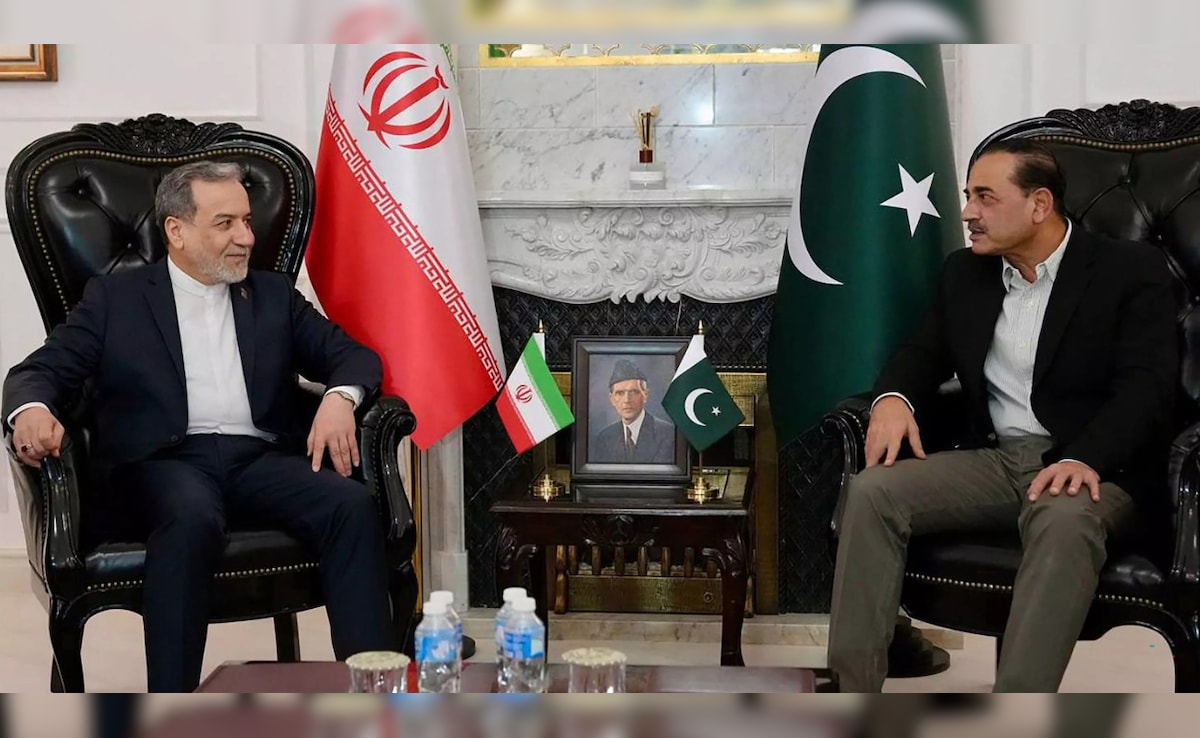
The current narrative surrounding the fractured relationship between Islamabad and Tehran is a masterpiece of geopolitical laziness. Analysts are tripping over themselves to paint Pakistan as the clumsy middleman that intentionally botched backchannel communications between Tehran and the Trump administration. They want you to believe in a world where a few missed phone calls or a "lost in translation" diplomatic cable is the reason these two neighbors are at each other’s throats.
It’s a neat story. It’s also completely wrong.
Pakistan didn't "sabotage" a bridge between Iran and Trump. That bridge was built on a foundation of sand from the start. To suggest that Islamabad possesses the unilateral power to derail the strategic calculus of the Islamic Revolutionary Guard Corps (IRGC) or the State Department is to misunderstand how power actually flows in the Middle East. The friction we see today isn't about a botched message; it’s about the brutal realization that the "Brotherhood of Islam" is a marketing slogan, not a foreign policy.
The Proxy War Fallacy
For decades, the global intelligence community has operated under the assumption that Pakistan and Iran maintain a "managed" tension. The consensus suggests they disagree on Afghanistan and trade, but keep it civil for the sake of regional stability.
Look closer. The border between Balochistan and Sistan-Baluchestan is not a line on a map; it is a laboratory for asymmetrical warfare. When the Jaish al-Adl militants strike inside Iran, Tehran doesn't blame "intelligence failures." They blame a deliberate Pakistani policy of strategic depth. When Pakistan retaliates with missile strikes—as we saw in early 2024—it isn't a "misunderstanding." It is a calibrated demonstration of sovereignty.
The "sabotage" theory regarding Trump is a convenient distraction. It allows both sides to avoid admitting the truth: Iran and Pakistan are currently trapped in a zero-sum game for regional relevance. If Iran secures a grand bargain with the West (or even a temporary truce with a hawk like Trump), Pakistan’s role as the indispensable "gatekeeper" of the region vanishes. Islamabad didn't miss a message; they simply recognized that a direct line between Tehran and Washington makes them obsolete.
Trump and the Art of the Non-Deal
The idea that Pakistan "ruined" a potential opening with Trump ignores who Donald Trump is. This is a man who ripped up the JCPOA and ordered the strike on Qasem Soleimani. The notion that a Pakistani envoy could have whispered the "right" words to transform Trump into a Persian ally is a fantasy.
Tehran knows this. The IRGC is not staffed by amateurs. They didn't trust Pakistan to carry their water in 2019, and they don't trust them now. Any "mistrust" cited by mainstream outlets isn't a new development triggered by a failed memo. It is the permanent state of affairs.
The real friction comes from the CPEC (China-Pakistan Economic Corridor) versus Chabahar Port rivalry. China is pouring billions into Gwadar. India has invested heavily in Iran's Chabahar. These are not just ports; they are competing visions for the trade veins of Asia. You cannot be "brothers" when you are fighting for the same oxygen.
Why the "Middleman" is a Dead Concept
I have spent years watching regional actors play the mediation game. It is a lucrative business for a mid-tier power. You get the prestige of the international stage and the leverage of holding secrets. But mediation only works when both principals actually want a deal.
In the Iran-Trump saga, neither side wanted a deal more than they wanted a domestic victory.
- Iran needed to show resistance to maintain the "Axis of Resistance."
- Trump needed to show "Maximum Pressure" to satisfy his base.
Pakistan was never the saboteur. They were the convenient scapegoat for two parties who were never going to sit at the same table anyway. Blaming Islamabad is the diplomatic equivalent of saying "the dog ate my peace treaty."
The Balochistan Tinderbox
If you want to understand the "growing mistrust," stop looking at Washington and start looking at the dirt in the borderlands.
Both nations are facing existential threats from separatist movements. The Baloch people, split by a border they never asked for, are the primary point of friction. Tehran suspects Islamabad of using these groups as a pressure valve to keep Iran distracted. Islamabad suspects Tehran of providing a safe haven for the BLA (Baloch Liberation Army) to strike at Chinese interests in Pakistan.
This is the "nuance" the mainstream media misses. They focus on high-level diplomacy because it’s easy to film. They ignore the low-level insurgency because it’s messy, dangerous, and doesn't fit into a 24-hour news cycle. The mistrust is baked into the geography. You cannot fix a border dispute with a better diplomatic envoy.
The India Factor: The Elephant in the Room
You cannot discuss Pakistan-Iran relations without mentioning New Delhi. Iran’s relationship with India is the ultimate "red line" for the Pakistani military establishment.
Every time an Iranian official visits India, a "misunderstanding" happens on the Pakistani border. Every time Pakistan strengthens ties with Saudi Arabia, Iran discovers a "terrorist cell" with links to Islamabad. This isn't sabotage; it's a choreographed dance of regional balancing.
The competitor's piece suggests that a single failed communication channel broke the bond. In reality, the bond was never there. It was a marriage of convenience during the Cold War that has long since soured into a bitter, neighboring rivalry.
Stop Asking if they can "Fix" the Relationship
The most common question in foreign policy circles is: "How can Pakistan and Iran restore trust?"
This is the wrong question. It assumes "trust" is the natural state of international relations. It isn't. Interest is the only currency that matters.
The real question is: "When will the cost of conflict exceed the benefit of the proxy war?"
Right now, both regimes benefit from having an external "other" to blame for their internal failings.
- Iran's leadership uses "external meddling" to justify crackdowns on dissent.
- Pakistan's leadership uses "border threats" to maintain its oversized grip on the national budget.
They don't want a "fix." They want a controlled burn.
The Hard Truth for the West
The West’s obsession with finding a "stabilizer" in the region is a fool's errand. We keep looking for a country that can "manage" Iran. First, we thought it was Iraq (that ended in a decade-long war). Then we thought it was Qatar. Then we thought Pakistan could bridge the gap with Trump.
It’s time to accept that Iran doesn't want a bridge built by a third party. They are a civilization-state with a 2,500-year memory. They don't need a 77-year-old nation-state like Pakistan to explain how the world works to them.
The "sabotage" narrative is a Western projection. It’s an attempt to find a linear, logical reason for why diplomacy failed, rather than accepting the chaotic, multipolar reality of 2026. Pakistan didn't fail as a messenger; the message was dead on arrival.
The mistrust isn't "growing." It has arrived. It is permanent. And it is the most honest thing about their relationship.
Any analyst telling you that a change in Pakistani leadership or a new US president will "reset" this dynamic is selling you a fairy tale. The era of the regional middleman is over. We are now in the era of the regional wall. Build your strategies accordingly.



