The financial press loves a ghost story. Currently, the favorite bedtime tale involves a "weaponised" Strait of Hormuz, rising oil prices, and the impending doom of global energy markets. They paint a picture of a desperate Iran holding the world’s carotid artery, ready to squeeze the moment a US diplomat breathes wrong.
It is a tired, shallow narrative.
If you believe the Strait of Hormuz is a genuine military "weapon," you aren't paying attention to the mechanics of power. The idea that Tehran would—or even could—effectively shut down the Strait to gain leverage in nuclear talks is a fundamental misunderstanding of both naval logistics and the Iranian regime's own survival instinct.
Stop looking at the price of Brent crude and start looking at the reality of the water.
The Geography of Fear vs. The Reality of Flow
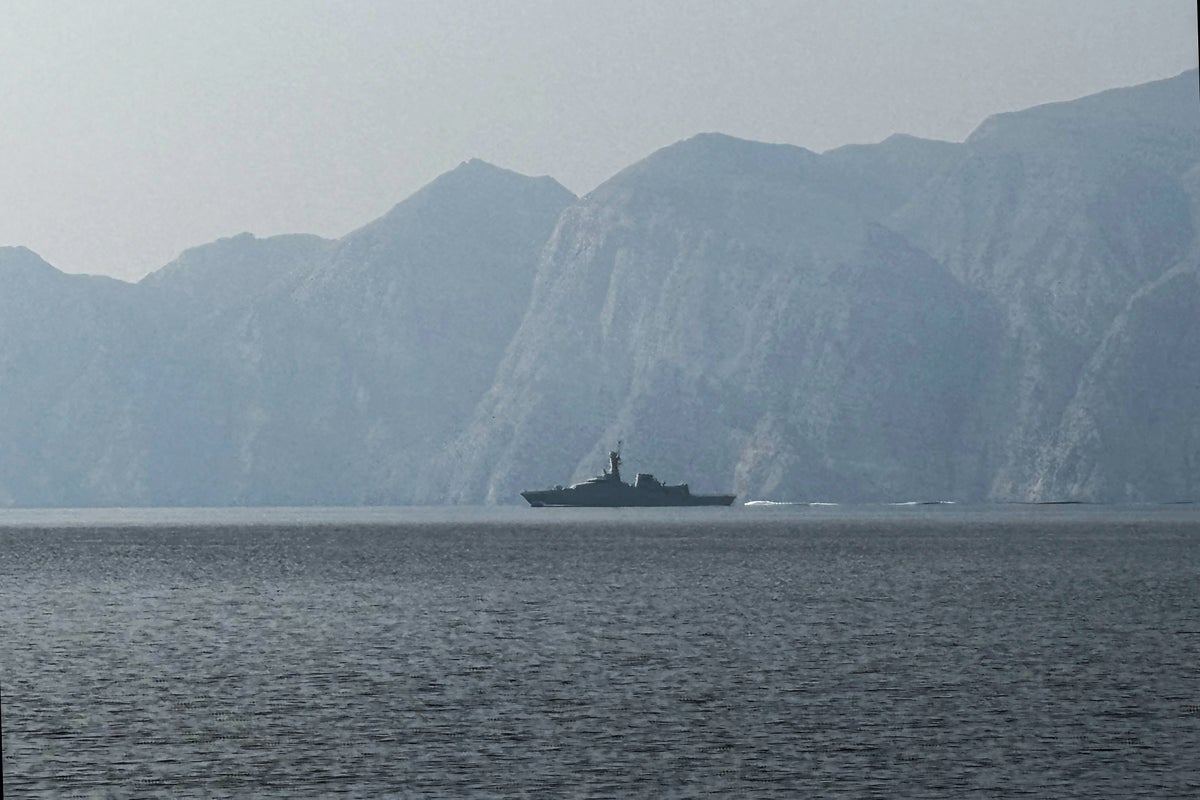
Every amateur analyst points to the map and notes that the Strait of Hormuz is only 21 miles wide at its narrowest point. They scream about the "chokepoint." They ignore the fact that the actual shipping lanes—the two-mile-wide channels that carry nearly 20% of the world's petroleum—are deep-water paths that cannot be "blocked" by sinking a few tankers.
To actually stop the flow of oil, Iran would need to maintain a persistent, high-intensity surface and air blockade against the combined might of the US Fifth Fleet and its allies. This isn't a chess move; it’s a suicide pact.
The "weaponisation" of the Strait isn't a military strategy. It’s a marketing campaign. Iran doesn't need to close the Strait to win; they just need the Financial Times and Reuters to say they might. The resulting risk premium on oil futures does the heavy lifting for them. Tehran gets the price hike they need to balance their battered budget without ever having to fire a shot that would result in the immediate vaporization of their navy.
The Self-Inflicted Wound
The "lazy consensus" argues that Iran holds all the cards because they sit on the coastline. This ignores one inconvenient truth: Iran is more dependent on the Strait of Hormuz than almost any other nation in the region.
While Saudi Arabia and the UAE have spent decades and billions building pipelines to bypass the Strait—like the East-West Pipeline to the Red Sea or the ADCOP line to Fujairah—Iran remains geographically trapped. They export the vast majority of their crude through the Kharg Island terminal, deep within the Persian Gulf.
If Tehran closes the Strait, they don't just starve the West; they starve themselves. They cut off their own lifeblood while their neighbors pivot to overland routes. I have seen analysts ignore this for twenty years, acting as if Iran operates in a vacuum where they don't need cash to keep their internal security apparatus functioning. A total closure of the Strait is the one thing guaranteed to collapse the Iranian economy faster than any Western sanction ever could.
The Tanker War Lesson Everyone Forgot
We have seen this movie before. During the "Tanker War" of the 1980s, over 500 ships were attacked. The result? Global oil supply barely flinched. Insurance premiums went up, yes. Some hulls were scorched. But the oil kept moving.
Modern tankers are massive, double-hulled fortresses. You cannot "close" an ocean with speedboats and sea mines in 2026. The technical reality of clearing mines has evolved. The ability of the US Navy to provide "Operation Earnest Will" style escorts is a proven playbook.
When you hear "Tehran is weaponising the Strait," read it as: "Tehran is desperate for a seat at the table and is using the only megaphone they have left."
Why the "US-Iran Talks" are a Red Herring
The competitor article suggests oil is gaining because of uncertainty surrounding upcoming talks. This is backwards. Oil isn't gaining because of the talks; the talks are happening because the oil market is already tight, and the US administration is terrified of $120-a-barrel gas during an election cycle.
The leverage isn't held by the Iranian negotiators; it’s held by the physical supply-demand imbalance.
The Thought Experiment of Total Silence
Imagine a scenario where the US and Iran simply stopped talking. No threats, no "leaked" memos about weaponisation, no diplomatic grandstanding. If the geopolitical noise vanished, oil prices would likely drop by $10 to $15 overnight.
This tells you that the "Iranian threat" is a built-in feature of the current market architecture. It is a price floor maintained by collective anxiety. The smart money knows this. Institutional traders aren't buying because they think the Strait will close; they are buying because they know other people are afraid it will. It’s a trade on human psychology, not naval strategy.
The Failure of the "Risk Premium" Model
The standard industry move is to calculate a "geopolitical risk premium" and add it to the fair value of a barrel. This is a flawed metric. It assumes risk is a linear variable.
In reality, the risk of a Hormuz closure is binary: it is either 0% or 100%. Since 100% results in global economic reset and potential World War III, the market never actually prices in the event. It only prices in the chatter.
If you are an investor or a policy observer, you must learn to distinguish between:
- Kinetic Risk: Actual missiles hitting actual ships (Low probability, high impact).
- Acoustic Risk: Politicians making noise to satisfy domestic hardliners (High probability, low impact).
The media treats Acoustic Risk as Kinetic Risk. They are doing the IRGC’s PR work for free.
The Real Threat Nobody Talks About
While everyone stares at the Strait of Hormuz, the real disruption is happening in the "Shadow Fleet."
Iran has mastered the art of ghosting—using aging tankers with turned-off transponders and complex ship-to-ship transfers to bypass sanctions. This isn't a threat to the flow of oil; it’s a threat to the transparency of the market.
We are moving toward a world where a significant portion of global energy moves in the dark. This creates a volatile, unregulated "gray market" that is far more dangerous to long-term price stability than a few Iranian patrol boats in the Strait.
The "weapon" isn't the ability to stop the oil; it's the ability to hide it, move it, and manipulate the data that the West uses to make decisions.
Stop Asking the Wrong Question
The question isn't "Will Iran close the Strait?" The answer is no. They aren't that stupid.
The question you should be asking is: "Why does the West remain so addicted to the narrative of Iranian Hegemony in the Gulf that we allow 21 miles of water to dictate our entire foreign policy?"
We have granted Tehran a "veto power" over global energy stability that they haven't actually earned. By reacting to every piece of rhetoric from the Iranian Ministry of Foreign Affairs, we validate their strategy. We provide the very leverage they are supposedly "weaponising."
The Brutal Truth of the Negotiation Table
If you think Tehran is coming to the talks from a position of strength because they can "threaten" the Strait, you are falling for the trap. They are coming to the table because they are running out of options.
Their infrastructure is crumbling. Their population is restless. Their "weapon" is a bluff that can only be called once. Once the first mine is laid or the first tanker is seized in a way that actually stops traffic, the "threat" is gone, replaced by a kinetic reality that ends with the total destruction of the Iranian state's ability to project power.
The Strait of Hormuz isn't a weapon. It’s a stage. And you are watching a very expensive piece of theater.
The next time you see a headline about "Hormuz tensions," don't check the price of oil. Check the date. It’s usually just time for another round of choreographed posturing where both sides pretend the stakes are higher than they actually are to satisfy their respective bases.
Stop fearing the chokepoint. Start fearing the incompetence of the people who think it’s the only thing that matters.