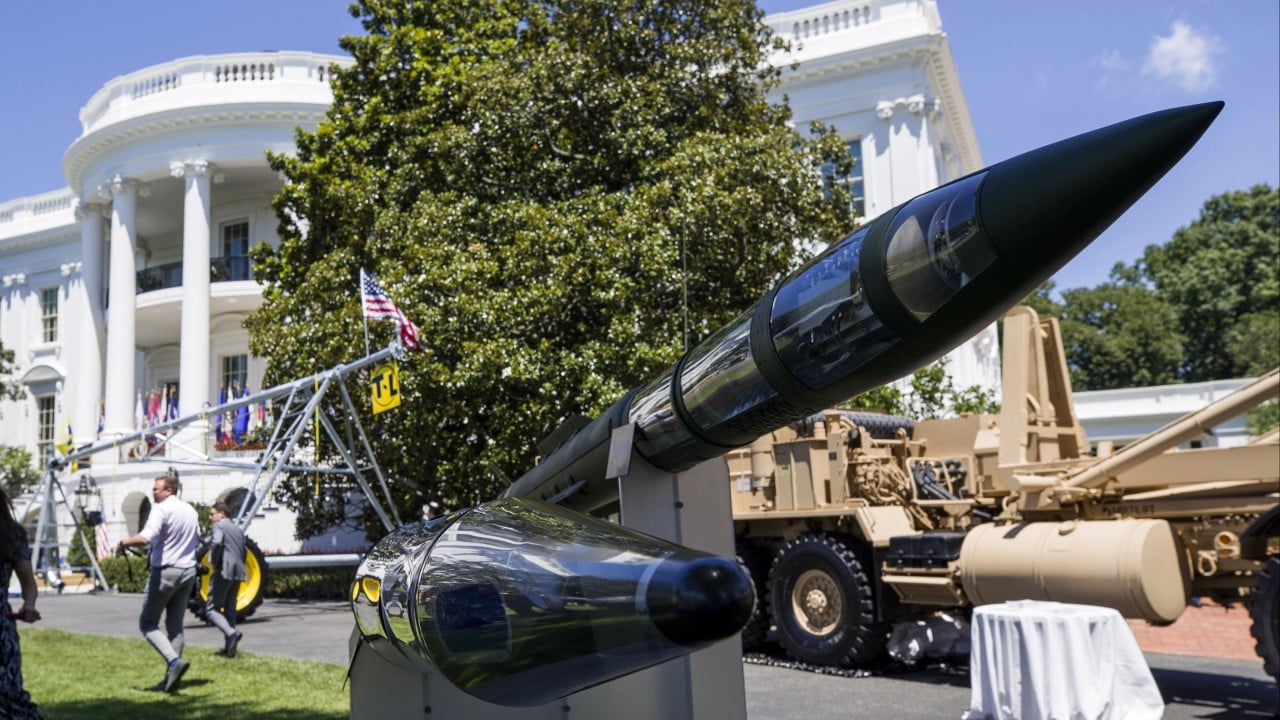
The operational reality of modern theater-level conflict has exposed a critical divergence between Western precision-strike doctrine and the actual consumption rates required by protracted multi-front engagements. While the United States military has optimized its inventory for high-value, low-volume "exquisite" munitions, the recent escalation in the Middle East—specifically the defense against Iranian-aligned drone and missile salvos—reveals a structural deficit in the Pentagon’s depth of fire. This is not merely a supply chain bottleneck; it is a fundamental mismatch between the cost-per-kill of defensive interceptors and the mass-produced saturation tactics of regional adversaries.
The Cost-Exchange Ratio Inversion
The primary vulnerability in the U.S. munitions posture is the economic and kinetic asymmetry of the "Interception Curve." When defending against low-cost unmanned aerial vehicles (UAVs) and cruise missiles, the U.S. Navy and Air Force frequently employ interceptors that cost orders of magnitude more than the threats they neutralize.
- The Expenditure Gap: An Iranian-designed Shahed-series drone costs approximately $20,000 to $50,000 to manufacture. The RIM-162 Evolved SeaSparrow Missile (ESSM) or the RIM-67 Standard Missile-2 (SM-2) used to intercept such threats cost between $1 million and $2.1 million per unit.
- The Inventory Depletion Rate: In a saturation attack, the defender is forced to use its most capable interceptors against "attritable" targets. This creates a strategic opening: by forcing the U.S. to deplete its limited stock of SM-2, SM-6, and Patriot missiles on low-tier threats, an adversary preserves its own high-end ballistic assets for a secondary strike against an undefended fleet.
This inversion turns defensive success into a long-term strategic failure. Every successful intercept at a 50:1 cost ratio brings the U.S. closer to "kinetic bankruptcy," where the ability to protect high-value assets like carrier strike groups or regional airbases is physically exhausted before the enemy’s offensive capacity is diminished.
The Industrial Base Illusion
The United States currently operates under a "Just-in-Time" munitions philosophy that assumes short, decisive conflicts. This model ignores the reality of industrial lead times. The production of a single AIM-120 AMRAAM or an SM-6 interceptor requires a complex, fragile ecosystem of specialized components—including solid rocket motors, seeker heads, and rare-earth magnets—that cannot be rapidly scaled.
Theoretical Maxima vs. Operational Necessity
Annual production rates for critical munitions often fall below the expenditure rates observed in a single month of high-intensity conflict. If the U.S. Navy fires 100 Standard Missiles in a multi-week engagement in the Red Sea, it has potentially consumed a significant percentage of the annual production run for that specific variant.
- Component Lead Times: The procurement cycle for microelectronics and specialized chemicals used in propellants can span 18 to 24 months.
- Specialized Workforce Constraints: Precision munition assembly is not a general labor task; it requires high-security clearances and specific technical certifications, creating a human capital ceiling that prevents rapid shift-scaling at factories.
- Single-Source Vulnerabilities: Many sub-components, such as thermal batteries or specific casting for missile bodies, rely on a single domestic or international supplier. A disruption at one facility halts the entire assembly line.
The mismatch is clear: the U.S. builds missiles like handcrafted watches, while modern warfare demands they be produced like consumer electronics.
Strategic Depth and the Pacific Pivot
The munitions "weak spot" identified in Middle Eastern theaters serves as a predictive model for a potential conflict in the Indo-Pacific. However, the scale of the Pacific theater amplifies the crisis through the lens of The Tyranny of Distance.
Unlike the Middle East, where land-based reload sites and established logistics hubs are relatively accessible, the Pacific requires shipborne magazines to be replenished at sea or at a few highly vulnerable deep-water ports. The "Vertical Launch System (VLS) Reload Problem" is the most significant tactical bottleneck in this regard. Currently, U.S. destroyers cannot easily reload VLS cells at sea in rough waters. Once a ship fires its load of 90 to 122 missiles, it must leave the combat zone for days or weeks to rearm, effectively removing a billion-dollar asset from the order of battle due to a lack of $2 million "bullets."
The Three Pillars of Munitions Resilience
To correct this trajectory, the strategic framework must shift from "Precision at All Costs" to "Affordable Mass." Analysis suggests three necessary pivots:
1. Kinetic Tiering
The U.S. must stop using "all-up-round" interceptors for every threat. This requires the rapid deployment of Directed Energy (DE) systems and high-capacity gun-based interceptions (like the Phalanx CIWS or newer 57mm programmable rounds). The goal is to move the cost-per-kill from millions of dollars to hundreds of dollars.
2. Multi-Domain Munition Commonality
The current siloed approach—where the Navy, Air Force, and Army use distinct, non-interchangeable munitions—fragments the industrial base. Moving toward "modular open systems architecture" in missile design would allow for shared motor segments and seekers, enabling factories to pivot production based on theater demand rather than service-specific contracts.
3. Forward-Positioned Manufacturing
Strategic depth is not just about having a large stockpile in the continental United States; it is about the "M-Day" (Mobilization Day) capacity of regional allies. License-producing key munitions in Japan, Australia, or South Korea reduces the logistics strain and ensures that replenishment does not depend on a 6,000-mile trans-Pacific pipeline that is susceptible to interdiction.
Failure of the "Quality Over Quantity" Dogma
The assumption that superior technology can always compensate for inferior mass is a fallacy when the quantity gap exceeds a specific threshold. In the Iran-Israel exchanges and the Red Sea skirmishes, the "mass" was provided by low-tech systems that forced high-tech responses.
Adversarial military experts have noted that the U.S. is currently "over-engineering" its way into a corner. By focusing on stealth and extreme precision, the U.S. has neglected the "Iron Mountain" of munitions—the deep, redundant stockpiles of mid-tier weapons that allow a military to sustain combat operations beyond the initial 30 days.
This vulnerability is exacerbated by the "Integrated Air and Missile Defense" (IAMD) paradox: the more effective the defense, the more the enemy is incentivized to use larger, cheaper swarms to overwhelm the system. Defensive success in the short term validates the enemy's saturation strategy in the long term.
The Strategic Realignment
The current U.S. munitions strategy is optimized for a world that no longer exists—a world of uncontested logistics and short-duration strikes against non-peer adversaries. To maintain a credible deterrent, the following tactical shifts are non-negotiable:
- Prioritize "Attritable" Defensive Systems: Shift R&D funding from sixth-generation platforms toward mass-producible, autonomous interceptors that can be lost without strategic consequence.
- Mandate Cold-Start Capacity: Contracts with defense primes must include requirements for "surge capacity" where production can triple within 90 days, supported by pre-positioned "buffer stocks" of long-lead components.
- Redefine the "Deep Magazine": Success should no longer be measured by the sophistication of a single missile, but by the "Stamina Metric"—the number of days a carrier strike group can maintain a high-intensity defensive bubble without retreating for a reload.
The "weak spot" is not a secret; it is an accounting reality. The ability to win a high-end conflict in the 2020s and 2030s will depend less on the ghost-like stealth of airframes and more on the unglamorous, high-volume output of solid rocket motors and guidance chips. Without a radical departure from the boutique procurement model, the U.S. risks finding itself with the world's most advanced weapon systems and an empty magazine within the first fortnight of a peer-to-peer war.