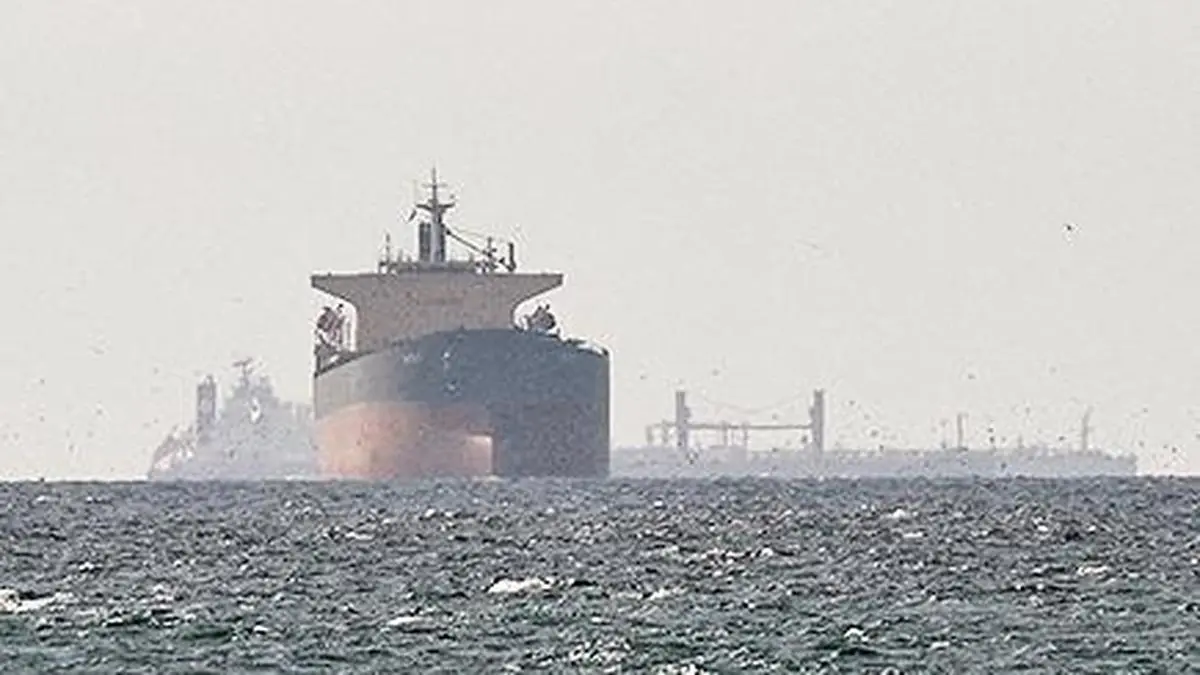
The steel floor of a bridge on a VLCC—a Very Large Crude Carrier—does not just carry weight; it vibrates with a low, bone-deep hum that settles in your marrow. It is the sound of two million barrels of oil, a black ocean within an ocean, pushing through the water. When you are standing on that bridge in the Strait of Hormuz, the world feels small. You are in a choke point. To your left and right, the jagged coastlines of Iran and Oman squeeze the pulse of the global economy into a narrow artery.
Captains in these waters do not look for land. They look for signals. They look for the invisible threads of diplomacy that keep the path open.
On a Tuesday that felt like any other, those threads snapped.
Two massive tankers, the Front Empress and the Aulac Fortune, were carving their way toward the heart of the Persian Gulf. They were destined for loading terminals that feed the world's hunger for energy. Then, the radios crackled. The orders shifted. In a move that sent literal and metaphorical ripples across the water, both ships performed a slow, agonizingly heavy U-turn. They turned their backs on the Gulf and headed for the open sea of the Gulf of Oman.
They weren't out of fuel. They weren't in mechanical distress. They were retreating from a ghost.
The Weight of a Broken Word
To understand why a ship the size of an Empire State Building would suddenly spin around, you have to look past the charts and into the sterile rooms of high-stakes diplomacy. For months, the air had been thick with the possibility of a deal. Washington and Tehran were leaning across a table that has been cold for years. There was talk of de-escalation. There was a faint, flickering hope that the shadow of sanctions might lift, or at least soften, allowing the oil to flow without the constant threat of seizure or sabotage.
But the talks didn't just stall. They shattered.
When the news of the breakdown hit the desks of maritime insurers and commodity traders, it didn't arrive as a headline. It arrived as a risk assessment. In the shipping world, risk is not an abstract concept; it is a dollar amount that grows by the second. If the "de-escalation" was a lie, then every mile further into the Strait was a mile deeper into a trap.
The decision to turn around is a brutal one. It costs hundreds of thousands of dollars in fuel, port fees, and lost time. It disrupts the delicate "just-in-time" dance of global refineries. Yet, the cost of staying was higher. The captains saw the horizon and realized the rules of the game had changed back to the old, dangerous ones.
A Highway Made of Glass
Imagine a four-lane highway where every car is carrying a thousand tons of TNT. Now imagine that the two neighbors owning the land on either side of the road have stopped talking and started reaching for their holsters. That is the Strait of Hormuz on a bad day.
It is only 21 miles wide at its narrowest point. Through this gap passes roughly a fifth of the world's oil consumption. When you see the price of gas tick up at a station in Ohio or a factory in Guangdong slows its production, you are seeing the aftershocks of a ship's rudder turning in Hormuz.
The U-turn of those two tankers was a signal to the markets that the "quiet period" was over. The tankers were "ballast" ships—empty vessels heading in to pick up cargo. By refusing to enter the Gulf, the operators were effectively saying they did not trust the water to remain stable long enough to load and leave.
It was a vote of no confidence written in wake and foam.
The Invisible Sailors
We often talk about these events in terms of "geopolitics" or "market volatility," but there is a human being holding the binoculars on those bridges. There is a crew of twenty or thirty people—mostly from the Philippines, India, or Eastern Europe—who have been at sea for months. For them, a U-turn isn't a market indicator. It is a moment of profound, cold clarity.
They know the history of this stretch of water. They remember the limpet mines. They remember the drones. They know that when the diplomats stop talking, the sailors start watching the radar with a different kind of intensity. To turn around is to choose the safety of the wide, blue nothingness over the suffocating tension of the Strait.
One can almost hear the silence on the bridge as the helm is ordered over. The massive engines strain. The wake becomes a white, churning crescent. There is a sense of relief, perhaps, but it is shadowed by the knowledge that the world they are returning to is now slightly more fractured than it was that morning.
The Ripple Effect in the Boardroom
While the ships were turning, the phones in London, Singapore, and Houston were screaming. A U-turn in Hormuz is a fire alarm for the energy sector.
Refinery managers have to scramble to find replacement "crude" so their towers don't go cold. Hedge fund managers look at the "risk premium"—that extra bit of money we all pay for oil because the world is a violent place—and they start buying. The breakdown of the US-Iran talks meant that the "diplomatic discount" was gone.
Everything became more expensive the moment those ships pointed their bows toward the horizon.
It highlights a terrifying reality of our modern life: our entire standard of living is built on the assumption that ships will keep moving. We live in a world of flow. We rely on the constant, rhythmic movement of commodities across borders. When that flow hit a wall of political ego and failed negotiations, the vessels did the only thing they could. They fled.
The Ghost of a Deal
What were the talks even about? On paper, it was about enrichment levels, centrifuge counts, and frozen assets. But in reality, it was about the ability to predict the future.
Business thrives on the boring. It loves predictability. The "de-escalation" talks were an attempt to make the Middle East boring again. For a few weeks, it seemed possible. The rhetoric cooled. The patrols seemed less aggressive. Traders began to bet on a summer of stability.
The U-turns are the physical manifestation of that dream dying.
You cannot run a multi-billion-dollar shipping empire on "maybe." You cannot risk a vessel that costs $100 million and a cargo worth double that on a "perhaps." The breakdown in communication between the two powers meant that the gray zone had returned. In the gray zone, mistakes happen. In the gray zone, a stray drone or a misunderstood radio transmission can spark a conflagration that no one actually wants but no one can stop.
The Sound of the Rudder
There is a specific sound a ship makes when it fights its own momentum. The steel groans. The water thrashes against the hull as the giant attempts to pivot. It is a slow process. It takes miles of sea room to turn a supertanker around.
The world is much the same. We are currently in the middle of a massive, grinding pivot. For years, the move was toward globalization, toward open lanes and shared interests. Now, the groaning you hear is the sound of the world turning back toward silos, toward suspicion, and toward the use of energy as a blunt-force weapon.
The Front Empress and the Aulac Fortune didn't just change their destination. They reflected a world that is losing its ability to talk. They are the outliers, the first ones to blink in a staring contest that involves the entire planet.
As they moved back into the safety of the Indian Ocean, they left behind a Strait that felt emptier and more ominous. The sun sets over the Persian Gulf, casting long, golden shadows across waters that should be teeming with the lifeblood of industry. Instead, there is a mounting tension, a waiting game played with million-ton pieces on a board made of salt and oil.
The ships are gone, but the silence they left behind is deafening.