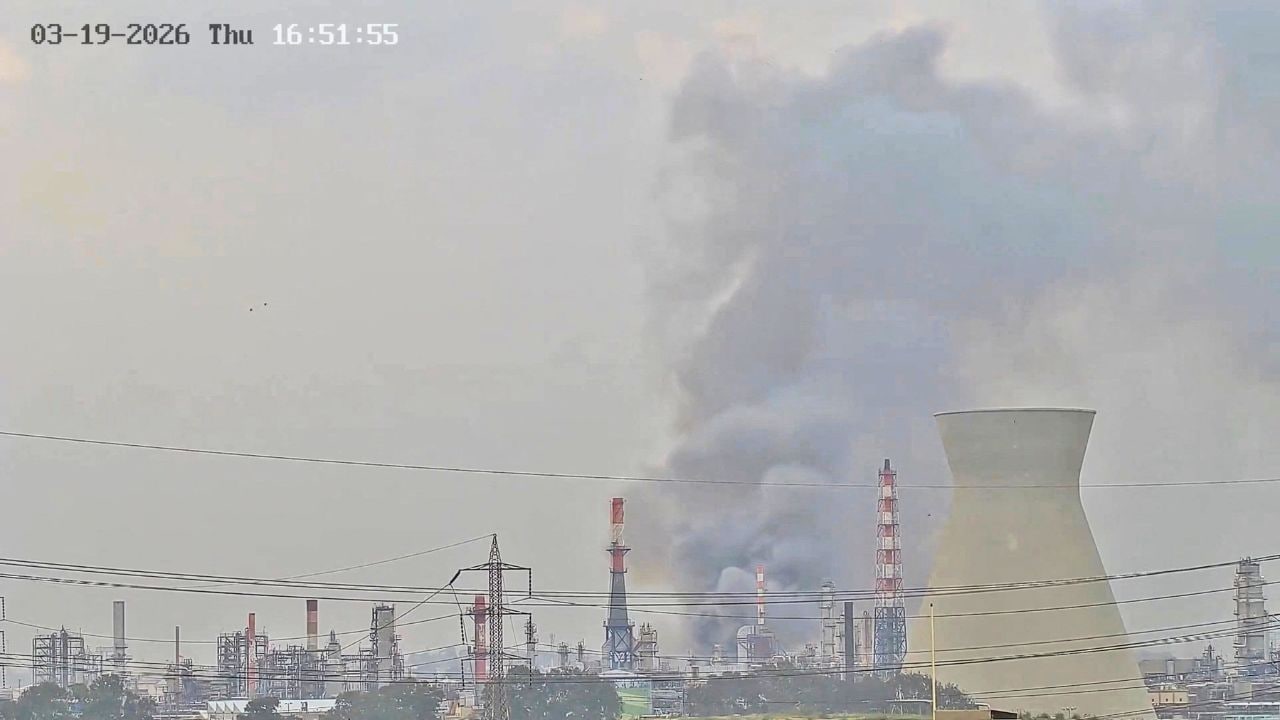
The black smoke billowing over Kuwait’s coastline isn't just a local emergency. When Iranian drones slammed into the Mina Al-Ahmadi refinery early Friday morning, they didn't just ignite a few processing units; they set fire to the remaining illusions of energy security in the Gulf. This marks the second time in forty-eight hours that this specific facility—a massive hub capable of churning through 730,000 barrels of oil a day—has been targeted.
If you’re watching your local gas prices tick up by another few cents this morning, this is why. We’re three weeks into a conflict that has jumped the fence from a direct US-Israel-Iran slugfest into a systematic dismantling of the world's most critical energy infrastructure. Honestly, it’s a mess. Authorities in Kuwait City are scrambling to contain the blazes, and while they claim no one’s been killed yet, the economic shrapnel is hitting everyone.
The Targeted Destruction of Mina Al-Ahmadi
This wasn't a random lucky shot. The Mina Al-Ahmadi complex is the oldest and largest refinery in Kuwait. It’s the heart of their downstream operations. Reports from the Kuwait Petroleum Corporation (KPC) confirm that multiple drones successfully evaded air defenses to strike "several operational units."
Think about the precision required there. They aren't just aiming for the sand; they're aiming for the specific plumbing that turns crude into the diesel and jet fuel the world is currently desperate for. To make matters worse, the nearby Mina Abdullah refinery was also hit on Thursday. By knocking both out or forcing "precautionary shutdowns," Iran has effectively neutralized over 1.2 million barrels per day of refining capacity in one of the most stable corners of the Middle East.
- Refining Capacity: ~730,000 bpd (Mina Al-Ahmadi) + ~490,000 bpd (Mina Abdullah).
- The Damage: Significant fires in atmospheric residue desulfurization units.
- The Response: Emergency crews are on-site, but "precautionary shutdowns" mean production has flatlined.
Why Kuwait is Suddenly in the Crosshairs
You might wonder why Iran is hitting Kuwait when their primary beef is with Israel and the US. It’s a textbook "asymmetric" strategy. On Wednesday, Israel took a massive swing at Iran’s South Pars gas field—the largest in the world. Tehran’s response has been to tell the neighborhood: "If we can’t export energy, nobody can."
By striking Kuwait, Qatar’s Ras Laffan, and Saudi Arabia’s SAMREF refinery in Yanbu, Iran is proving that no amount of Western "protection" can truly shield these fixed targets. It’s a terrifyingly effective way to force the international community to scream for a ceasefire. They’re holding the global economy hostage, and right now, the ransom is paid at the pump. Brent crude is already hovering around $114, and some analysts are whispering about $150 if the Strait of Hormuz remains a graveyard for tankers.
The Human Side of the Smoke
Imagine being a worker at Mina Al-Ahmadi right now. It’s Eid al-Fitr. You’re supposed to be celebrating the end of Ramadan with your family. Instead, you’re hearing the buzz of low-flying drones and watching your workplace turn into a fireball. The psychological impact on the Gulf’s expatriate workforce—the people who actually keep these plants running—cannot be overstated. If they start leaving because it’s too dangerous to work, the "damage" to these facilities becomes permanent regardless of whether the fires are out.
What Happens When the Pumps Run Dry
We need to stop pretending this is just a "regional conflict." The hit on Mina Al-Ahmadi is a direct blow to the global supply of refined products. Crude oil is useless if you can't cook it.
- Diesel and Jet Fuel Scarcity: These refineries are specialized. Taking them offline creates a massive hole in the supply of middle distillates. In Australia, diesel is already being rationed at over 100 stations.
- LPG Shortages: Kuwait is a major exporter of liquefied petroleum gas. In places like India, the government has already increased the waiting time for cooking gas cylinder bookings because the supply chain is snapped.
- The Insurance Nightmare: Good luck getting a tanker insured to dock anywhere in the northern Gulf right now. The "war risk" premiums are basically becoming the cost of the cargo itself.
Reality Check for the Energy Transition
Some people are using this as a "told you so" for renewable energy. Sure, a solar farm is harder to "shut down" with a single drone than a refinery is, but we aren't there yet. The world runs on the stuff coming out of Mina Al-Ahmadi. When those units go dark, food prices rise because trucking gets expensive. Heating gets expensive. Everything gets expensive.
The immediate reality is that the "safety" of the global energy market was built on the assumption that these massive Gulf plants were off-limits. That rule book was just tossed into the fire.
If you’re looking for a silver lining, there isn't one today. The next logical step is to monitor the repair timelines. If KPC can bring the non-damaged units back online within 72 hours, the market might settle. If these fires burn through the weekend and damage the core distillation columns, we’re looking at months of supply disruption that no amount of strategic reserve releases can fix.
Keep a close eye on the shipping data out of the Shuaiba port. If the tankers stop queuing, the crisis has moved into its next, much darker phase. Check your local fuel prices and maybe postpone that long road trip. The volatility isn't going away anytime soon.