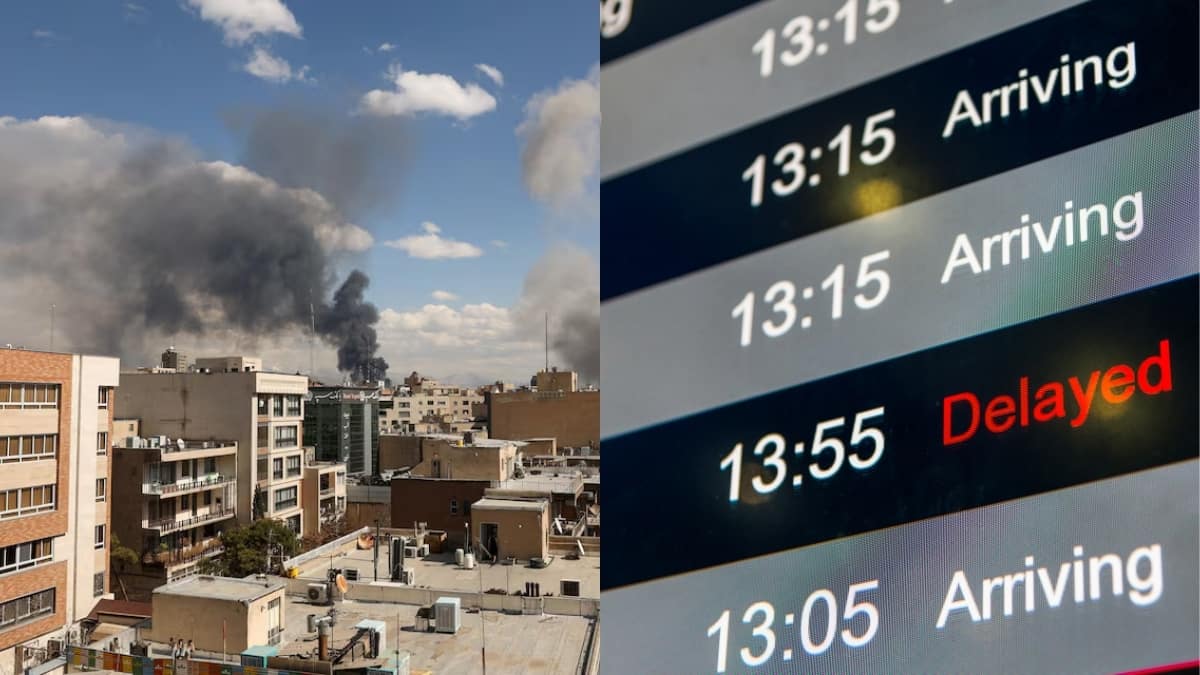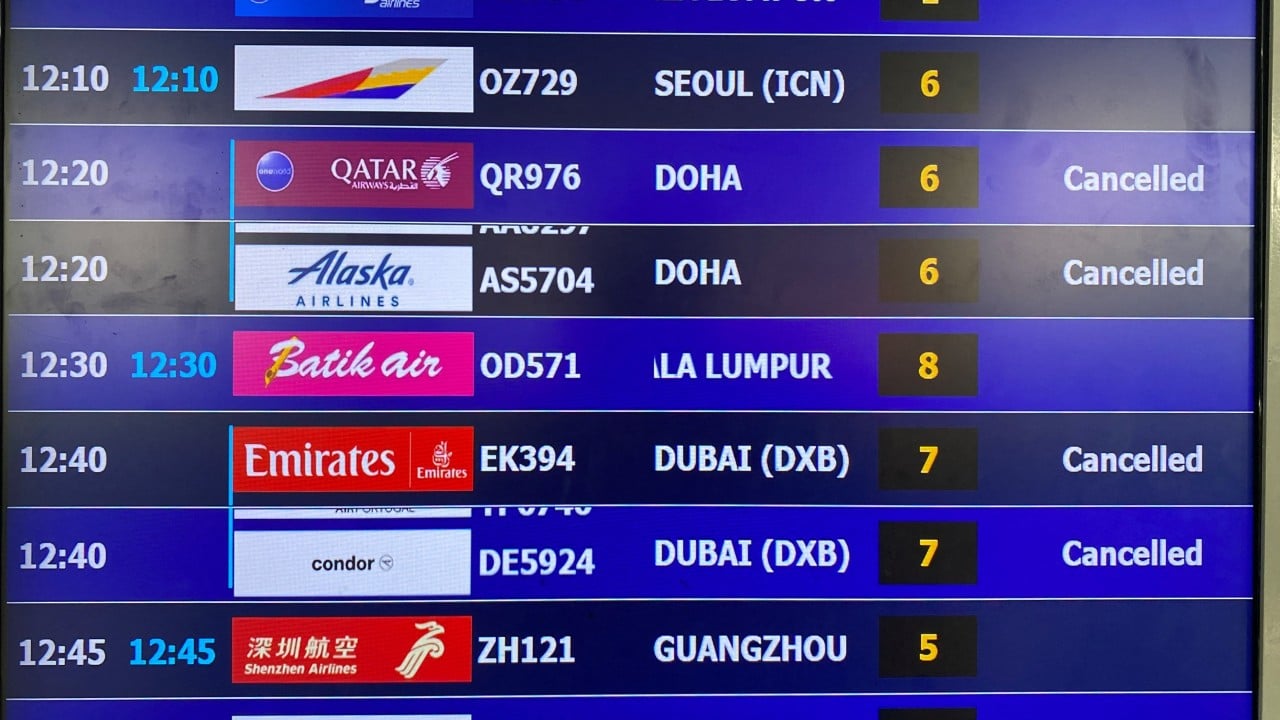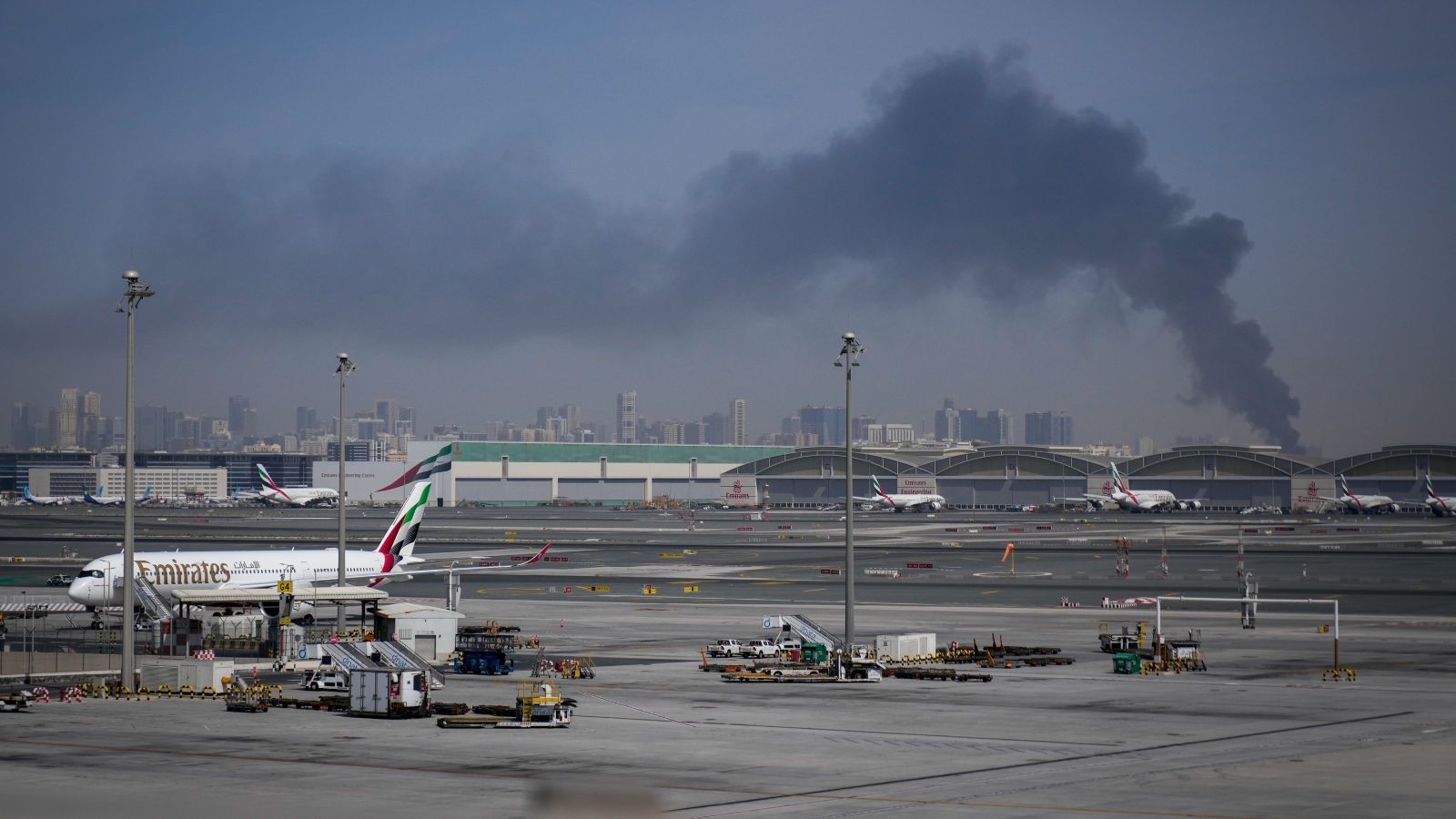
The suspension of civil aviation in the Middle East is not merely a logistical delay but a systemic failure of high-altitude transit corridors. When sovereign states like Jordan, Lebanon, and Iraq preemptively shutter their Flight Information Regions (FIRs), they trigger a deterministic chain reaction that affects global fuel burn, crew duty limits, and hub-and-spoke connectivity. On March 3, 2026, the aviation industry faces a third consecutive day of compounding delays, revealing the fragility of the "Great Circle" routes that link Europe to Southeast Asia. Understanding this disruption requires moving beyond "flight cancellations" and examining the three distinct layers of impact: tactical rerouting physics, the economic exhaustion of carriers, and the breakdown of passenger throughput.
The Triad of Airspace Closure
Airspace closures are rarely isolated. They operate through a tripartite mechanism that renders certain routes physically or economically impossible to fly. In other news, read about: The Long Walk Home Why Coastal Trekkers Are Risking Everything for a Dying Shoreline.
- The Kinetic Barrier: Direct closure due to active missile trajectories or drone swarms. This is the immediate cause seen in Tehran and Tel Aviv.
- The Insurance Wall: Even if a corridor is technically open, Lloyd’s of London and other underwriters may withdraw war-risk coverage. An aircraft flying without valid hull or liability insurance is grounded by its own corporate legal mandate.
- The Capacity Bottleneck: When three countries close their skies, 80% of regional traffic is funneled into a single remaining corridor (often over Saudi Arabia or Egypt). This creates tactical congestion where Air Traffic Control (ATC) must implement massive separation intervals, causing holding patterns that deplete fuel reserves.
The Physics of Forced Rerouting
Modern long-haul aviation relies on the efficiency of $Great Circle Routes$. These are the shortest distances between two points on a sphere. When the Iran-Iraq-Jordan corridor vanishes, aircraft must fly "The Long Hook." For a flight from London to Singapore, this adds approximately 900 to 1,200 nautical miles.
The mathematical consequence of this detour is expressed in the Increased Fuel Burn Coefficient. A Boeing 787-9, which typically burns roughly 5,400 kg of fuel per hour, may find its flight time extended by 2.5 hours. This necessitates an extra 13,500 kg of fuel. Because fuel has mass, the aircraft must burn fuel simply to carry the extra fuel (the "tankering" penalty), reducing the maximum allowable payload for cargo and passengers. The Points Guy has also covered this fascinating topic in extensive detail.
Operational Exhaustion and the Crew Duty Wall
Airlines are currently hitting a "Duty Wall." Aviation authorities, such as the FAA or EASA, mandate strict Flight Duty Periods (FDP). A crew might be legal for a 14-hour flight, but if a reroute pushes that flight to 16.5 hours, the aircraft cannot legally depart.
- The Displacement Effect: Aircraft are currently "out of position." A plane scheduled to fly from Amman to New York on March 3 is likely stuck in London or Istanbul.
- The Hub Decay: Large hubs like Dubai (DXB) and Doha (DOH) operate on "waves." If the morning wave of arrivals is delayed by four hours due to rerouting, the afternoon departure wave collapses because the incoming aircraft—and their crews—have not arrived.
This creates a Logistical Debt. For every hour of total airspace closure, it typically takes four hours of open-skies operation to clear the resulting backlog. By March 3, the regional logistical debt has likely exceeded 200 hours, meaning even if peace were declared tomorrow, the schedule would not normalize for nearly 10 days.
The Economic Cost Function of Conflict
The financial impact on carriers is not linear; it is geometric. We can categorize these costs into hard and soft variables.
Primary Variables (Direct)
- Fuel Overages: Spot prices for Jet A-1 fuel often spike during Middle Eastern instability, compounding the cost of the longer routes.
- Overflight Fees: Countries charge airlines for the right to fly through their FIR. With Iraq and Jordan closed, Saudi Arabia and Egypt may see a windfall, while the grounded airlines lose the revenue intended to cover these fees.
- Passenger Indemnity: Under regulations like EU261, airlines may be liable for hotel and meal costs for stranded passengers. While "extraordinary circumstances" (war) often waive cash compensation, the "duty of care" costs remain a massive drain on liquidity.
Secondary Variables (Indirect)
- Cargo Yield Erosion: High-value electronics and perishables that rely on belly-hold capacity are currently rotting or missing market windows.
- Yield Management Failure: Airlines use algorithms to price seats based on historical demand. A war-induced shock renders these models useless, forcing manual pricing overrides that often fail to capture the true cost of the flight.
The Strategic Fragility of the "Middle East Bridge"
The world’s dependence on the Middle East as a transit hub is a structural vulnerability. The region serves as the "Global Pivot." When this pivot locks, the world is effectively split into two disconnected hemispheres for narrow-body aircraft, which lack the range to fly around the entire continent of Africa.
The Rise of the Africa Bypass
We are seeing a resurgence of the "Cape of Good Hope" aerial equivalent. Ultra-long-haul flights are bypassing the Middle East entirely, opting for routes over Central Africa or the Mediterranean-Atlantic corridor. This shift favors airlines with massive fleets of A350-1000s or 777-200LRs, which have the range to endure the extra 3,000 miles without a technical stop.
The Death of the 24-Hour Turnaround
The 24-hour aircraft utilization cycle—where a plane flies out and back in one day—is currently impossible for regional carriers. This reduces the "Available Seat Kilometers" (ASK) across the entire industry, effectively shrinking the global supply of air travel and driving up ticket prices across unaffected routes as demand shifts to the North Pole or Pacific corridors.
Assessing the March 3 Trajectory
As we move through March 3, the focus shifts from "if" flights will happen to "how" they will be staged. Expect the following tactical shifts:
- Technical Stops: Flights that previously flew non-stop will begin scheduled fueling stops in Athens, Cairo, or Baku to account for the extra mileage and the inability to carry enough fuel for the entire detour.
- Prioritization of Hub Flow: Carriers will likely cancel "point-to-point" regional routes (e.g., Dubai to Muscat) to save crew hours for "intercontinental" flagship routes (e.g., Dubai to New York).
- The Ghost Hub Phenomenon: Massive airports like Queen Alia International (AMM) will operate as parking lots. The secondary economic impact on airport retail, ground handling, and catering services will create a regional recession in the aviation services sector.
The situation remains fluid because of the Escalation Ladder. If the conflict remains limited to missile exchanges, airlines can plan for "The Long Hook." If the conflict expands to include electronic warfare—specifically GPS spoofing in the Eastern Mediterranean—civilian aircraft will lose the ability to navigate safely even in open corridors, potentially forcing a total cessation of West-East air travel.
Strategic Recommendation for Operational Response
Airlines and logistics providers must immediately shift from a "Wait-and-See" posture to a Discontinuous Contingency Framework.
- Action 1: Implement a 72-hour rolling cancellation policy for all routes transiting the impacted FIRs. Attempting to run a "near-normal" schedule results in higher costs than a total suspension because of the "deadhead" crew costs and fuel wasted on planes that eventually turn back.
- Action 2: Divert all available wide-body assets to the North Pole and Pacific tracks to maximize the throughput of high-yield cargo, offsetting the loss of the Middle Eastern bridge.
- Action 3: Renegotiate wet-lease agreements (ACMI) immediately. Carriers with grounded fleets should look to lease their aircraft to operators in the Americas or Asia-Pacific to maintain cash flow while their primary routes are kinetically blocked.
The assumption that "skies will open tomorrow" is a cognitive bias. Strategy must be built on the reality of a semi-permanent "Locked Sky" scenario.