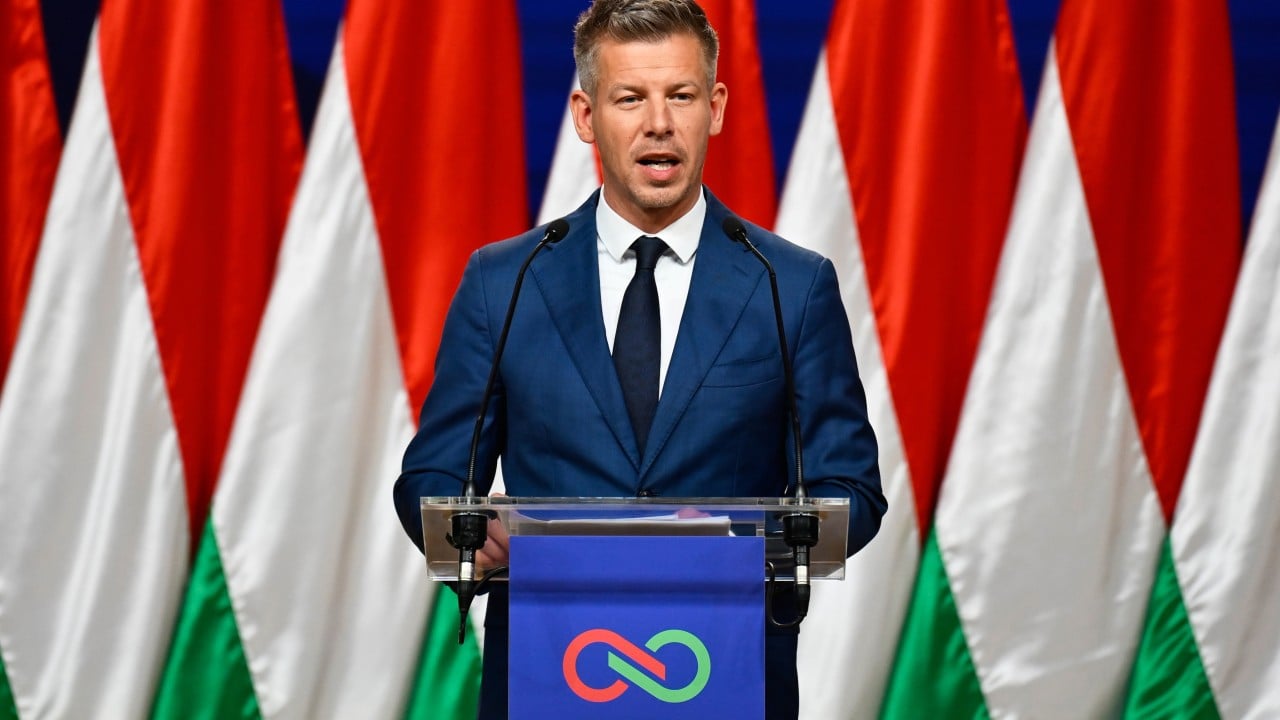
The international press is currently tripping over itself to paint Péter Magyar as the moderate, Western-leaning savior who will "normalize" Hungary’s relationship with Beijing. They see his "warm overtures" and promises of "fair play" as a sophisticated balancing act. They are wrong.
Magyar isn’t fixing the cracks in Hungary’s foreign policy; he’s wallpapering over a structural collapse. The narrative that a change in leadership will create a more stable, predictable environment for Chinese capital—while somehow satisfying Brussels—is a fantasy. In reality, Magyar is walking into a debt-trap-diplomacy minefield with a blindfold on, and the "fair play" he promises is a mathematical impossibility in a state-led economic collision.
The Myth of the "Clean Slate"
Mainstream analysts love a redemption arc. They suggest that because Magyar isn't Viktor Orbán, he can magically strip away the cronyism while keeping the massive infrastructure projects. This ignores the physical reality of how these deals are structured.
Most of the Chinese investment in Hungary, specifically the Budapest-Belgrade railway and the massive EV battery plants like CATL in Debrecen, are not "market" deals. They are geopolitical anchors. These projects are built on opaque bilateral loans and sovereign guarantees that do not care who sits in the Prime Minister’s office.
I have watched emerging markets try to "renegotiate" with Beijing for a decade. It doesn't happen through polite overtures. When you sign a contract that includes "no-recourse" clauses or specifies arbitration in Chinese-led forums, you aren't a partner. You’re a tenant. Magyar’s promise of "fair play" suggests he can impose European transparency standards on projects that were specifically designed to bypass them. You cannot bring a whistle to a knife fight and call it "refereeing."
Why "Fair Play" is a Death Sentence for Domestic Firms
Magyar’s rhetoric focuses on a level playing field. On the surface, that sounds pro-business. In practice, it is a suicide pact for Hungarian SMEs (Small and Medium Enterprises).
Chinese state-owned enterprises (SOEs) do not compete on margin. They compete on market share and strategic positioning, backed by the infinite runway of the China Development Bank. If Magyar actually enforces "fair play" by removing the specific subsidies and backroom protections that currently keep the Hungarian economy afloat, he won't be inviting healthy competition. He will be inviting an extinction event for local industry.
If you treat a $50 billion state-backed behemoth the same way you treat a local manufacturing firm, the local firm disappears. Orbán’s "Eastern Opening" was corrupt, yes, but it was also a shield for his inner circle’s interests. Removing that shield without a massive, decade-long transition plan—which Magyar hasn't even hinted at—simply hands the keys to the kingdom to the highest bidder in the East.
The False Dichotomy of East vs. West
The "People Also Ask" crowd wants to know: Will Hungary stay in the EU while being China's gateway?
The question is flawed. The real question is: How long until the EU uses Hungary’s Chinese debt as a reason to cut off cohesion funds permanently?
Magyar thinks he can play both sides. He wants the prestige of the EU and the cash of the CCP. But the "Magyar Overture" ignores the fact that Brussels is currently de-risking. The European Commission is actively investigating Chinese EV subsidies. By vowing to keep Hungary "open" and "fair" to these same firms, Magyar is effectively putting Hungary in the crosshairs of EU trade defense instruments.
You cannot be the "fair" gateway for a country that the rest of your trade bloc views as a systemic rival. It is a fundamental hardware incompatibility. Magyar is trying to run Linux apps on a Windows OS and wondering why the system is crashing.
The Battery Plant Blunder
Let’s talk about the specific obsession with battery manufacturing. The competitor piece frames this as a "strategic asset." It’s actually a liability.
The global battery market is heading toward a massive oversupply. By the time these Hungarian plants are fully operational, the margins will have compressed to near zero. Hungary is sacrificing its water tables, its land, and its energy grid to host low-margin, high-pollution assembly lines for a technology—Lithium-ion—that might be superseded by solid-state or sodium-ion within the next seven years.
Magyar’s "overture" to keep these firms happy is a commitment to a dying industrial model. Real "fair play" would involve demanding environmental standards that these firms cannot or will not meet, which would lead them to pull out. If they stay, it’s because the "fair play" is just a marketing slogan for "business as usual with a different face."
The Illusion of Stability
Investors crave stability, and they see Magyar as a return to the rule of law. But in a transition from an autocracy to a "normalized" democracy, stability is the first casualty.
Renegotiating contracts, auditing the "Eastern Opening" files, and shifting the judicial framework creates a decade of litigation, not a decade of growth. If Magyar is serious about "fair play," he has to freeze every major Chinese project on day one to investigate the procurement process. If he does that, the capital stops flowing. If he doesn't, he’s just Orbán-lite in a better-tailored suit.
Stop Asking if He’s Pro-China or Pro-West
Ask if he’s Pro-Reality.
The reality is that Hungary is a small, landlocked nation with no natural resources and a shrinking workforce. It has bet its entire future on being a toll booth between two warring economic superpowers. Magyar’s "warm overtures" are the desperate gasps of a politician realizing that the toll booth is about to be bypassed by a new Silk Road that doesn't need a middleman who asks too many questions about "fair play."
The smart money isn't betting on a "Magyar Miracle." The smart money is watching for the moment he realizes that "fair play" and "Chinese investment" are mutually exclusive terms in the current geopolitical climate.
If you want fair play, go to Scandinavia. If you want Chinese billions, you accept the strings. Trying to have both isn't leadership; it's a hallucination.
Magyar isn't opening a door; he's painting one on a brick wall and inviting everyone to walk through it.
Don't be the first one to hit the bricks.