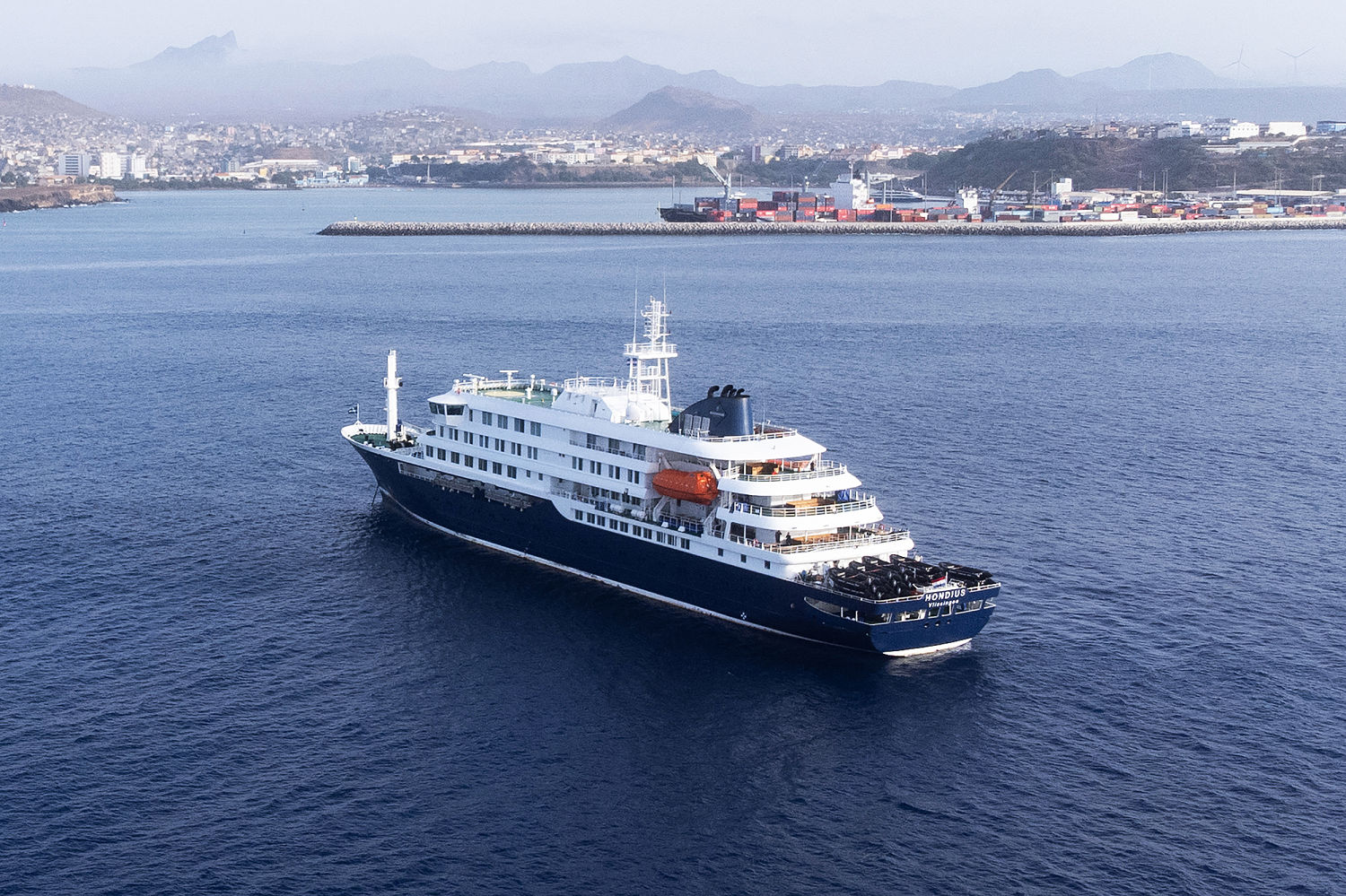
The North Sea does not welcome you home; it merely permits your arrival. On Monday morning, a specific shade of steel-gray hull will slice through the dense Dutch fog, cutting toward the port of Vlissingen. To a casual observer standing on the pier, shivering against the damp coastal wind, the vessel known as the MV Hondius looks like any other modern passenger ship. It is clean, functional, and massive.
But ships, like the people who build them, carry secrets in their bones.
The Hondius is not a floating resort designed for Caribbean sunbathers. It is a Polar Class 6 expedition vessel, a hardened shell of steel engineered to crush through first-year pack ice. For months, it has been navigating the brutal, mesmerizing fringes of the Earth, tracing the jagged coastlines of the Arctic and Antarctica. Now, its long journey ends in the Netherlands.
A scheduled arrival is a sterile thing on paper. It appears on a digital ledger in a port authority office: Vessel: Hondius. ETA: Monday. Status: On Schedule. Yet, beneath that dry data point lies a complex web of human transition.
To understand what happens when a polar ship returns to civilization, you have to understand the silence of the ice.
The Weight of the Horizon
Imagine weeks of living in a world defined by only three things: white ice, black water, and a sky that refuses to settle on a single color. Out there, the noise of modern life evaporates. There are no pings from smartphones, no traffic hums, no endless streams of breaking news. The crew and passengers of the Hondius have spent weeks in a state of hyper-focused isolation, sharing tight quarters while watching blue-veined glaciers calve into freezing seas.
When you live on an expedition ship, your internal clock warps. You become hyper-aware of the wind shifting by a few knots or the subtle change in the vibration of the engine as the captain maneuvers through a field of growlers—those deceptive, couch-sized chunks of ice that can tear the belly out of a lesser boat.
Then, the voyage turns northward.
The transition is slow, then jarringly fast. The open ocean gives way to the crowded shipping lanes of the English Channel and the southern North Sea. Suddenly, the radar screen, which used to show nothing but solitary icebergs, blurs with the digital blips of hundreds of cargo ships, tankers, and fishing trawlers.
The air changes too. It loses that sharp, pristine, frozen quality that burns the back of your throat. It starts to smell of diesel, land, and industry.
For the crew on the bridge, the tension spikes. Navigating the polar wilderness requires immense skill, but navigating the maritime highways of Europe requires a frantic, relentless vigilance. They are transitioning from a world of natural hazards to a world of human traffic.
The Invisible Engine Below the Deck
We tend to look at cruise ships as monolithic objects, but they are actually fragile ecosystems held together by sheer willpower. While the passengers spend their final nights packing thick parkas into suitcases and scrolling through the thousands of photos they captured of wandering albatrosses, a different kind of reality sets in below the waterline.
Consider the engineers.
The Hondius relies on two main engines that generate thousands of kilowatts of power, pushing a vessel that weighs over five thousand tons. In the polar regions, those engines are the difference between safety and catastrophe. If power fails in a remote storm off the coast of South Georgia, help is days, if not weeks, away. The engineering crew lives with that quiet, low-frequency anxiety every single day.
As the ship approaches the Netherlands, their focus shifts from survival to maintenance. A polar vessel undergoes immense stress. Ice impacts rattle the hull. Freezing temperatures test every seal, pipe, and valve. Coming into port on Monday isn't just a chance to stretch their legs; it is a critical window to inspect the mechanical heart of the ship before the next grueling season begins.
The port of Vlissingen, located on the Western Scheldt, is uniquely suited for this homecoming. It is a working man’s port, steeped in maritime history, far removed from the manicured cruise terminals of the Mediterranean. Here, the Hondius can shed its romantic aura and become what it truly is: a highly sophisticated machine requiring precise technical care.
The Psychology of the Pier
There is a distinct psychological phenomenon that occurs at the end of any long sea voyage. Mariners call it channel fever. It is a restless, infectious energy that sweeps through the corridors as land grows closer.
For the international crew of the Hondius, Monday represents a crossroads. For some, it means the end of a four-month contract. It means a flight home to the Philippines, Eastern Europe, or South America, to see children who have grown inches taller since they last held them. For others, it is merely a brief respite—a forty-eight-hour rush to clean cabins, restock thousands of pounds of fresh produce, and fuel the ship before a new batch of travelers climbs the gangway.
The contrast between the two groups standing on the pier on Monday will be stark.
On one side are the families waiting for loved ones, staring at the horizon, waiting for the first glimpse of the superstructure. On the other side are the logistics managers, clipboards in hand, checking manifests, coordinating with customs officials, and ensuring the freshwater tanks are filled.
The competitor reports might tell you the ship is arriving. They won't tell you about the chef who has spent the last seventy-two hours calculating exactly how many heads of lettuce and cartons of eggs are needed to feed hundreds of people for the next month, or the captain who hasn't slept more than three consecutive hours since the ship entered European waters.
The Lessons of the Cold
Why do we care about the movement of a single expedition ship?
Because vessels like the Hondius are the thin, steel line between our comfortable, paved reality and the raw truth of the planet. The people stepping off that ship on Monday are not the same people who stepped onto it weeks ago. You cannot look into the eye of a humpback whale or watch a shelf of ice older than human civilization collapse into the ocean without a certain part of your ego fracturing.
They return to the Netherlands carrying a heavy burden of perspective. They return to a world of traffic jams, political debates, and grocery store lines, possessing a quiet knowledge of what the edge of the earth looks like when no one is watching.
The ship will dock. The heavy lines will be thrown across the water, caught by waiting hands on the damp concrete of the pier. The winches will groan, pulling the steel hull tight against the rubber fenders. The gangway will drop with a sharp, metallic clang.
The fog will eventually lift over Vlissingen, revealing the Hondius sitting quiet and still in her berth, her hull scarred with the faint, honorable scratches of polar ice, waiting for the land to finish its business so she can return to the cold.


