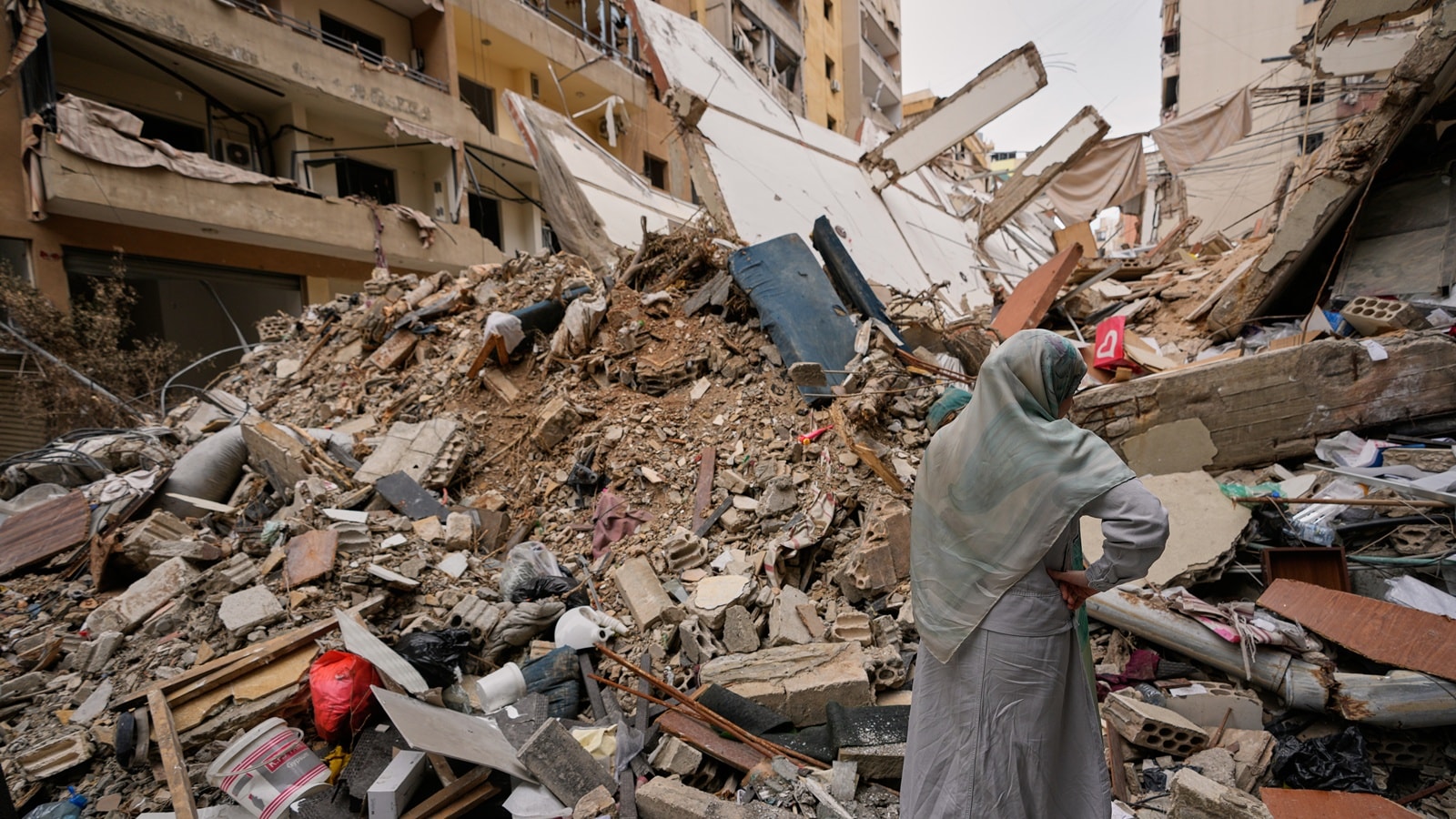
Panic is the primary export of the United States State Department. When the headlines scream that the U.S. has ordered citizens to flee Lebanon, they aren't offering a strategic assessment of geopolitical risk. They are performing a bureaucratic CYA maneuver designed to insulate Washington from the political fallout of a potential hostage crisis or a messy evacuation.
The media eats it up. They report on "blocked airport roads" and "fragile ceasefires" with the same breathless incompetence they’ve applied to every Levantine conflict since 1982. But here is the reality from inside the room: By the time the U.S. Embassy sends that frantic mass email, the people who actually understand the regional risk-reward ratio have already made their moves.
The "lazy consensus" suggests that a Level 4 "Do Not Travel" advisory is an objective measure of danger. It isn't. It's a lagging indicator. If you are waiting for a government notification to tell you when to leave a high-friction zone, you’ve already failed the basic test of situational awareness.
The Ceasefire Fallacy
The mainstream narrative treats a ceasefire like a light switch. It's either on or it's off. This binary thinking is why Western analysts are constantly blindsided when "peace" evaporates in six hours.
In the Levant, a ceasefire is not the end of hostilities. It is a tactical pause used by non-state actors to re-arm, re-position, and re-evaluate their leverage. When the news reports that a ceasefire has "ended," they imply a sudden, shocking breakdown. Anyone who has spent forty-eight hours in Beirut knows that low-level kinetic exchanges never actually stopped.
The "fragility" isn't a bug; it's the feature. The conflict is a market. It fluctuates based on the cost of munitions, the internal political pressure on Hezbollah, and the appetite for escalation in Tel Aviv. If you’re reading about it on a major news site, you’re looking at data that is twelve hours old. In a conflict zone, twelve hours is an eternity.
Roads Don't Just Get Blocked
The reports of "blocked airport roads" are framed as a sign of total societal collapse. This is a fundamental misunderstanding of Lebanese civil protest and militia tactics.
Burning tires on the Airport Road is a ritual. It is a form of political communication. It is a dial, not a wall. The road is "blocked" when a specific group wants to signal its displeasure with a specific cabinet decision or a lack of fuel subsidies.
- The Amateur's Mistake: Seeing a fire on the road and assuming the country is falling to pieces.
- The Insider's Reality: Knowing which specific neighborhood is manning the barricade, who they report to, and exactly how much cash it takes to get a "VIP" taxi through the back alleys of Dahieh to reach the terminal.
The U.S. government tells you the road is blocked because they cannot guarantee your safety. I’ve seen diplomats sit in armored SUVs for six hours waiting for "clearance" while local fixers move three tons of medical supplies through the same "impenetrable" blockade using nothing but a burner phone and a few favors.
The Incompetence of the Level 4 Advisory
The State Department’s "Do Not Travel" list is the most blunt, useless instrument in modern foreign policy. It puts Lebanon in the same category as North Korea and Yemen.
This is objectively absurd.
Beirut is a city of layers. You can have a drone strike in the southern suburbs while people are drinking $18 gin and tonics in Mar Mikhael. This isn't "cognitive dissonance" or "resilience"—it's the functional reality of a fragmented state.
By issuing a blanket evacuation order, the U.S. government effectively abandons its ability to provide nuanced guidance. It tells the dual-national Lebanese-American businessman the same thing it tells the naive backpacker. The businessman knows the advisory is nonsense. He knows his neighborhood hasn't seen a bullet in thirty years. But because of the "official" warning, his insurance is voided, his bank freezes his credit lines, and his logistics chain snaps.
The U.S. government doesn't protect citizens with these orders; it punishes the ones who actually keep the Lebanese economy tethered to the West.
The Logistics of the Fleeing Class
Let’s talk about the "citizens ordered to flee" trope. Who are these people?
Most are dual nationals. They have homes, businesses, and families in Lebanon. They aren't "fleeing" anywhere. They are moving to their mountain houses in the Chouf or Heading north to Batroun where the risk profile is lower.
The idea that thousands of people are sprinting toward a C-130 on the tarmac is a Hollywood fever dream. Real evacuation is quiet. It happens via Middle East Airlines (MEA) three days before the "order" is even drafted.
If you want to know when to leave, stop checking the State Department website. Watch the flight prices for MEA to Larnaca or Istanbul. When the prices 4x in two hours, that's your signal. When the insurance premiums for commercial hulls skyrocket, that’s your signal.
The U.S. government is the last person to the party, and they usually bring a megaphone to tell everyone the party is over when the house is already half-burned.
The Security-Industrial Complex
Why does the media keep pushing the "total collapse" narrative? Because fear sells subscriptions and secures funding for NGOs.
There is a massive industry built around "Lebanon in Crisis." Every time a ceasefire wobbles, the "security experts" come out of the woodwork to talk about the "precipice of civil war."
I have heard "Lebanon is on the brink" every year for the last two decades. The "brink" is where Lebanon lives. It is a permanent state of being. The country is a masterclass in the "informal economy"—a system that functions precisely because the formal government is a hollow shell.
When the airport road is blocked, the maritime routes open. When the central bank fails, the "hawala" system thrives. The "fragility" the media decries is actually a bizarrely stable form of chaos. The U.S. government hates this because they can't track it, they can't tax it, and they can't control it. So, they call it a "failed state" and tell everyone to run.
Stop Asking the Wrong Questions
People ask: "Is it safe to go to Lebanon?"
That is a stupid question. It’s like asking "Is it safe to go to the ocean?" It depends on whether you're on a yacht or a pool float, and whether you know how to swim.
The real questions are:
- Who controls the road between my hotel and the border?
- Do I have a liquid currency hedge that isn't dependent on a local ATM?
- Is my evacuation plan reliant on a government that hasn't successfully managed a clean exit from a conflict zone in forty years?
If you rely on the "status quo" for your safety, you are already a casualty. The people who survive and thrive in high-friction environments are those who treat government advisories as background noise and local intelligence as the only signal that matters.
The "Humanitarian" Charade
The U.S. tells its citizens to leave "while commercial options are still available." This is a veiled threat. It means: "If you stay, don't call us when the bombs start falling because we don't want to send the Marines."
It’s a waiver of responsibility disguised as a warning.
They cite the "blocked roads" to justify their own eventual inaction. It creates a paper trail of "we told you so." If you're a traveler or an expat, understand that the U.S. Embassy is not your parent. They are a massive, slow-moving insurance company that is trying to deny your claim before you even file it.
The airport road will open. The fires will go out. A new "fragile" ceasefire will be signed. The news cycle will move on to the next disaster. And the people who actually know Lebanon will still be there, sipping coffee, watching the U.S. State Department play catch-up with a reality they will never truly grasp.
The most dangerous thing in Beirut isn't a militia checkpoint or a broken ceasefire. It's the blind belief that a press release from Washington D.C. can tell you what’s happening on the street in front of you.
Get better sources. Watch the markets. Trust the fixers. Ignore the bureaucrats. If you’re waiting for the "order to flee," you’re already stuck.
The road isn't blocked. Your perspective is.