The lights in a small apartment in northern Tehran don’t just illuminate a room; they hold back the weight of a thousand years of history and the sudden, sharp edge of modern geopolitics. For a family sitting down to dinner, the hum of the refrigerator is the sound of stability. But thousands of miles away, in the marble corridors of the Pentagon, that hum is being discussed as a variable in a high-stakes calculation of war and peace.
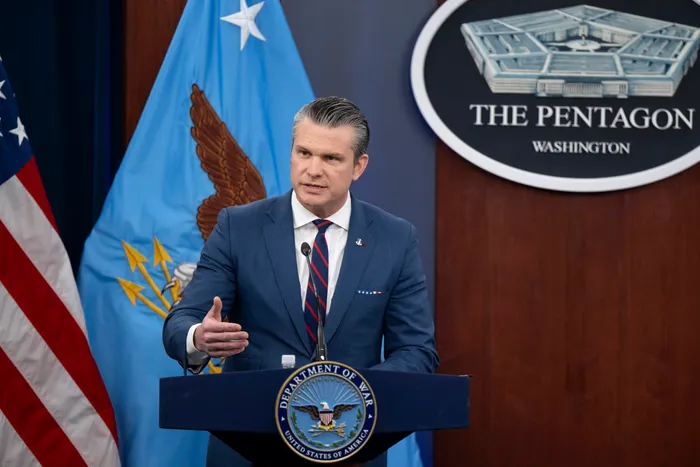
Defense Secretary Pete Hegseth recently issued a directive that stripped away the usual diplomatic gauze. He didn't offer the standard boilerplate about "all options being on the table." Instead, he pointed directly at the light switches, the water pumps, and the power grids of a nation of 88 million people. The message was surgical: choose a peace deal now, or prepare to watch the machinery of modern life grind to a halt under the weight of American ordnance.
This is the new language of the 2026 standoff. It is no longer just about hidden centrifuges or shadow proxies in the desert. It is about the very calories and kilowatts that sustain a civilian population.
The Calculus of Darkness
Imagine a technician named Reza. He is hypothetical, but his job is very real. He works at the Tavanir power station, watching a glowing monitor that tracks the load across the city. To Reza, those lines on the screen represent hospitals, elevators carrying elderly residents to their flats, and the cooling systems for life-saving medicine.
When a superpower threatens "infrastructure," they are talking about the world Reza maintains. Hegseth’s warning wasn't just a military threat; it was an economic and psychological ultimatum. By specifically naming energy and power as primary targets, the U.S. is signaling a shift toward "total pressure." The goal is to make the cost of Iranian non-compliance so visceral that the internal pressure from a darkened, cold, and thirsty population becomes unbearable for the leadership in Qom and Tehran.
The logic is brutal. It suggests that the fastest way to a peace deal isn't through the front lines, but through the fuse box.
Why the Old Playbook Failed
For decades, the West played a game of cat and mouse with sanctions. We froze bank accounts. We seized oil tankers. We banned the export of luxury cars and high-tech sensors. The idea was to squeeze the elite until they gasped. But the elite usually have their own generators. They have private wells. They have ways of moving money that the average citizen in a bazaar can only dream of.
Secretary Hegseth’s stance implies a frustration with that slow-motion strangulation. The new American leadership is looking at the board and seeing a stalemate that has lasted since 1979. They see an Iran that has managed to build a "resistance economy," surviving on black-market oil sales and regional influence despite being pariahs in the global financial system.
The threat to bomb power plants is an attempt to bypass the resistance economy entirely. You cannot "smuggle" a functioning electrical grid. You cannot "launder" a destroyed bridge or a shattered dam. By targeting the fundamental requirements of 21st-century survival, the U.S. is attempting to force a "wise" choice by removing every other alternative.
The Human Cost of a Blown Fuse
There is a tendency in newsrooms and briefing rooms to talk about "kinetic strikes" as if they are abstract physics problems. We discuss "output capacity" and "grid vulnerability" like we are playing a grand strategy game on a computer screen.
The reality is much noisier.
If the energy sector is hit, the first thing to go is the water. In modern cities, water doesn't flow by gravity; it flows because electric pumps push it through miles of aging pipe. When the power dies, the taps run dry within hours. Sanitation fails. The risk of disease skyrockets.
Consider the "invisible stakes" of a power-based ultimatum. It isn't just about the military’s ability to move tanks. It’s about the oxygen concentrator in a suburban clinic. It’s about the digital ledger of a small business owner who loses everything when the servers go dark. Hegseth is betting that the Iranian government cares more about preventing this domestic collapse than it cares about its nuclear ambitions or its regional "Axis of Resistance."
It is a gamble on the humanity of a regime that has often shown very little of it.
The Peace Deal on the Table
What does "choosing wisely" actually look like? The U.S. demand isn't just a ceasefire; it is a total recalibration of Iran’s role in the Middle East. Hegseth and the current administration are pushing for a deal that would see Iran permanently shutter its enrichment programs, cease its development of long-range ballistic missiles, and—most importantly—sever ties with groups like Hezbollah and the Houthis.
To the U.S., this is a "peace deal." To the hardliners in Tehran, it looks like an unconditional surrender.
The tension lies in that gap of perception. The U.S. views the threat to infrastructure as a preventive measure—a way to stop a larger, more chaotic war by showing exactly how much pain can be inflicted in a single afternoon. They are trying to be the "strongman" who ends the fight before it starts.
But history is a messy teacher. Often, when a population is pushed into a corner and their lights are turned off, they don't always turn on their leaders. Sometimes, they turn their eyes toward the sky and harbor a resentment that lasts for generations.
The Logistics of the Threat
The U.S. military capability to execute this threat is not in doubt. Between the carrier strike groups in the Arabian Sea and the stealth assets stationed in the region, the Pentagon could theoretically dismantle Iran’s energy independence in a matter of days. Unlike the grainy footage of the 1990s, modern munitions are precise enough to hit a specific transformer in a specific yard.
But precision in targeting does not mean precision in consequence.
The global energy market is a nervous, interconnected web. If Iran’s oil and gas infrastructure is set ablaze, the price of crude doesn't just "tick up." It leaps. The shockwaves would be felt at gas stations in Ohio, in factories in Germany, and in rice paddies in Vietnam. Hegseth’s warning carries a hidden price tag for the American consumer as well. It is a game of chicken where both drivers are heading toward a cliff, and the U.S. is claiming it has better brakes.
A Ghost in the Machinery
We must also grapple with the reality of what happens if the threat is ignored. If the "peace deal" is rejected and the bombs actually fall, the U.S. becomes responsible for the humanitarian aftermath. We have seen this movie before. We saw it in Baghdad. We saw it in Kabul. You can destroy a power plant in ten minutes, but it takes ten years to rebuild the trust of the people who sat in the dark.
The technical term for this is "collateral effect," but that feels too sterile.
The real effect is the silence. The silence of a city that has lost its heartbeat. The silence of a factory that no longer produces. The silence of a diplomatic channel that has been replaced by the roar of an afterburner.
Secretary Hegseth is betting that the mere description of that silence is enough to bring the Iranian leadership to the table. He is using words as a psychological blockade. He wants the Iranian generals to look at their maps and see not targets, but liabilities. Every refinery becomes a vulnerability. Every port becomes a noose.
The Echo of 1953 and Beyond
To understand why this rhetoric hits so hard in Tehran, we have to look past the current headlines. The Iranian psyche is deeply scarred by foreign intervention in their energy and sovereignty. They remember the coups, the revolutions, and the long, bloody war with Iraq where their cities were regularly shelled.
When an American Defense Secretary threatens their "power and energy," it doesn't just sound like a military objective. It sounds like an echo of a century of perceived humiliation.
This is the bridge the U.S. is trying to cross. Hegseth is moving away from the "hearts and minds" philosophy of the early 2000s and toward a "reality and consequences" model. It is a stark, unvarnished form of diplomacy. It says: We do not need you to like us. We do not even need you to respect us. We only need you to calculate the cost of your defiance correctly.
The Ticking Clock
There is a deadline inherent in this kind of rhetoric. You cannot threaten to destroy a nation's core infrastructure and then wait years for a response. The threat creates a "use it or lose it" mentality on both sides. Iran may feel pressured to lash out before its assets are neutralized. The U.S. may feel pressured to act if its "ultimatum" is treated as a bluff.
The air in the Middle East is currently thick with this anticipation.
In the corridors of the Pentagon, the planners are likely looking at satellite imagery of the Kharg Island oil terminal, the Abadan refinery, and the Bushehr nuclear plant. They are marking the GPS coordinates. They are calculating the wind drift of smoke.
In Tehran, the Supreme National Security Council is likely weighing the survival of the "Revolutionary" identity against the physical survival of the country’s modern comforts. They are wondering if Hegseth is a man of his word, or if this is a masterclass in coercive theater.
The tragedy of this specific moment is that both sides believe they are the ones acting in "defense." The U.S. believes it is defending global order and preventing a nuclear-armed rogue state. Iran believes it is defending its right to exist and its regional influence against an empire.
When two such massive certainties collide, the first thing to shatter is usually the lives of people who never asked for the fight.
The Fragile Hum
Back in that Tehran apartment, the lights are still on. For now.
The children are doing their homework by the glow of a LED bulb. The mother is checking her phone. The father is listening to the news, trying to read between the lines of the state media's defiant response. They are the "infrastructure" that isn't listed on a military target map. They are the human core of a conflict that has become increasingly dehumanized by rhetoric of "bombing" and "deals."
The choice Hegseth spoke of—to "choose wisely"—is being made in high-security bunkers and gilded halls. But the consequences of that choice will be felt in the kitchens, the bedrooms, and the hospitals.
The switch is in the hands of the powerful, but it is the powerless who will find out what it means to live in the shadows of a broken grid. The world waits to see if the hum continues, or if we are about to enter a long, cold night where the only thing visible is the fire.
The warning has been delivered. The coordinates are locked. The only thing left is the decision of a few men to either keep the world connected or to let the darkness fall.