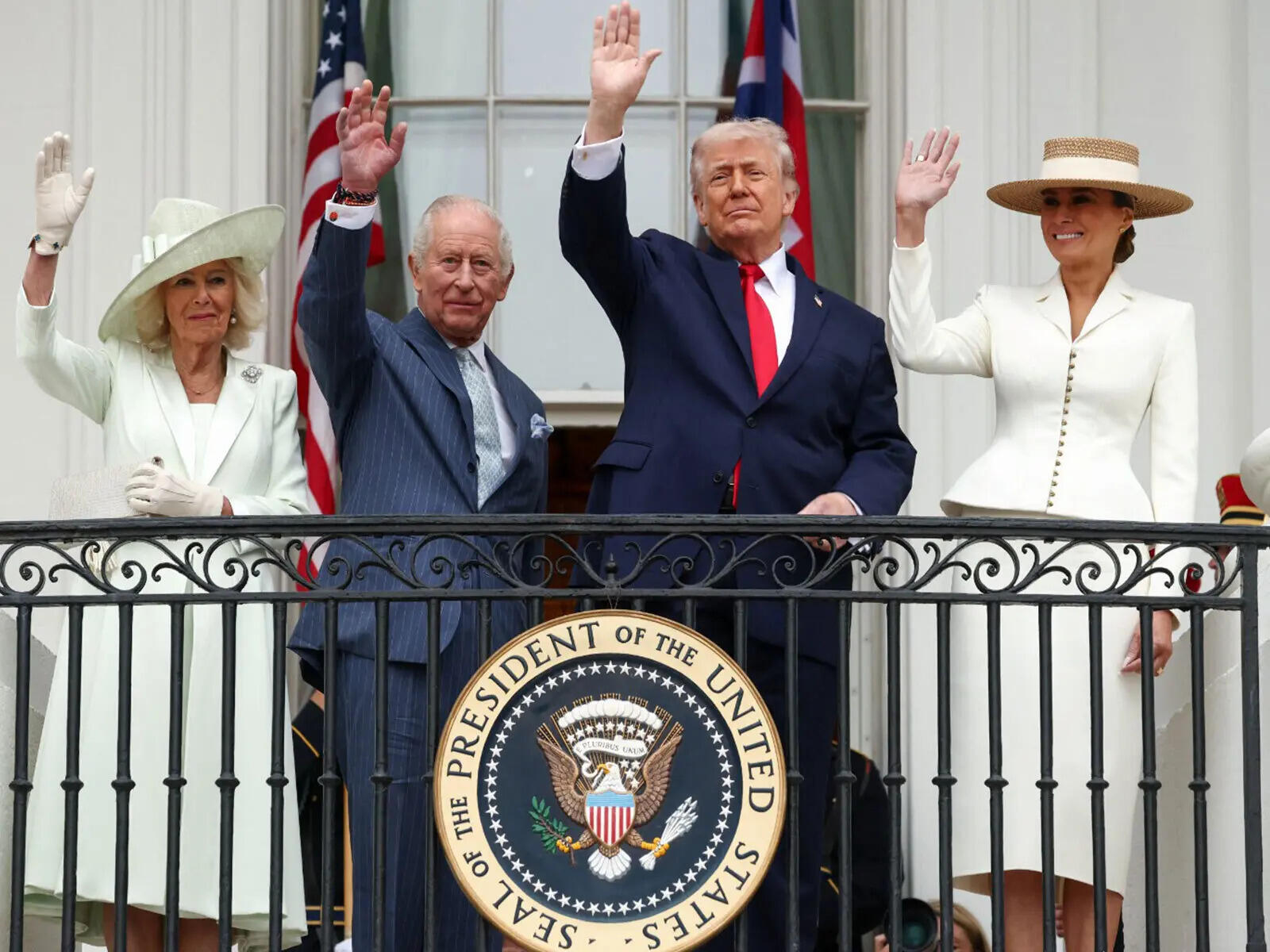
The floorboards of the United States Capitol have a specific, hallowed resonance. They have held the weight of giants, the fury of rebels, and the quiet tread of those who shaped the modern world. But on this particular morning, the air in the chamber felt thick with something else: a long-delayed conversation between an old father and a son who moved out centuries ago.
King Charles III stood before a joint session of Congress, not as a conqueror or a distant overlord, but as a man holding a very fragile olive branch.
History is a heavy coat. For a British monarch to stand at the very podium where American democracy defines its independence is an irony that could not have been lost on anyone in the room. This wasn't just a diplomatic visit or a check-the-box exercise in geopolitical maintenance. It was a reset. The world is getting colder, the shadows of old conflicts are lengthening in the East, and the "Special Relationship" has, for several years, felt like a marriage where both parties have forgotten why they moved in together in the first place.
Charles didn't lead with policy. He led with the marrow of the connection.
The Invisible Threads of a Shared Pulse
Consider a small town in the American Midwest where the local factory relies on components shipped from a firm in the British Midlands. Or think of the intelligence officer in a windowless room in London, sharing data with a counterpart in Virginia to stop a threat neither could see alone. These are the nerves of the alliance. They are invisible until they are severed.
The King spoke to these nerves. He didn't focus on the dry mechanics of trade agreements or the granular details of defense spending. Instead, he painted a picture of a world where the shared values of the English-speaking world are no longer the default setting for the globe. They are under pressure. They are being questioned.
He moved through his speech with a measured cadence, his voice carrying the rasp of a man who has spent seventy years waiting to say exactly what he thinks. He spoke of the "indispensable" nature of the bond between Washington and London. It was a plea for a return to a common center.
We often think of international relations as a game of chess played by people in suits. We see maps and arrows. But the reality is far more human. It is about trust. When trust erodes, the trade deals slow down. The military cooperation becomes hesitant. The cultural exchange thins out. Charles wasn't there to sign a treaty; he was there to repair the foundation of trust.
The Weight of the Crown in a House of Representatives
There is a specific kind of silence that falls over a room when someone acknowledges their own family's role in a painful past. Charles navigated the ghosts of the American Revolution with a grace that felt surprisingly modern. He didn't apologize for the existence of the monarchy, but he honored the spirit of the democracy that broke away from it.
He spoke about the climate—a topic that has been his life's work long before it was fashionable. This was where the narrative shifted from the past to the future. He framed the environmental crisis not as a political debate, but as a security threat that knows no borders. He suggested that if the U.S. and the UK cannot lead on this, no one will.
The tension in the room was palpable when he touched on the war in Ukraine and the rising instability in the Indo-Pacific. These are the "stakes" everyone whispers about but rarely articulates with such bluntness. The message was clear: the era of isolation is a luxury we can no longer afford.
A Bridge Built of Words
Think about the last time you had a falling out with a close friend. You both move on. You both succeed. But there is a gap. A hollow space where support used to be. Eventually, one of you has to be the first to reach out and say, "The world is harder without you."
That was the essence of the speech.
The "reset" Charles called for isn't about going back to the way things were in the 1940s. It’s about building a new version of the alliance that accounts for a world that is digital, divided, and dangerously hot. He was calling for a partnership that isn't based on nostalgia, but on a clear-eyed assessment of what happens if the two nations drift further apart.
Critics will say it was just a speech. They will point to the complexities of post-Brexit trade and the internal divisions of the American Congress. They aren't wrong. A speech doesn't lower tariffs or deploy battalions.
But a speech can change the temperature.
It can remind a legislator from Ohio or a member of Parliament from Manchester that they are part of a story that is much bigger than their own career. It provides the "political cover" for cooperation. It sets a tone that filters down from the State Department to the local chamber of commerce.
The Human Core of Geopolitics
We tend to deify or demonize leaders, forgetting they are men and women trying to steer massive, rusting ships through a storm. Charles, at this stage of his life, is acutely aware of his legacy. He isn't looking for a quick win. He is looking at the horizon.
He spoke of his grandfather, George VI, and the bond he shared with Roosevelt during the darkest days of the 20th century. By invoking that history, he wasn't just being sentimental. He was reminding the audience that when these two powers align, the course of human history changes. When they don't, the world becomes a much more dangerous place for everyone.
The speech ended not with a flourish, but with a quiet, steady gaze across the room.
As the King stepped down from the rostrum, the applause was long and genuine. It wasn't just for the man or the crown. It was for the idea he represented—that even in an age of discord, there is still a place for the grand gesture, for the hand extended across the ocean, and for the belief that our commonalities are more enduring than our disputes.
The sun caught the marble of the Capitol dome as the motorcade pulled away. The flags of both nations snapped in the wind, side by side. For a brief moment, the Atlantic felt a little narrower. The ghosts of 1776 were still there, of course, but they seemed less like enemies and more like witnesses to a family finally finding its way back to the table.



