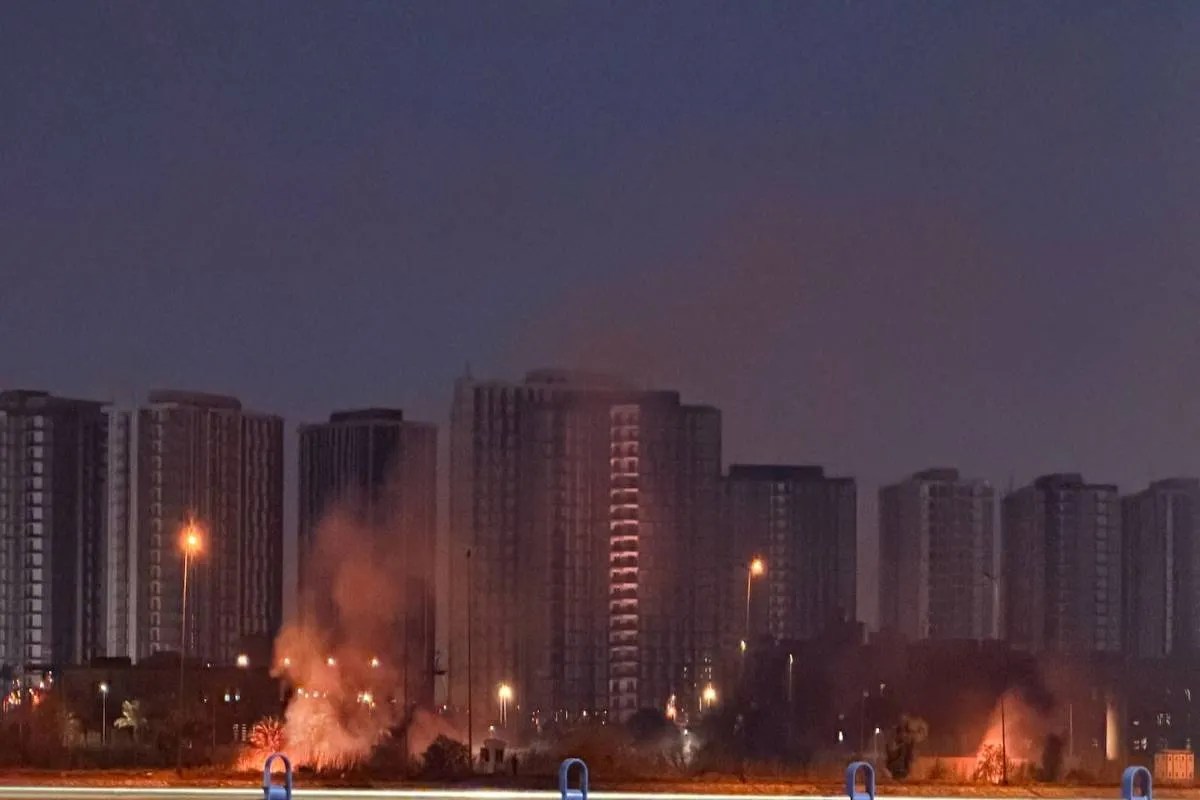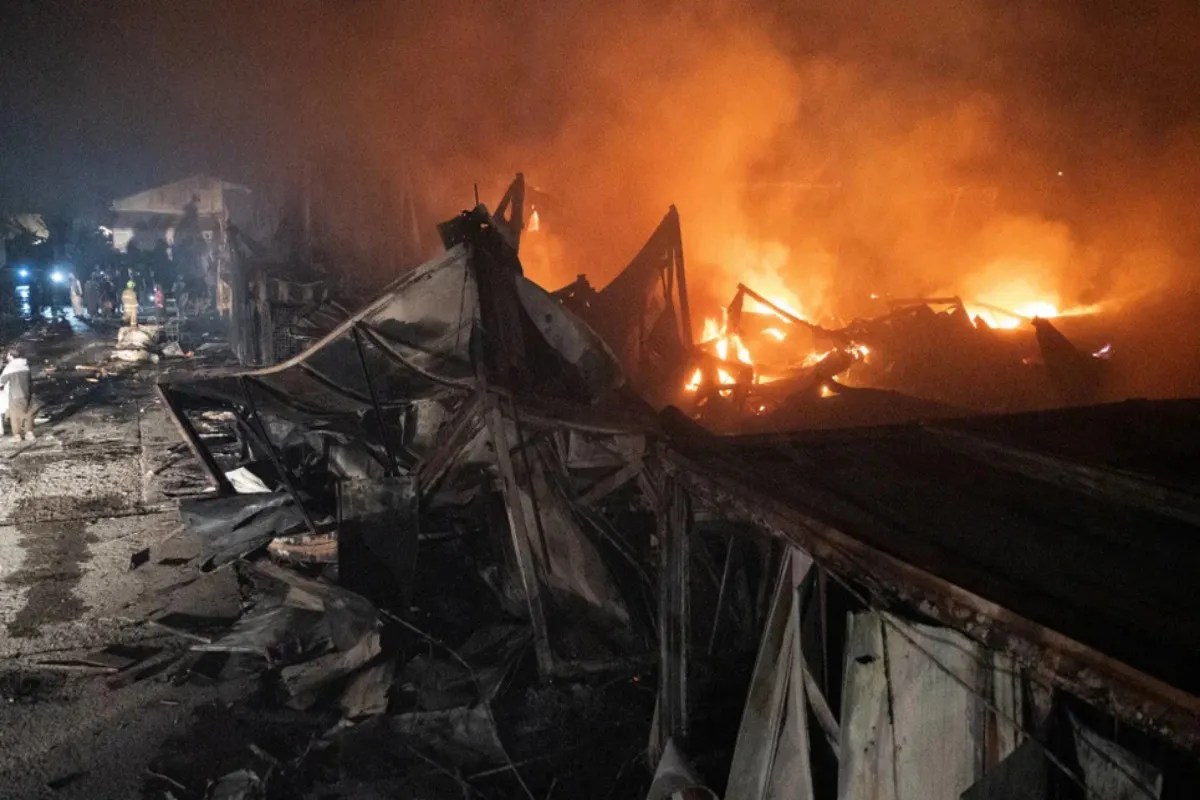
The recent missile strike by Iran targeting Tel Aviv represents a fundamental shift from symbolic posturing to a calculated exhaustion of regional missile defense architectures. While initial reports focused on the casualty count—specifically the death of two individuals—a technical assessment reveals that the primary objective was not mass casualty generation, but the testing of saturation thresholds within the "Iron Dome" and "Arrow" interceptor layers. By deploying ballistic trajectories over a concentrated urban center, Tehran has effectively signaled a transition from proxy-based attrition to direct-state kinetic engagement.
The Triad of Interception Failure
To understand why a sophisticated defense system allowed impacts within a high-value target zone like Tel Aviv, we must examine the intersection of three variables: interceptor inventory, radar discrimination, and the terminal velocity of the incoming projectiles.
- Saturation Math: Every battery has a finite number of firing cells. If the incoming salvo exceeds the number of ready-to-launch interceptors ($I_{ready} < M_{incoming}$), a "leaker" is mathematically guaranteed regardless of the system's accuracy.
- Radar Discrimination Latency: In a dense environment, distinguishing between a spent booster and a live warhead requires microsecond processing. When multiple missiles enter the terminal phase simultaneously, the computational load on the ground-based radar increases exponentially, leading to a prioritization queue that can be exploited.
- Terminal Phase Physics: Ballistic missiles, unlike slower cruise missiles, descend at hypersonic speeds. This leaves the defense system with a narrow engagement window. If the interceptor fails to achieve a "kinetic kill" (hit-to-kill) at the optimal altitude, the resulting debris—or the intact warhead—follows a gravity-bound path into the urban center.
Strategic Depth and the Cost Function of Interception
The economic disparity between an offensive missile and a defensive interceptor creates a structural vulnerability for Israel. An Iranian-made Fattah or Kheibar-class missile costs a fraction of the $2 million to $3.5 million required for a single Arrow-3 interceptor.
- The Depletion Variable: Iran’s strategy relies on "Interdiction by Exhaustion." By firing relatively low-cost ballistic missiles, they force Israel to expend high-cost, limited-stock interceptors.
- The Probability Gap: Standard defense doctrine requires firing two interceptors at every incoming high-threat target to ensure a 99% kill probability. This 2:1 ratio means Iran only needs to launch 50 missiles to force the deployment of 100 interceptors, rapidly draining the defender's magazine depth.
The two confirmed fatalities in Tel Aviv serve as a grim validation of this "leaker" theory. These deaths are not statistical outliers; they are the projected outcome of a saturation attack where the defense's probability of intercept ($P_i$) falls below 1.0 due to volume.
Missile Categorization and Flight Dynamics
The ordnance used in this strike suggests a move away from the older liquid-fueled Shabab series toward solid-fueled variants. Solid-fuel missiles are significantly more dangerous because they do not require a lengthy fueling process before launch, reducing the "left-of-launch" window—the time during which Israeli or allied intelligence can detect and preemptively strike the launch sites.
Solid-Fuel Advantage
- Rapid Deployment: Can be moved and fired from mobile launchers (TELs) in minutes.
- Storage Stability: Missiles can remain "combat ready" for years in underground silos (often referred to as "missile cities").
- Higher Thrust: Allows for more complex lofted trajectories that make intercept calculations more difficult for the Arrow system.
Re-entry Vehicle (RV) Maneuverability
The observation of impact points in Tel Aviv indicates that Iran may be employing "maneuverable re-entry vehicles" (MaRVs). Unlike a standard ballistic arc, a MaRV can shift its path in the final seconds of flight. This creates a "cone of uncertainty" for the interceptor. Even a slight shift in the RV’s path can cause an interceptor to miss its target by several meters, which, at hypersonic speeds, is equivalent to a total failure.
The Geography of Risk: Urban vs. Military Targets
A critical distinction must be made between the intent of the strike and its impact. While military airbases (such as Nevatim) are often the intended targets due to their strategic value, the inclusion of Tel Aviv in the flight path serves a psychological warfare function.
Targeting a dense urban center forces the defender to prioritize civilian protection over military asset protection. This creates a "resource dilemma." If the IDF moves its batteries to protect Tel Aviv, it leaves military hangars and runways vulnerable. If it protects the airbases, civilian casualties rise. Iran’s choice to target Tel Aviv specifically exploits this friction, forcing the Israeli high command to make impossible choices regarding the allocation of their most advanced defense assets.
Geopolitical Friction and the Second-Strike Capability
The strike confirms that Iran has achieved a "credible second-strike capability." This means that even if Israel were to launch a preemptive strike on Iranian nuclear or military facilities, Iran retains enough mobile, hidden launchers to retaliate with sufficient force to penetrate the Iron Dome.
The death of two civilians in Tel Aviv is the first empirical proof that the "impenetrable" shield has a breaking point. This is not a failure of the technology itself, but a realization of the physical limits of any missile defense system.
Constraints on Response
The escalation ladder is currently constrained by two factors:
- Supply Chain Latency: Israel cannot instantly manufacture more interceptors; it relies on US-based production lines (specifically for components of the David’s Sling and Arrow systems).
- Regional Escalation: A direct kinetic response from Israel against Iranian soil would likely trigger a multi-front engagement involving Hezbollah in the north, further stressing the short-range Iron Dome batteries with thousands of unguided rockets.
Tactical Recommendation: Transition to Directed Energy
The current interceptor-based model is reaching its fiscal and physical limit. To regain the advantage, the defense strategy must pivot toward Directed Energy Weapons (DEW), specifically high-energy lasers like the "Iron Beam."
- Cost per Shot: A laser interception costs roughly $2 per shot, compared to $2 million for a missile.
- Unlimited Magazine: As long as there is power, the system can fire, effectively neutralizing the "saturation" strategy.
- Speed of Light Engagement: Eliminates the need for complex interceptor flight calculations, as the "projectile" travels at $300,000$ km/s.
Until DEW systems are fully integrated into the national defense architecture, the operational reality is one of managed vulnerability. The strike on Tel Aviv has proven that in the age of hypersonic ballistic saturation, a 100% interception rate is a mathematical impossibility. The strategic focus must now shift from trying to catch every arrow to dismantling the archer's ability to fire them.