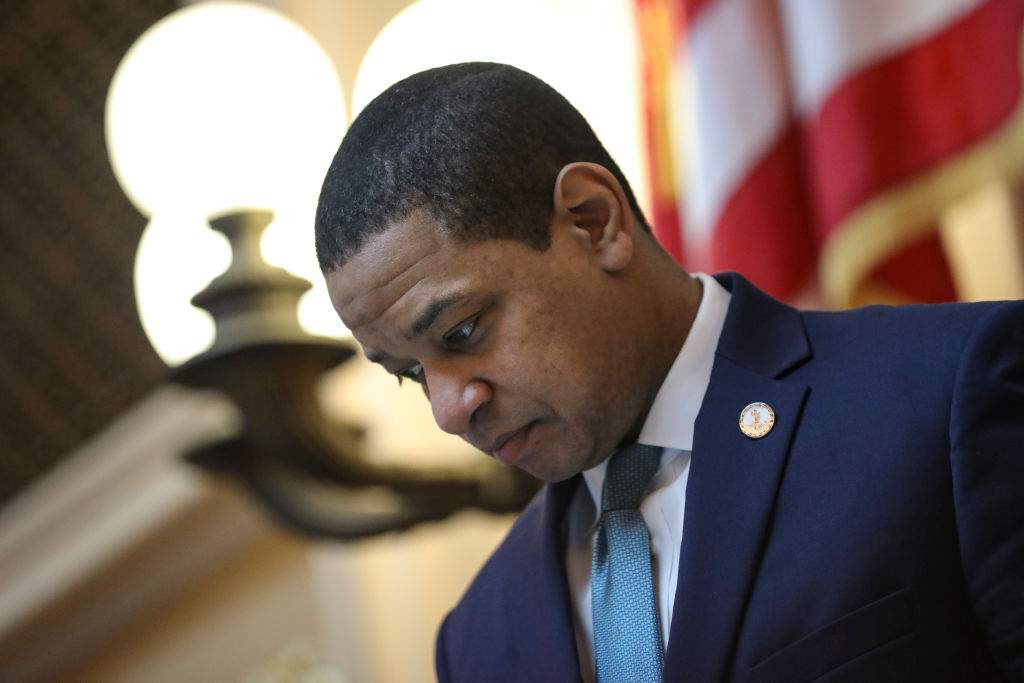
The headlines are sanitizing a horror show. Former Virginia Lieutenant Governor Justin Fairfax and his wife, Dr. Cerina Fairfax, are dead. The police calls it a murder-suicide. The media calls it a tragedy. I call it the inevitable fallout of a political culture that demands a level of performative perfection no human psyche can actually sustain.
Stop looking for a "motive" in the traditional sense. You won't find it in a bank statement or a hidden scandal. You’ll find it in the architecture of the American political family—a structure built on the hollow promise that if you look the part, you are the part. We are obsessed with the "stable" political unit, yet we ignore the fact that the very traits required to reach the upper echelons of power—hyper-vigilance, ego-preservation, and the suppression of vulnerability—are the exact same traits that turn a home into a pressure cooker. Building on this idea, you can find more in: The Peru Runoff Myth and Why Labels Like Leftist or Far Right Are Geopolitical Dead Ends.
The Credibility Trap
Modern political reporting treats these events as "shocks to the system." They shouldn't be. The "lazy consensus" in the Fairfax coverage is that this was a sudden departure from a life of public service and private bliss. That narrative is a lie we tell ourselves to feel safe.
In the world of high-stakes politics, your spouse isn't just a partner; they are a data point. They are a "trust asset." When that asset is leveraged to maintain a public-facing brand during times of extreme stress—like the 2019 sexual assault allegations that nearly derailed Justin Fairfax’s career—the internal rot doesn't just go away. It gets compressed. Observers at The Guardian have provided expertise on this trend.
I’ve seen this in DC and Richmond for decades. Power players don't seek therapy; they seek "rebranding." They don't process trauma; they "manage" it. We’ve created a system where admitting to a mental health crisis is a professional death sentence, so instead, we settle for actual death.
Why the Murder-Suicide Label is a Cop-Out
Calling this a murder-suicide is technically accurate and intellectually lazy. It frames the event as a closed case—a discrete act of violence. It ignores the cumulative psychological erosion inherent in the Virginia political machine.
Look at the timeline. Fairfax was a man who went from the precipice of the governorship to the wilderness of private practice and lingering litigation. In the "power centers" of the East Coast, your value is tied to your proximity to the throne. When that proximity vanishes, many of these individuals suffer from a form of "relevance deprivation syndrome" that is every bit as lethal as physical illness.
We want to believe that people in these positions are "better" than us, or at least more resilient. The data suggests the opposite. The high-achiever’s paradox is real: the more you have to lose, the more likely you are to burn the whole house down rather than face the humiliation of a slow, public decline.
The False Security of the "Success" Aesthetic
Cerina Fairfax was a successful dentist. Justin was a high-profile attorney and politician. They were the "Power Couple."
That label is a cage.
- The Power Couple Myth: It demands that both parties maintain a 100% "up-time."
- The Silo Effect: Successful individuals often believe they are the only ones who can solve their problems.
- The Privacy Tax: The more famous you are, the higher the cost of seeking help.
When you are the " lieutenant governor," you aren't allowed to be a mess. When you are the "doctor," you aren't allowed to be a victim. The Fairfax case isn't an anomaly; it's the logical conclusion of a society that prizes the aesthetic of success over the mechanics of survival.
Dismantling the "What Went Wrong" Question
People are asking, "How did this happen?" That is the wrong question. The right question is: "How did we expect it not to happen?"
We take individuals, subject them to the most brutal public vetting imaginable, strip them of their privacy, tie their self-worth to volatile election cycles, and then act surprised when they snap. The political arena isn't a workplace; it’s a psychological centrifuge. It separates the ego from reality until there is nothing left but the "office" and the "image."
If you want to understand the Fairfax tragedy, stop looking at the crime scene tape. Look at the ballroom photos from 2018. Look at the smiles that were forced even then. We are complicit because we demand these masks. We vote for the masks. We donate to the masks. And when the human behind the mask finally breaks, we act like we didn't see the cracks forming years ago.
The Brutal Reality of Public Life
You think you want the title. You think you want the security detail and the prestige. You don't. You want the feeling of being important without the burden of being a symbol.
Justin Fairfax was a symbol for many—of progress, of a new generation of leadership, of resilience against accusations. But symbols don't have hearts; they have functions. When a symbol fails its function, it becomes a liability.
The tragedy in Fairfax County isn't just about two lives lost; it's about the systemic failure of a culture that treats human beings as political capital. We’ve turned "leadership" into a suicide mission where the only acceptable outcome is total victory or total destruction.
Stop Offering Thoughts and Prayers
The "thoughts and prayers" brigade is already out in full force. It’s a cheap way to avoid the uncomfortable truth: Virginia’s political culture—and by extension, America’s—is toxic to the human soul.
We don't need more "awareness" about domestic violence or mental health. We need a fundamental shift in how we view our leaders. We need to stop deifying them and start allowing them to be flawed, broken, and—most importantly—redundant.
If a politician can't walk away from the game without losing their mind, then the game is rigged against all of us. The Fairfax family didn't fall from grace. They were crushed by the weight of a pedestal that was never built to hold a real person.
Burn the pedestal. It’s the only way to save the next person standing on it.
The investigation will conclude. The "whys" will be debated on talk shows by people who have never felt the weight of a state’s expectations on their shoulders. They will miss the point. They always do. This wasn't a glitch in the system; it was the system working exactly as designed, stripping away the humanity of its participants until only the violence remained.
Stop asking what happened. Start asking what we’ve built.