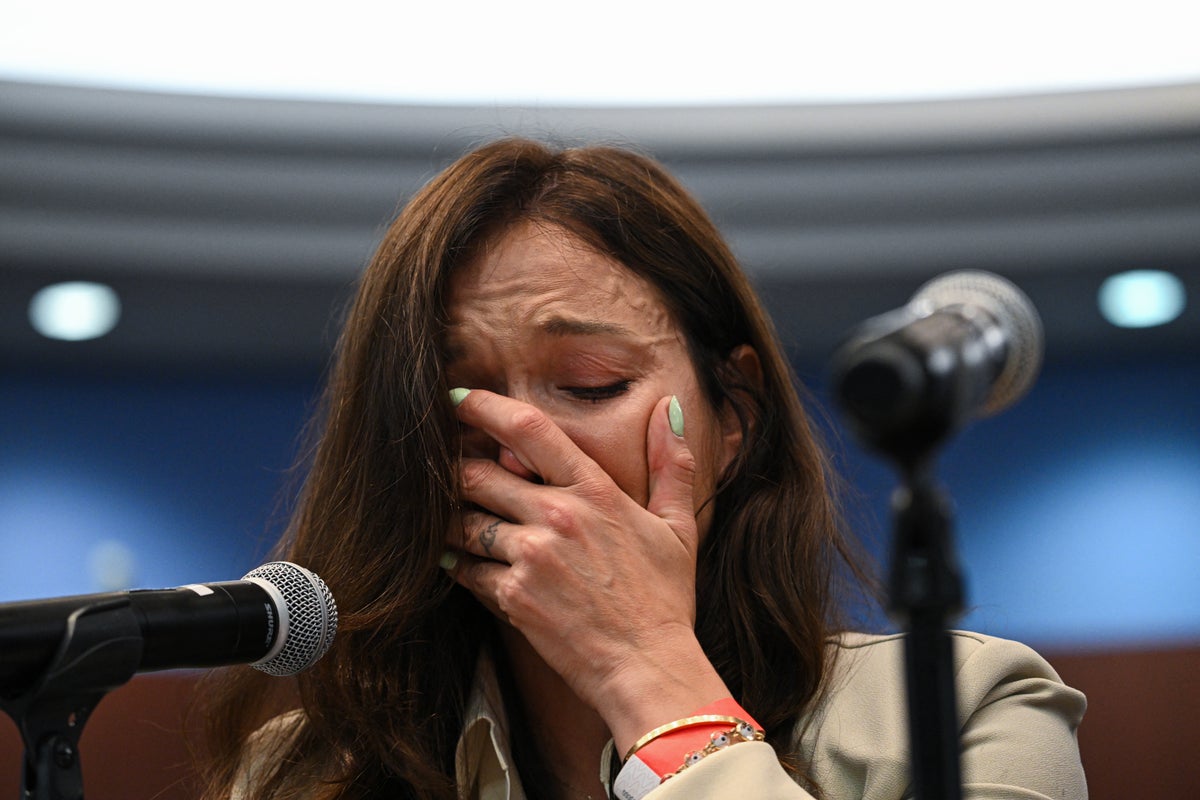
The courtroom used to be a sanctuary of cold, hard facts. Now, it is a theater for the macabre, fed to a public that treats human tragedy like a Netflix true-crime special. When a teacher is accused of a crime as horrific as murdering an infant, the media doesn't just report the news; they curate a villain. They take a defiant statement like "I will fight you til the day I die" and twist it into a confession of sociopathy before a single piece of forensic evidence hits the record.
We are addicted to the narrative of the "monstrous professional." We love the idea that the person we trusted—the teacher, the nurse, the caregiver—is secretly a wolf in sheep’s clothing. This isn't just sensationalism. It’s a systemic failure of how we process justice in the digital age. We have traded the presumption of innocence for the dopamine hit of a viral headline.
The Myth of the "Correct" Defendant
The media expects a defendant to act like a broken reed. If they cry, they are manipulative. If they are stoic, they are cold. If they are defiant, they are "dangerous." When a suspect tells the police they will fight until their last breath, the "lazy consensus" dictates that this is the behavior of a guilty party lashing out.
Logic dictates the exact opposite.
If you were innocent and accused of the most heinous crime imaginable, would you go quietly into the night? Would you politely disagree with the officers dismantling your life? No. You would be incandescent with rage. You would promise a fight that outlasts your own heartbeat. Yet, when the public reads these quotes out of context, they see a threat instead of a desperate plea for truth. This bias is a cognitive shortcut that bypasses the complexities of the legal process in favor of a moral binary.
Why We Fail to Understand Forensic Reality
Most people get their legal education from sixty-minute procedurals where the DNA matches in five minutes and the killer breaks down on the stand. Real trials are a grind of contradictory expert testimony, circumstantial chains, and procedural nuances that don't fit into a 280-character post.
Take the "medical evidence" often cited in these high-profile infant death cases. The public assumes "medical evidence" means a smoking gun. In reality, it often involves debating the minute physiological markers of "Shaken Baby Syndrome" or sudden infant death—fields where the science is frequently contested and evolving.
When the media focuses on a teacher’s "defiant" words, they are intentionally distracting you from the lack of physical certainty. They are selling you a character arc because the science is too boring for the average reader. We are convicting people based on their personality under pressure rather than the data in the folder.
The Cost of the "Hero" Prosecutor
We have incentivized a culture where prosecutors and police are rewarded for "getting the monster." This creates a feedback loop where the more sensational the crime, the more pressure there is to secure a conviction at any cost. This isn't about "seeking justice"; it's about winning a high-stakes game where the scoreboard is the evening news.
I have seen the inside of these legal machines. I have watched how a single quote, taken from a twenty-hour interrogation, is isolated to make a defendant look like a comic book villain.
- The Decontextualized Quote: "I will fight you" becomes a threat of violence rather than a promise of legal defense.
- The Character Assassination: Previous minor lapses in judgment are framed as "precursors" to murder.
- The Emotional Anchor: Using photos of the victim to bypass the jury's logical faculties.
This isn't law. It's marketing.
Stop Asking if They Did It
The question the public asks is always, "Did they do it?"
That is the wrong question.
The question should be: "Can the state prove it without relying on the defendant's emotional state?" If the answer is no, the defendant must walk. It doesn't matter if they are "likable." It doesn't matter if they are "defiant." If we allow the state to use a teacher's anger as a substitute for physical evidence, we have abandoned the rule of law for the rule of the mob.
The "defiant" teacher isn't just fighting for their own life; they are inadvertently fighting for the integrity of a system that is currently being eaten alive by the need for clicks. We need to stop treating the legal process like an interactive drama.
The High Price of Moral Certainty
We crave moral certainty because it makes us feel safe. If the teacher is a monster, then the world makes sense. If the teacher is just a person caught in a tragic situation or a victim of a flawed investigation, then the world is chaotic and scary.
We choose the monster because it’s easier to sleep at night.
But this comfort comes at the cost of innocent lives being shredded by the machinery of public opinion long before a jury is even empaneled. The "consensus" loves a villain, but the truth is usually found in the grey areas that headlines refuse to touch.
Stop buying the narrative. Demand the data.
Ignore the "defiant" quotes. Look at the lab reports.
If you can't distinguish between a defendant's personality and their guilt, you aren't seeking justice—you're just another spectator in the colosseum, waiting for the lions to finish their meal. Turn off the news, read the transcripts, and realize that the most dangerous person in the courtroom isn't always the one in the dock. It’s the one holding the microphone, telling you exactly what to think.