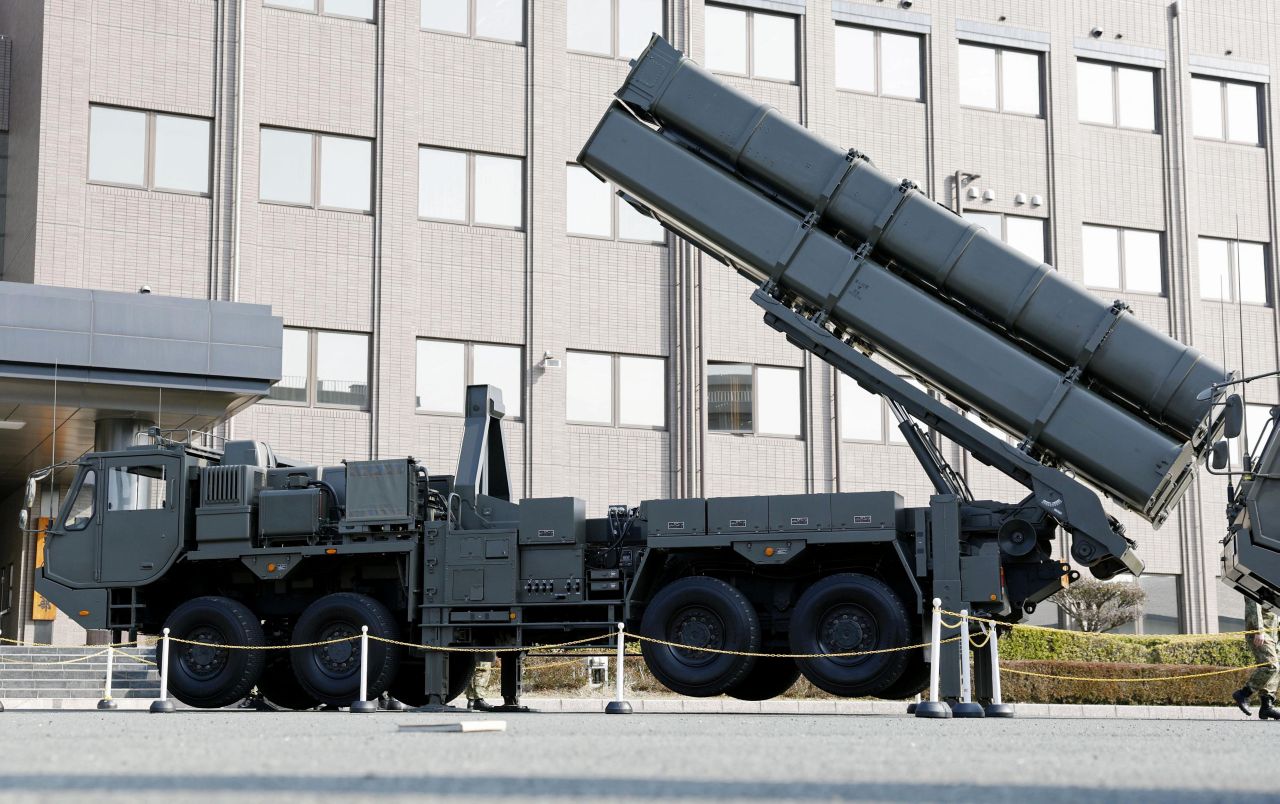
The headlines are screaming about a "historic shift" in Tokyo. They want you to believe that Japan’s deployment of the Type 12 Surface-to-Ship Missile (SSM) and the acquisition of Tomahawks represent a radical new era of "counterstrike capability." It makes for great copy. It makes for even better defense stock rallies. But if you look at the actual physics of regional deterrence, these deployments aren't a strategic masterstroke. They are an expensive, desperate attempt to maintain the illusion of relevance in a theater that has already moved past them.
Most analysts are stuck in the 1990s. They see a missile with a 1,000-kilometer range and assume it changes the math for Beijing or Pyongyang. It doesn't.
The Range Fallacy
The press loves to obsess over range. They treat a 1,000km missile like a magic wand that can suddenly touch the "heart of the enemy." This ignores the fundamental reality of modern Integrated Air Defense Systems (IADS).
Let’s be clear: Having a missile that can reach a target is not the same as having a missile that can hit a target. China has spent the last two decades building the most dense, sophisticated anti-access/area-denial (A2/AD) bubble on the planet. Japan deploying a few hundred subsonic Tomahawks or upgraded Type 12s is the equivalent of bringing a knife to a drone fight.
To actually penetrate modern sensors, you need mass. You need saturation. You need the ability to overwhelm the target’s computer-brain with more threats than it can process simultaneously. Japan’s current procurement numbers are a joke. They are buying enough to look scary in a pamphlet, but not enough to survive the first forty-eight hours of a high-intensity kinetic conflict.
The Target Acquisition Gap
Here is the dirty secret the Ministry of Defense doesn't want to talk about: Japan doesn't have the "eyes" to use its new "arms."
If you want to hit a mobile missile launcher or a moving ship 800 kilometers away, you need real-time, high-fidelity targeting data. You need a constellation of Synthetic Aperture Radar (SAR) satellites, a fleet of high-altitude long-endurance (HALE) drones, and a battle management network that can relay that data in seconds.
Japan is currently a decade behind in the kill-chain department. Right now, they are effectively buying a long-range sniper rifle while being legally blind. They are forced to rely on U.S. intelligence, surveillance, and reconnaissance (ISR) assets. This isn't "independent counterstrike capability." It’s just an expensive extension of the U.S. Pacific Command. If the U.S. data link goes down or is jammed—a certainty in a real peer-level war—those billion-yen missiles become very high-tech lawn ornaments.
The Myth of Deterrence
"People Also Ask" if this deployment will deter China. The answer is a resounding no, because deterrence requires both capability and will.
China views Japan’s rearmament through a specific historical and psychological lens. To Beijing, these missiles aren't a credible threat to their sovereignty; they are a political provocation. Instead of backing off, China is more likely to use this as a justification to accelerate its own hypersonic programs—weapons Japan has zero defense against.
We are witnessing a classic security dilemma. By trying to increase its security through these symbolic "long-range" purchases, Tokyo is actually decreasing its security by incentivizing a regional arms race it cannot win. Japan’s debt-to-GDP ratio is over 250%. They cannot outspend China. Attempting to match China missile-for-missile is a recipe for national bankruptcy before a single shot is ever fired.
The Subsonic Trap
The Type 12 upgrade and the Tomahawk Block V are subsonic. They fly at roughly 550 miles per hour. In the era of Mach 5+ hypersonic cruise missiles and AI-driven point defense, subsonic missiles are becoming the biplanes of the 21st century.
Imagine a scenario where Japan launches a salvo. Those missiles take over an hour to reach their distant targets. In that time, the target has moved, the air defense has recalibrated, and the retaliatory strike—likely traveling at five times the speed—has already hit Tokyo.
This isn't just a technical gap; it's a conceptual failure. Japan is preparing for a 20th-century war of attrition while its adversaries are preparing for a 21st-century war of speed and electromagnetic dominance.
The Real Intent: Domestic Theater
So why do it? Why spend trillions of yen on hardware that provides such a marginal increase in actual combat power?
Because this isn't about war. It’s about domestic politics and the "normalization" of the Japanese Self-Defense Forces (JSDF).
The ruling Liberal Democratic Party (LDP) has wanted to chip away at Article 9 for decades. They can’t change the constitution yet—the public isn't there—so they change the "interpretation." Calling a long-range cruise missile a "stand-off defense weapon" is a linguistic gymnastic feat that would win Olympic gold.
By deploying these systems, the government creates a "new normal." They get the public used to the idea of offensive reach. They satisfy the "hawks" in Washington who are tired of carrying the entire defense burden in the Pacific. It’s a theater of optics designed to make Japan look like a "normal" military power without actually doing the hard work of building the infrastructure required to be one.
Stop Asking if Japan Can Strike Back
The wrong question is: "Can Japan hit targets in China or North Korea?"
The right question is: "Can Japan survive the response?"
The answer, currently, is no. Japan is an island nation with highly concentrated population centers and a fragile energy grid. It has almost no civil defense infrastructure. It has zero meaningful missile defense against a massed hypersonic or swarming drone attack.
Investing in "counterstrike" before investing in "resilience" is a strategic blunder of the highest order. It’s like buying a sword when you don't own a shield and your house is made of glass.
The Actionable Alternative
If Japan actually wanted to be a "disruptive" force in regional security, it would stop trying to mimic the U.S. Navy’s playbook. It should stop buying expensive, slow-moving targets like the Aegis Ashore (now Aegis System Equipped Vessels) or long-range cruise missiles.
Instead, they should pivot to an "Asymmetric Archipelagic Defense" strategy:
- Massive Drone Swarms: Thousands of cheap, expendable sea and air drones that can turn the East China Sea into a "no-go zone."
- Subsurface Dominance: Forget the surface ships. Build more Soryu and Taigei-class submarines. They are the only things China actually fears.
- Electronic Warfare (EW): Invest heavily in the ability to blind and deafen an invading force. If you can break the enemy's kill-chain, range doesn't matter.
Japan is currently choosing the most expensive and least effective path toward security. They are buying the status quo. They are buying 1980s doctrine with 2026 tax dollars.
The "long-range" revolution is a mirage. It’s a political pacifier for a nation that is too afraid to admit that in a real conflict, a few hundred cruise missiles are nothing more than a signal flare for its own obsolescence.
Stop cheering for the missiles. Start asking why the shield is made of paper.