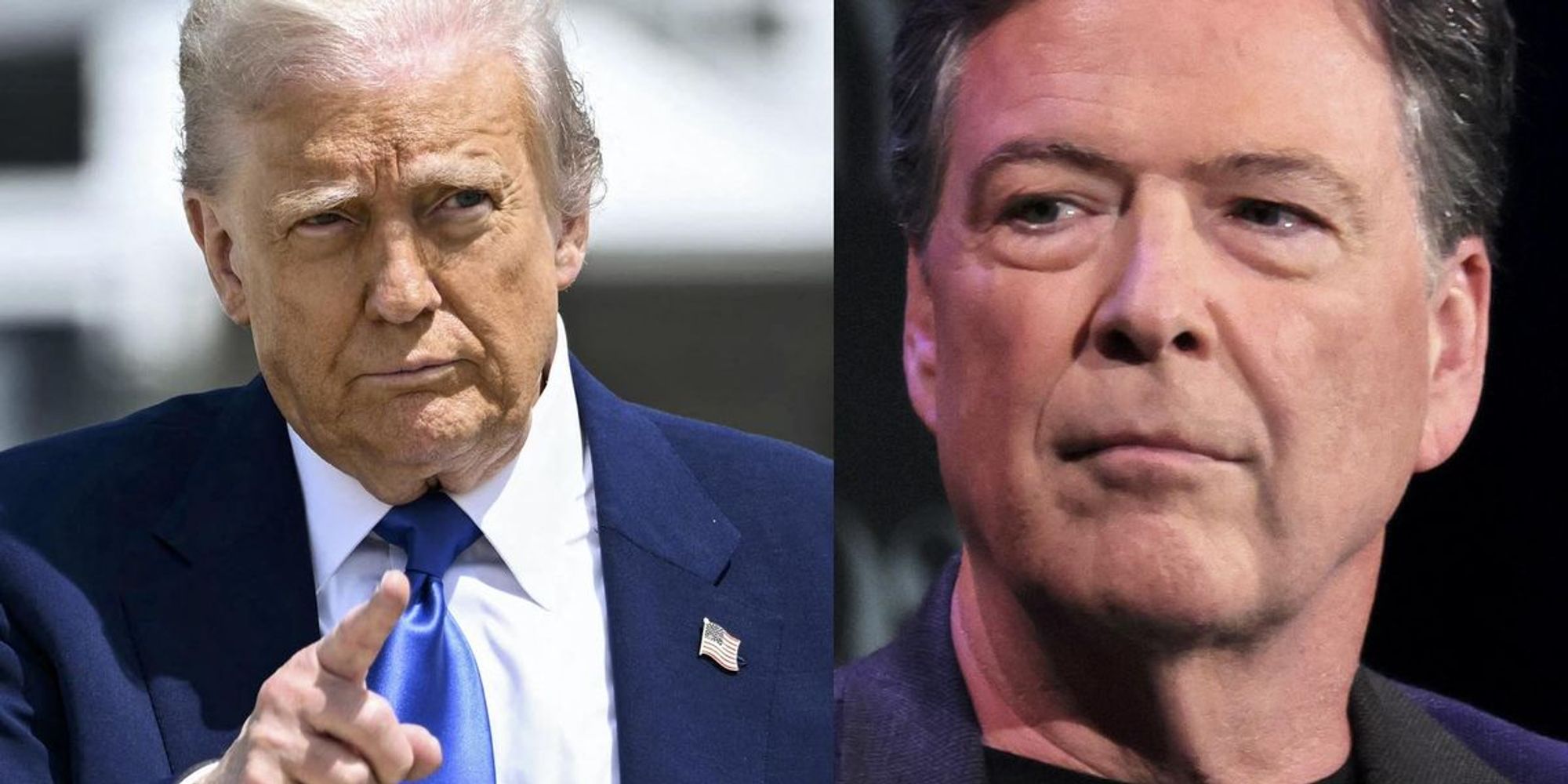
The federal government is currently trying to put a former FBI Director in prison because of a picture of seashells. It sounds like a bad political thriller, but it's the reality James Comey faced Wednesday in an Alexandria, Virginia courtroom. He walked out a free man for now, released without bail, but the underlying charges are some of the most aggressive uses of federal threat statutes we've seen in decades.
If you haven't followed the "86 47" saga, here's the deal. About a year ago, Comey posted a photo on Instagram of seashells on a beach arranged to form those numbers. The Justice Department—now led by Trump loyalists—claims "86" is restaurant slang for "get rid of" or "kill," and "47" refers to the 47th president. They're calling it a "true threat" to assassinate Donald Trump. Comey says it was just a political message he saw on a walk.
This isn't just about one man. It’s a massive test for the First Amendment.
The Government’s Weak Hand on Intent
In any criminal threat case, the prosecution has to prove "mens rea"—the mental state. They have to show Comey actually intended to threaten the President or, at the very least, recklessly ignored the fact that people would see it as a call for violence.
Acting Attorney General Todd Blanche hasn't shown his cards yet. At a recent press conference, he dodged questions about what specific evidence they have that Comey "willfully" made a threat. There’s a big problem with their theory. Comey sat down voluntarily with the Secret Service last year. He told them he saw the shells, thought they were a political statement, and posted them. He deleted the post almost immediately when people started getting upset, explicitly stating he opposes violence.
When someone deletes a post and apologizes within hours, proving they had "murderous intent" is a tall order. The Supreme Court set a high bar in 2023, requiring the government to prove a defendant "consciously disregarded" the risk of their words being seen as a threat. Posting a photo of shells on a public Instagram account isn't exactly how most people plot a high-level assassination.
Selective Prosecution or Standard Procedure
Blanche argues this is just a standard threat case like any other. He says they prosecute people for this every day. That’s technically true, but most people don’t get indicted a second time by the same administration after the first case—which involved unrelated false statement charges—was laughed out of court by a judge.
The timeline here is suspicious. The shell post happened in May 2025. Why wait nearly a year to indict? Legal experts see this as "vindictive prosecution." That’s a legal term for when the government brings charges specifically to punish someone for exercising their rights or because of a personal grudge. Considering the long, messy history between Trump and Comey, you don't have to be a conspiracy theorist to see the pattern.
The Problem With 86ing Speech
The word "86" is famously ambiguous. In a kitchen, it means you're out of soup. In a bar, it means you're kicked out. In politics, it’s been used for decades to mean "vote them out." By trying to narrow the definition specifically to "assassinate," the DOJ is trying to criminalize political metaphors.
- Ambiguity: If a phrase has three non-violent meanings and one violent one, the tie usually goes to the speaker in a free speech case.
- Context: Comey is a 65-year-old former law enforcement official, not a known leader of a violent militia.
- Action: No actual violence was attempted or even planned in connection to the shells.
What Happens Next for Comey
The Magistrate Judge, William E. Fitzpatrick, didn't seem impressed with the government’s request for release conditions. He let Comey go on his own recognizance, noting that Comey didn't flee during his last indictment and isn't a flight risk now.
The defense team, led by Patrick Fitzgerald, is going to file a motion to dismiss almost immediately. They'll argue that the indictment fails to state a crime because the speech is protected. If this case actually goes to trial in North Carolina (where the beach walk happened), it’ll be a circus.
Don't expect a quick resolution. The government wants to make an example of Comey, and Comey seems perfectly happy to fight this in the name of the First Amendment. It’s a high-stakes game of chicken where the prize is either a decade in federal prison or a landmark ruling that limits how the government can interpret your social media posts.
If you’re worried about how your own political posts might be interpreted, the lesson here is simple. The government is watching. Even if a case is legally weak, they can still make your life a living hell for a year or two just by filing the paperwork. Stay vocal, but maybe keep the cryptic seashell art to yourself until the 2028 cycle.