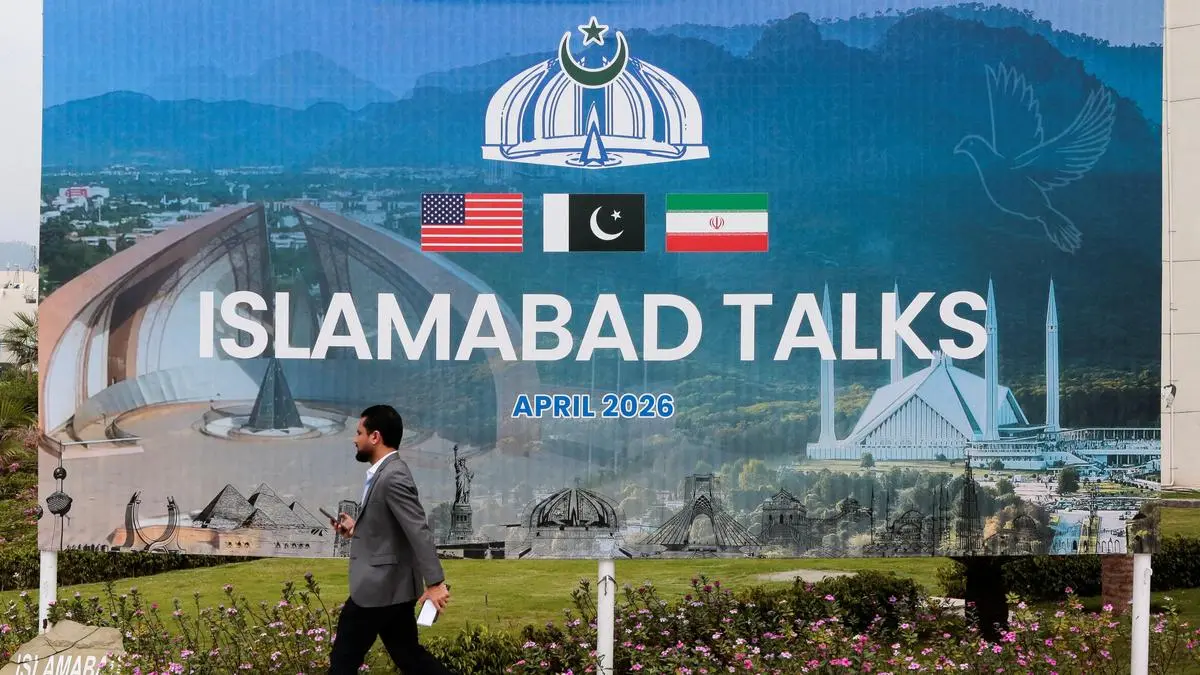
The arrival of U.S. Vice President JD Vance in Islamabad this morning marks the most desperate diplomatic maneuver of the 2026 Iran war. After six weeks of kinetic exchanges that have left the global energy market paralyzed and the Strait of Hormuz effectively a graveyard for tankers, the "Islamabad Talks" represent a fragile 14-day pause in a conflict that neither side can afford to continue but neither knows how to end. The primary objective is simple: a permanent ceasefire and the immediate restoration of maritime traffic through the world’s most critical chokepoint.
But the reality on the ground in the Pakistani capital is far more complex than a simple handshake.
While the U.S. delegation, which includes special envoy Steve Witkoff and Jared Kushner, seeks a return to a status quo that includes "verifiable constraints" on Iran’s nuclear program, the Iranian delegation led by Foreign Minister Abbas Araghchi has arrived with a 10-point counter-proposal that treats the ceasefire not as an end, but as a starting point for a total regional reset. The gap between these two positions is not just wide; it is a chasm.
The Pakistan Pivot
Pakistan’s emergence as the sole credible mediator is perhaps the most surprising development of this war. Historically, such roles were reserved for Oman or Switzerland, but the personal rapport between U.S. President Donald Trump and Pakistan’s army chief, Field Marshal Asim Munir, has shifted the center of gravity.
Munir, whom Trump has publicly referred to as his "favorite field marshal," has leveraged Pakistan’s unique position—a nuclear-armed neighbor to Iran that simultaneously maintains a strategic defense pact with Saudi Arabia. By hosting these talks, Islamabad is attempting to prevent the conflict from spilling over its own 900-kilometer border, where sectarian tensions have already led to domestic unrest.
For the Pakistani government, the mediation is a matter of survival. The country relies on the Gulf for 90% of its oil imports. The closure of the Strait has forced the Pakistan Navy into "Operation Muhafiz-ul-Bahr," a costly escort mission for merchant ships that the state’s dwindling treasury cannot sustain indefinitely.
The Redline Collision
The core of the disagreement in Islamabad centers on the definition of the ceasefire itself. The U.S. view is tactical. They want the missiles to stop flying and the oil to start flowing. The Iranian view is strategic. To Tehran, the closure of the Strait of Hormuz is the only leverage they have left after Israeli and American strikes degraded their conventional air defenses and nuclear infrastructure earlier this year.
The Iranian 10-Point Demand
The Iranian delegation has submitted a list of "redlines" to Prime Minister Shehbaz Sharif that goes far beyond a simple halt to hostilities:
- Total Sanctions Removal: Not just a suspension, but a full lifting of the "maximum pressure" era sanctions.
- Lebanon Inclusion: Iran insists that the ceasefire must apply to Israeli operations against Hezbollah in Lebanon, a condition the U.S. and Israel have currently rejected.
- Reparations: A demand for financial compensation for the damage caused by the joint U.S.-Israeli strikes on Iranian energy sites.
- Frozen Assets: The immediate release of billions in Iranian funds currently held in international banks.
The American 15-Point Framework
Conversely, the American proposal, delivered through Pakistani backchannels last month, demands concessions that the Iranian Revolutionary Guard Corps (IRGC) views as a surrender:
- Nuclear Dismantlement: A total end to all uranium enrichment beyond 3.67%.
- Missile Constraints: Hard limits on the range of Iran’s ballistic missile arsenal.
- Hormuz Sovereignty: A regional framework that ensures the Strait can never be closed again, effectively stripping Iran of its "maritime veto."
The Energy Extortion Trap
The war has effectively removed 20% of the world’s daily oil supply from the market. While President Trump has attempted to frame this as an opportunity for the U.S. energy sector—claiming that "sweet" American oil will fill the void—the math does not hold up for the average consumer. Without the Strait of Hormuz, global prices remain at record highs, and the logistical cost of rerouting supply is crippling.
Iran knows this. They are playing a game of "energy extortion," using the threat of a prolonged blockade to force the U.S. to the table before the November midterm elections. The Trump administration is acutely aware that a war with no end and $7-per-gallon gasoline is a political death sentence.
The Saudi Shadow
The quietest but most influential player in the Islamabad Talks is Saudi Arabia. The September 2025 Strategic Mutual Defence Agreement between Islamabad and Riyadh means that any further escalation against Saudi oil facilities—like the drone strikes seen at King Abdulaziz Air Base—could pull Pakistan’s military directly into the fray.
On Saturday, Pakistani fighter jets arrived at Saudi bases as part of a "defensive deployment." This move serves two purposes: it reassures Riyadh and warns Tehran that Pakistan’s neutrality has its limits. If the talks in Islamabad fail, the tripartite alliance of the U.S., Saudi Arabia, and Pakistan is positioned to move from diplomacy to "regional deterrence."
The Fragility of the Two-Week Window
The ceasefire is currently set to expire in ten days. There is no sign yet that the blockade of the Strait is being lifted. In fact, reports from the Gulf suggest that the IRGC is continuing to harass vessels despite the diplomatic activity in Islamabad.
The danger of this "managed peace" is that it provides a window for both sides to rearm. Iran is using the pause to hide its remaining mobile missile launchers, while the U.S. is positioning more carrier strike groups in the Arabian Sea.
If JD Vance leaves Islamabad without a signed agreement on the "Phase 2" permanent settlement, the temporary ceasefire will not have been a peace deal. It will have been a countdown.
The success of these talks hinges on a single, uncomfortable question: is Washington willing to trade its long-term goal of a non-nuclear Iran for the short-term necessity of cheap oil? For now, the world waits for the answer in a fortified hotel in Islamabad, while the tankers sit idle in the Gulf.