In a small, windowless office somewhere in the heart of Texas, a digital editor watches a traffic graph flatline. It is a slow, agonizing death. For years, the site had been a vibrant hub of discourse, a place where sharp-edged opinions on policy and culture met an audience of millions. Then, without a warning or a letter or a knock on the door, the oxygen was cut off. The site didn't change. The audience didn't lose interest. But the pathways between them—the invisible arteries of the modern internet—simply constricted.
This wasn't a glitch. It was the result of a silent, high-stakes game of digital blacklist, funded by the very government that is constitutionally bound to protect the right to speak.
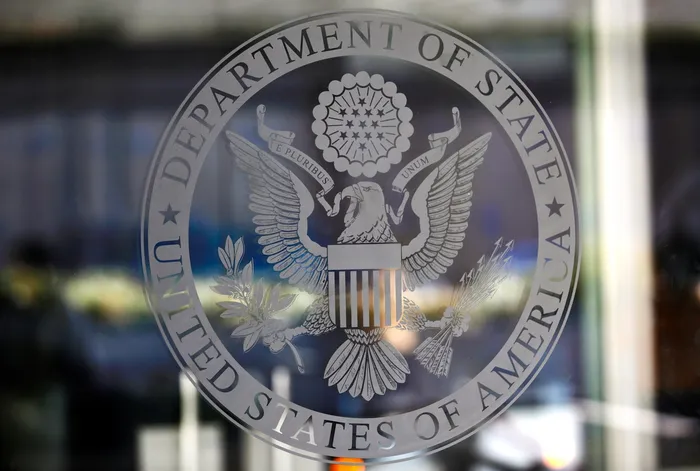
The recent settlement between the U.S. State Department and a group of conservative media outlets marks the end of a legal battle that most Americans never knew was happening. At its core, the lawsuit alleged that the State Department’s Global Engagement Center (GEC) used taxpayer resources to promote "adversary lists" that effectively demonetized and suppressed domestic news organizations. It is a story about how a government agency, designed to fight foreign propaganda, ended up aiming its sights inward.
The Mechanics of Silence
To understand how this happened, you have to look at the plumbing of the internet. Most major advertisers don't choose every site their ads appear on. They rely on "brand safety" organizations—essentially private rating agencies—to tell them which sites are "risky." If a rating agency labels a news outlet as a purveyor of "disinformation," the advertising revenue vanishes overnight.
The lawsuit, led by the State of Texas along with outlets like The Federalist and The Daily Wire, charged that the GEC actively promoted these private rating agencies. By providing them with grants, prestige, and data, the government wasn't just observing the conversation; it was tipping the scales.
Imagine a librarian who doesn’t just organize books, but stands by the door and whispers to every visitor that certain shelves are poisoned. You can still reach for those books, but the librarian has made sure you feel the weight of a warning you never asked for. Now, imagine the librarian is actually a federal agent, and the "poison" is simply a political perspective they find inconvenient.
The GEC was established to counter foreign interference from actors like Russia and China. It was a noble goal in an era of deepfakes and bot farms. But the line between "foreign propaganda" and "domestic dissent" proved to be dangerously thin. When the government began supporting entities like the Global Disinformation Index (GDI), it gave a federal seal of approval to a system that flagged mainstream conservative outlets as high-risk.
The result was a ghosting of the First Amendment. No laws were passed to ban these sites. No police arrived to seize the servers. Instead, the government used the soft power of "disinformation" labels to starve them of the capital needed to survive.
The Human Toll of a Label
Behind the legal filings and the dry talk of "settlement terms" are actual newsrooms. Think of a young journalist who spends weeks chasing a lead, verifying sources, and polishing prose, only to find that their work has been buried by an algorithm because a government-funded entity decided the publication was "unreliable."
The psychological effect is profound. It breeds a specific kind of paranoia—the realization that you aren't just competing with other journalists for clicks, but you are fighting a ghost in the machine. When the state gets involved in defining truth, the definition inevitably begins to look like the state’s own interests.
The settlement reached this week is a tactical retreat for the State Department. Under the terms, the GEC is prohibited from using its budget to promote or steer business toward these private censorship enterprises that target domestic speech. It is a win for the plaintiffs, certainly. But the scars on the digital landscape remain.
The defense often argued that they were merely "fostering media literacy" or "identifying narratives." These are comfortable, academic terms. They sound helpful. They sound safe. But in practice, they acted as a digital red pen, crossing out voices that didn't fit the approved script.
The danger of this model is that it treats the American public like children who cannot be trusted with a menu. It assumes that the average citizen is so fragile that they must be shielded from "wrong" information by a committee of experts. It replaces the messy, loud, and often frustrating marketplace of ideas with a sterile, curated gallery.
A Precedent of Shadows
The lawsuit highlighted a terrifyingly efficient loop. The government provides a grant to a non-profit. The non-profit creates a list of "disinformation" sites. Big Tech companies and advertising conglomerates use that list to block revenue. The government then points to the private companies' actions as "independent business decisions," washing its hands of the outcome.
It was a brilliant bit of legal engineering. By outsourcing the actual suppression to private firms, the government attempted to bypass the First Amendment entirely. If the State Department had sent an official letter telling an advertiser to stop working with a specific magazine, it would be an open-and-shut case of unconstitutional censorship. By doing it through the "Global Disinformation Index," they created a layer of plausible deniability.
The settlement tears that layer away. It acknowledges, if only through the cessation of the practice, that the government’s hand was indeed on the scale.
But we should be wary of thinking the problem is solved. The infrastructure for this kind of "narrative management" still exists. The desire for those in power to control the flow of information is a human constant, as old as the printing press itself. Only the tools have changed. Instead of burning books, we now just tweak the visibility settings.
The Weight of the Word
What happens to a society when its citizens realize the news they see is being filtered by a hidden hand?
Trust evaporates.
When people feel they are being manipulated for their own good, they don't become more "literate." They become more cynical. They stop believing in the institutions that claim to protect them. They retreat into even deeper silos, seeking out the very "fringe" content the censors were trying to hide, simply because it hasn't been sanctioned by the state.
The State Department settlement is a reminder that the First Amendment is not a suggestion; it is a boundary. It exists specifically to protect the speech that the government hates. The popular, government-approved speech never needed a constitutional amendment to survive.
The battle wasn't just about a few websites or a few million dollars in ad revenue. It was about who gets to decide what is "true" in a free society. If we allow the government to fund the referees of our digital town square, we shouldn't be surprised when the game is rigged.
The traffic graphs might start to climb again for the outlets involved in the suit. The digital arteries might begin to open up. But the lesson of the invisible red pen is one we cannot afford to forget. The moment we accept that some ideas are too "dangerous" to be heard is the moment we stop being a country of citizens and start being a country of subjects.
The screen flickers. A new article is posted. Somewhere, a server hums, and for now, the signal is clear.



