The salt air in the Strait of Hormuz has a way of corroding everything it touches. It eats at the steel of massive oil tankers and stings the eyes of the young sailors watching radar screens in cramped, windowless rooms. At its narrowest point, this strip of water is only twenty-one miles wide. That is a terrifyingly small space when you consider that a fifth of the world’s oil supply passes through it. It is a jugular vein. If you press hard enough here, the entire global body feels the heartbeat skip.
Lately, the tension in these waters has shifted from a low-grade fever to something much more clinical and dangerous. Tehran is no longer just talking about defense; they are rewriting the manual on how the world accesses the Persian Gulf.
The Ledger of the Atom
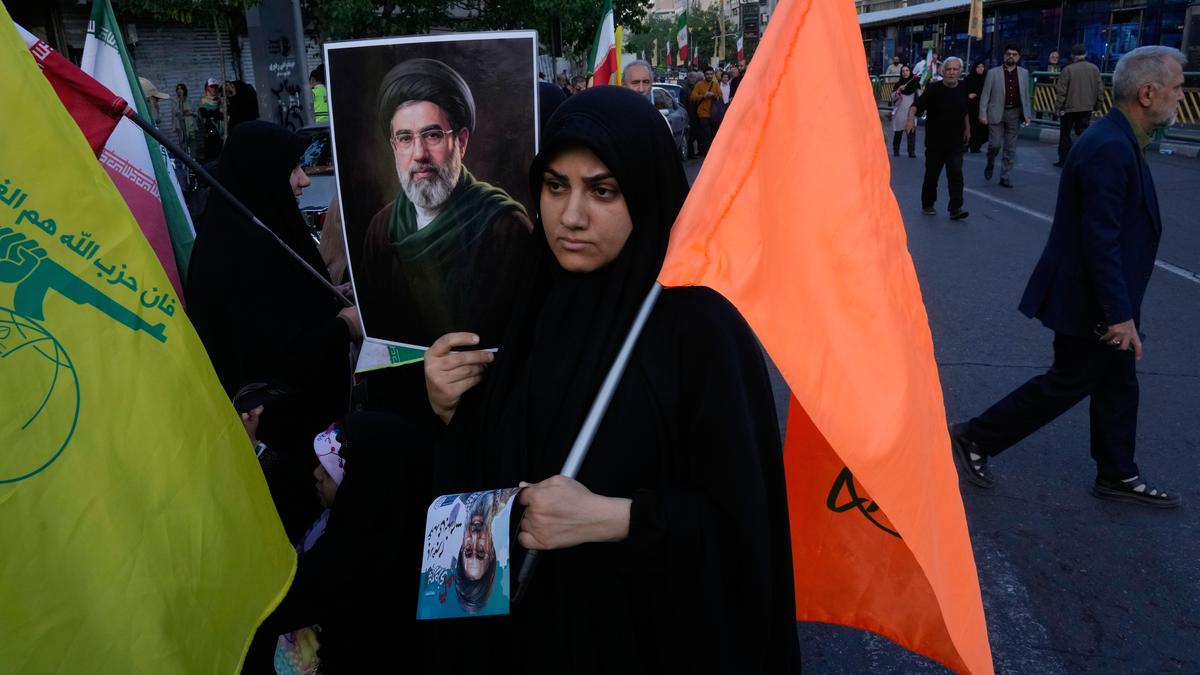
Deep beneath the mountains of central Iran, the hum of centrifuges creates a steady, rhythmic vibration that most of us will never hear. But for the scientists working there, and the satellites watching from above, that sound represents the ultimate insurance policy. Recently, Iranian officials made it clear: the days of tactical ambiguity are over. They have vowed to protect their nuclear capabilities with a renewed, aggressive posture.
To understand why this matters to a person sitting in a coffee shop in London or a commuter fueling up in Ohio, you have to look past the political speeches. Think of the nuclear program not just as a weapon or a power source, but as a vault. Inside that vault is the nation’s sense of sovereignty. Every time a new sanction is leveled or a cyberattack blurs the screens of a facility like Natanz, the vault door gets another heavy bolt.
The technical reality is staggering. Enriched uranium isn't just a substance; it is a countdown. By pushing enrichment levels closer to weapons-grade, Iran isn't necessarily saying they will build a bomb tomorrow. They are saying they have the capability to do so. That distinction is the thin wire the world is currently walking. It is a move designed to create "nuclear hedging," a state where you are a threshold power, perpetually one short step away from the finish line.
New Rules for an Ancient Sea
While the centrifuges spin in the dark, the light on the water in the Strait of Hormuz reveals a different kind of chess match. The Iranian leadership recently signaled a shift toward "new rules" for this waterway. In the past, the Strait was a place of uneasy coexistence. Now, it is being framed as a leverage point that can be tilted at will.
Imagine a merchant captain. Let’s call him Elias. Elias has spent thirty years navigating these waters. He knows the currents and the heat, but he doesn't know the politics. Under these "new rules," Elias is no longer just moving cargo; he is a pawn in a high-stakes demonstration of regional dominance. If Iran decides that the transit of certain vessels violates their interpretation of maritime security, the "rules" allow for seizures, inspections, or "defensive" maneuvers that can halt trade in an instant.
This isn't just about ships. It's about the psychological architecture of the global market. The moment a trader in Singapore believes the Strait might close, the price of crude oil jumps. That jump trickles down to the cost of plastic, the price of shipping a loaf of bread, and the interest rates set by central banks.
We often treat "geopolitics" as a dry academic subject. It isn't. It is the reason your groceries cost five percent more this month. It is the reason a tech company in Silicon Valley decides to delay a shipment of components. The Strait of Hormuz is a pressure sensor for the global economy, and Tehran has its foot firmly planted on the scale.
The Weight of the Invisible Stakes
There is a specific kind of fear that comes from things you cannot see. You cannot see radiation. You cannot see the digital code of a Stuxnet-style virus. You cannot see the political resolve of a closed-door cabinet meeting. Yet, these invisible forces dictate the physical reality of our lives.
The Iranian stance is a response to what they perceive as a broken promise. To them, the 2018 withdrawal from the nuclear deal by the United States wasn't just a policy change; it was a betrayal that necessitated a harder shell. When a nation feels backed into a corner, its rhetoric becomes more than just words. It becomes a blueprint for survival.
Consider the "new rules" of the Strait as a physical manifestation of that nuclear vault. If the world tries to reach into the vault, Iran will squeeze the jugular. It is a symbiotic strategy of defense. One happens in the silence of the underground; the other happens in the roar of fast-attack boats swarming a tanker.
The Human Cost of the Stalemate
Behind every headline about "capabilities" and "strategic signaling" are people. There are the families in Tehran who deal with the crushing weight of inflation caused by the very sanctions the nuclear program is meant to defy. There are the sailors on the USS Dwight D. Eisenhower, drifting in the Gulf, wondering if a miscalculation by a single drone operator will spark a conflagration.
The danger of "new rules" is that they are often written in pencil until they are etched in blood. When rules are ambiguous, mistakes happen. A ship turns too sharply. A warning shot is misinterpreted. In a twenty-one-mile-wide gap, there is no room for error.
We have moved past the era of simple diplomacy. We are now in a period of "kinetic diplomacy," where the movement of hardware and the enrichment of isotopes are the only languages being spoken. It is a conversation held in the dark, where the participants are shouting to be heard over the noise of their own machines.
The centrifuges continue to spin, a high-pitched whine that signals a refusal to back down. The waves in the Strait continue to crash against the hulls of the world's trade, carrying the threat of a sudden, suffocating stillness.
The vault is locked. The hand is on the throat. The world waits to see who breathes first.