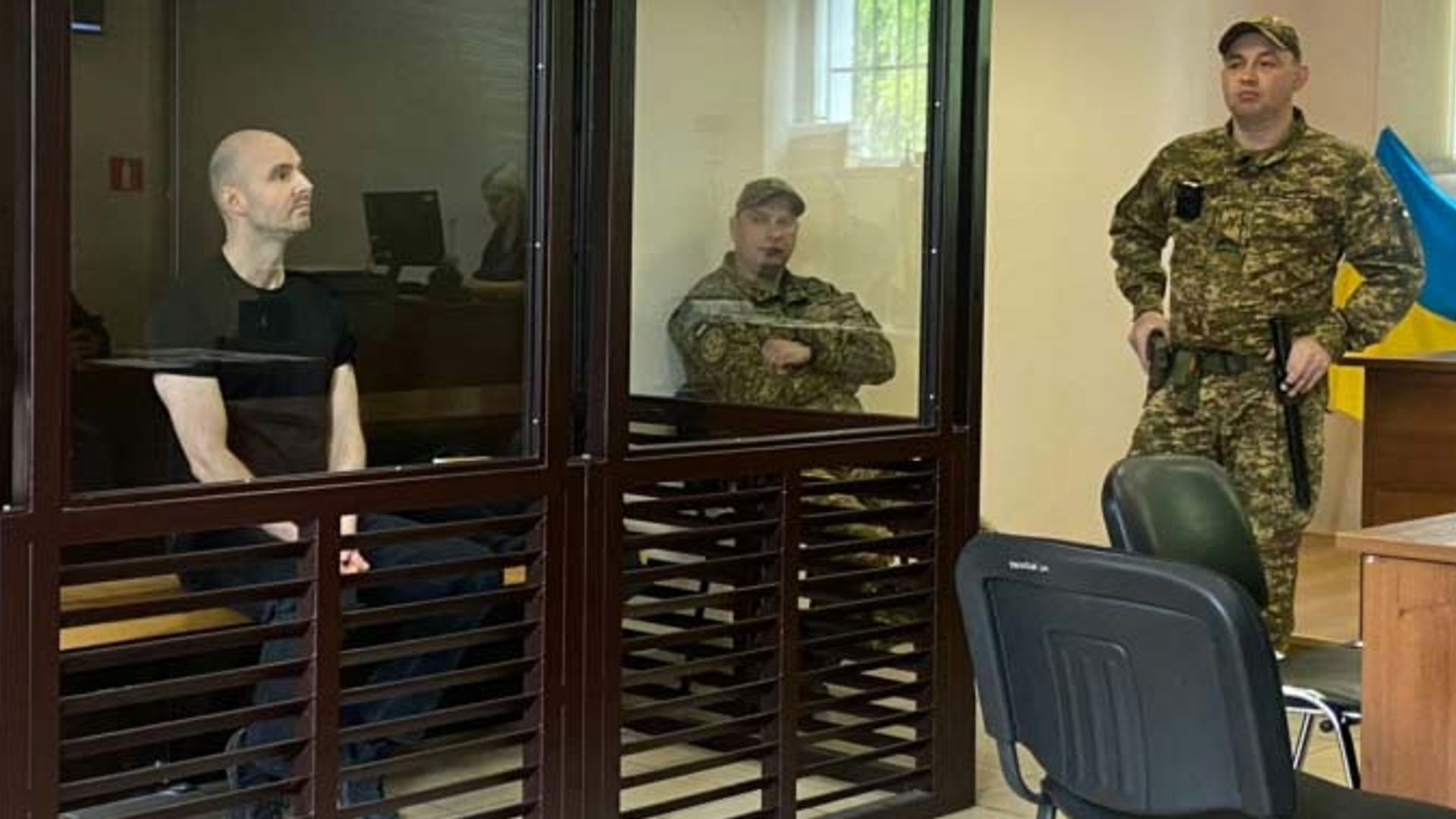
The recent sentencing of a British national for providing intelligence to the Russian Federation while residing in Ukraine serves as a case study in the shifting cost-benefit analysis of modern tradecraft. While media accounts focus on the drama of the arrest, the underlying reality is a clinical operation of human-intelligence (HUMINT) procurement in a high-intensity conflict zone. The conviction rests on a fundamental breakdown of the "Intelligence Lifecycle"—the systemic process of planning, collection, processing, and dissemination. When an individual operates outside the protection of an official diplomatic pouch or state-sanctioned immunity, they become a high-risk asset with a high probability of terminal compromise.
The Structural Architecture of Modern Espionage
Intelligence operations in 2026 are categorized by the proximity of the asset to the objective and the technical medium used for transmission. In this specific instance, the subject’s utility to the Russian state was defined by physical presence in a territory undergoing active military and administrative transition. This creates three distinct layers of operational risk:
- The Geographic Proximity Risk: Operating within the sovereign territory of the adversary (Ukraine) while communicating with a third-party state (Russia) creates a dual-threat environment. The asset is subject to local counter-intelligence (SBU) and signals intelligence (SIGINT) monitoring from international partners.
- The Technical Footprint: Modern counter-espionage utilizes automated pattern recognition to identify anomalous communication behaviors. Transferring sensitive data—whether troop movements, infrastructure vulnerabilities, or political intelligence—requires a secure channel. Any deviation into consumer-grade encryption or unencrypted channels provides the forensic trail necessary for a conviction.
- The Human Factor and Motivation: Most non-professional assets are recruited through what intelligence circles define as the MICE framework (Money, Ideology, Coercion, Ego). In cases where a foreign national admits to spying, the motive often shifts from ideology to financial desperation or coercion, which simultaneously makes the asset more prone to operational security (OPSEC) failures.
Quantitative Assessment of the Intelligence Yield
The severity of a prison sentence in espionage cases is often proportional to the "damage assessment" conducted by the state’s intelligence services. This assessment calculates the delta between the state’s security posture before and after the leak.
In the context of the Ukraine-Russia conflict, intelligence has a decaying half-life. Tactical data, such as the coordinates of a mobile unit, loses 90% of its value within hours. Strategic data, such as the location of underground command centers or the specific technical specifications of air defense systems, retains value for months. The prosecution’s success in this case suggests the subject provided data with high strategic longevity. The legal system quantifies this damage through sentencing guidelines that weigh the intent to cause harm against the actualized risk to national security.
Counter-Intelligence Detection Matrices
The apprehension of the subject was likely the result of a "trigger-event" within a larger surveillance matrix. Modern counter-intelligence does not rely on luck; it relies on identifying deviations from a baseline.
- Behavioral Anomalies: A foreign national frequently visiting sensitive locations or maintaining contact with known foreign intelligence officers (FIOs) creates a red flag in relational databases.
- Financial Discrepancies: The "Money" aspect of recruitment leaves a trail. Large, unexplained deposits or high-frequency, low-value transfers from shell companies are flagged by anti-money laundering (AML) protocols.
- Digital Exhaust: Every interaction with a cell tower or public Wi-Fi creates a timestamped log. When these logs correlate with the timing of intelligence "drops" or Russian kinetic strikes, the circumstantial evidence becomes statistically undeniable.
The Legal Framework of Foreign Agent Prosecution
The conviction of a British man in a Ukrainian court highlights the complexities of international law during wartime. Under Article 114 of the Criminal Code of Ukraine, espionage involves the transfer of state secrets to a foreign state, organization, or their representatives. For a foreign national, this is a precarious legal position because:
- Jurisdictional Supremacy: The crime occurred on Ukrainian soil, giving Ukraine the primary right to prosecute, regardless of the subject’s citizenship.
- Extradition Hurdles: During active conflict, extradition requests for intelligence-related crimes are almost never granted, as the subject is viewed as a high-value asset for information extraction or future prisoner exchanges.
- Evidence Thresholds: An admission of guilt, as seen in this case, often follows a "locked-in" evidence chain where the prosecution presents undeniable forensic data—such as recovered encrypted messages or physical dead-drop evidence—leaving the defense with no viable path to acquittal.
The Role of Asymmetric Information in Modern Conflict
Information asymmetry is the primary driver of intelligence value. Russia’s reliance on human assets (HUMINT) to supplement its satellite imagery (IMINT) suggests gaps in its technical collection capabilities. A human on the ground can provide context that a satellite cannot: the morale of a unit, the true operational status of a "decoy" HIMARS launcher, or the specific timing of a civilian-military meeting.
The subject functioned as a "sensor" in an integrated kill chain. By admitting to spying, the subject acknowledged his role as a component of a foreign military apparatus. This elevates the act from a simple criminal offense to an act of hybrid warfare.
Strategic Implications for Foreign Nationals in High-Risk Zones
The incarceration of a British national underscores the "Duty of Care" dilemma for home governments. The UK Foreign, Commonwealth & Development Office (FCDO) faces a restricted set of options when a citizen is charged with espionage. Consular access is a right, but interference in the judicial process of a sovereign ally is diplomatically impossible, especially when the charges involve collaboration with an aggressor state.
This creates a "Zero-Protection Environment" for individuals who engage in clandestine activities. The assumption that a Western passport provides a layer of immunity is a catastrophic miscalculation. In a high-stakes geopolitical environment, the individual is a pawn in a larger game of signaling between powers.
The Mechanism of the Plea Bargain in Espionage
Why admit to spying? In many high-profile cases, an admission is a calculated move to avoid a life sentence or to position oneself for a "spy swap." Historically, the Russian Federation has used imprisoned Westerners as leverage to secure the release of its own "illegals" or high-level intelligence officers held in Western capitals.
The plea bargain serves two purposes:
- State Efficiency: It allows the Ukrainian government to secure a win without a protracted trial that could expose its own counter-intelligence methods.
- Asset Preservation: For the individual, a fixed-term sentence is preferable to the uncertainty of a wartime tribunal.
Future Trajectory of HUMINT Operations
The "British man in Ukraine" scenario will become more frequent as conflict becomes increasingly decentralized. We are seeing the "Uber-ization" of espionage, where states use non-professional, low-cost assets to perform high-risk tasks. These individuals are often recruited via social media or dark web forums, briefed remotely, and provided with digital currency for payment.
This model is inherently disposable. The state actor (Russia) minimizes the risk to its professional officers while maximizing the "burn rate" of its local or foreign national assets. The failure of the asset is a statistical certainty built into the operational model.
The strategic takeaway for any entity operating in or near conflict zones is the total transparency of the modern digital and physical environment. The ability to hide in plain sight has been neutralized by the integration of SIGINT, HUMINT, and AI-driven pattern analysis. The legal consequences are no longer just domestic; they are geopolitical instruments. Governments and organizations must recognize that the cost of intelligence collection is rising, and the primary currency being spent is the liberty of the assets themselves. Individuals operating in these spaces must assume that every communication is intercepted, every movement is logged, and the state's response to betrayal will be clinical, documented, and permanent.