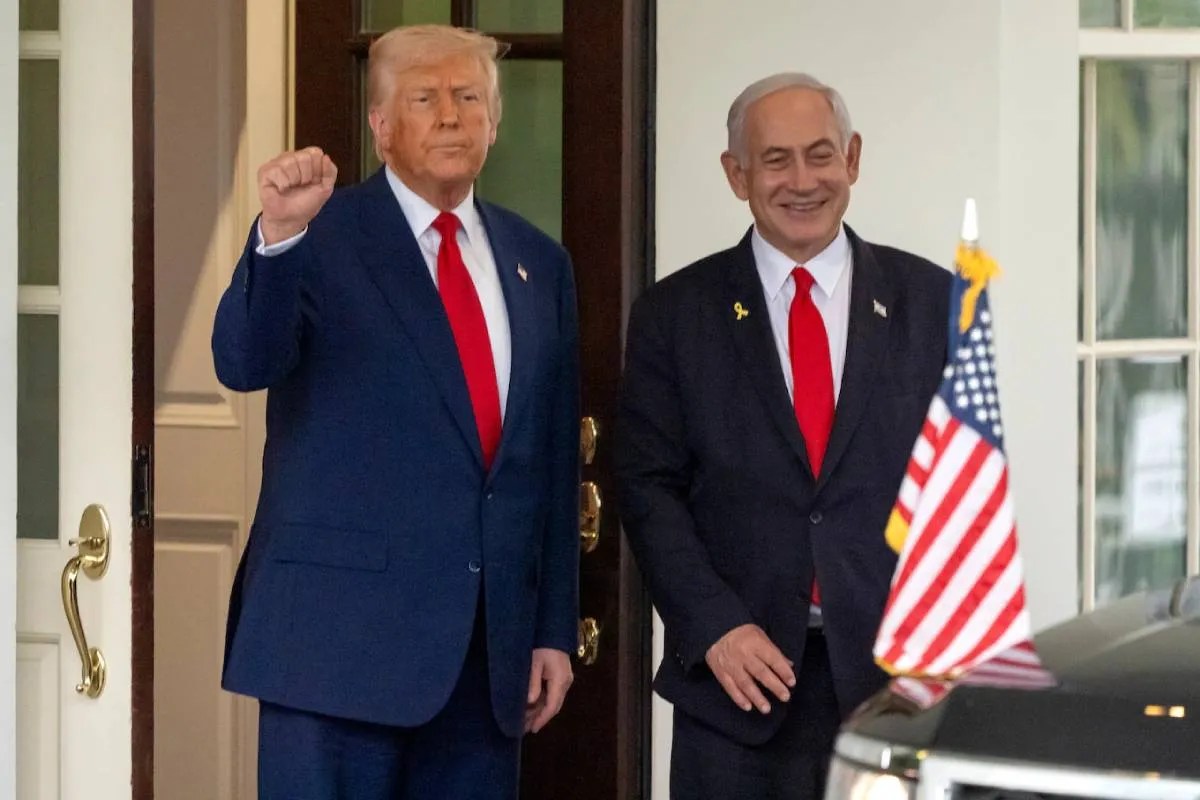
The political life of Benjamin Netanyahu has always been a game of inches, but the current 10-day temporary ceasefire in Lebanon, brokered by Donald Trump, has pushed the Israeli Prime Minister into a corner from which there may be no clean escape. On the streets of West Jerusalem and Tel Aviv, the air is thick with the smoke of protest flares. Tens of thousands of Israelis are no longer just demanding the return of hostages; they are demanding a date for the end of the Netanyahu era.
This isn’t just another round of civil unrest. It is a fundamental collapse of the "Mr. Security" brand that Netanyahu spent three decades building. The irony is sharp enough to cut: the Prime Minister’s survival now depends on navigating a peace process dictated by a U.S. President who has proven far less pliable than Netanyahu’s base expected.
The Trump Ultimatum and the End of Defiance
For years, Netanyahu mastered the art of "no." He successfully side-stepped the Biden administration’s red lines by leaning into his domestic right-wing coalition. But the dynamic changed when Trump returned to the Oval Office. Trump’s "deal-maker" persona requires results, not perpetual skirmishes. By forcing the 10-day truce with Lebanon and pushing for the second phase of the Gaza peace plan, Trump has stripped Netanyahu of his favorite shield: the claim that he is the only man capable of standing up to Washington.
The pressure from the White House is now direct and transactional. Trump wants a regional "grand bargain" that includes the normalization of ties between Israel and Saudi Arabia—a crown jewel for any U.S. president. However, the price of that bargain is a permanent ceasefire and a credible path to Palestinian governance in Gaza, two things Netanyahu’s extremist coalition partners, Itamar Ben-Gvir and Bezalel Smotrich, have vowed to burn the government down over.
The Coalition Mutiny
Inside the Knesset, the math is becoming terminal. Ben-Gvir and Smotrich are not merely posturing; they are witnessing their ideological dream of total settlement and annexation being traded for a diplomatic win in Washington. If they withdraw their support, the government collapses. If they stay, they risk being seen as complicit in what they term a "surrender."
Netanyahu is currently attempting a "third way" that doesn't exist. He frames the ceasefire as a tactical pause to dismantle Hezbollah's missile infrastructure through diplomacy rather than blood, but his own generals are skeptical. The IDF is currently holding the "Yellow Line," a security buffer in southern Lebanon, but holding territory without an active mission is a recipe for stagnation and rising casualties.
The financial markets have already voiced their verdict. The shekel remains volatile, and international credit agencies have flagged the continued political instability as a primary risk factor for Israel’s 2026 economic recovery. Investors aren't just worried about rockets; they are worried about a vacuum of leadership.
A Public at the Breaking Point
While the political elite bicker, the Israeli public has reached a saturation point. Recent polling suggests that 72% of Israelis support the ceasefire deal, but nearly 70% also want immediate elections the moment the guns fall silent. The disconnect is staggering. Netanyahu is presiding over a country that wants the peace he is negotiating but doesn't want him to lead it.
The protests occurring this week are different from the judicial reform rallies of 2023. They are grimmer. They include families of the "second wave" of hostages and reservists who have spent the better part of two years in uniform. To these groups, the 10-day ceasefire isn't a diplomatic masterstroke; it’s a reminder of the time lost to political maneuvering.
The Hamas Disarmament Deadlock
In Gaza, the situation is even more precarious. The "Board of Peace," an international body tasked with reconstruction, has $17 billion in pledges ready to flow. However, Saudi Arabia and the UAE have made it clear: not a single riyal moves until there is a verified plan for Hamas to disarm and the IDF to withdraw.
Hamas has predictably refused to surrender its arsenal, using the ceasefire to regroup. This puts Netanyahu in an impossible bind. If he resumes the war to force disarmament, he defies Trump and loses the Arab normalization deal. If he allows the status quo to persist, he leaves a weakened but functional Hamas on his doorstep, effectively admitting that his "total victory" promise was a campaign slogan, not a military reality.
The Shadow of the Courtroom
Looming over every decision is Netanyahu’s ongoing corruption trial. In Israel, the Prime Minister’s survival isn't just about legacy; it's about legal immunity. A collapse of the government means a return to the status of a private citizen, subject to the full weight of the judiciary without the protection of the premiership.
This personal stakes-to-policy pipeline is what makes the current crisis so dangerous. Critics argue that Netanyahu is lengthening the conflict or stalling the peace process not for the "security of Israel," but for the security of Benjamin Netanyahu. Whether that is true or not is almost secondary to the fact that half the country—and an increasing number of his international allies—believes it to be the case.
The 10-day ceasefire is a ticking clock. When it expires, Netanyahu must choose between his coalition, his international benefactor, or his own political exit. In the past, he has managed to jam the gears of history to stay in power. This time, the machine is simply too big, and the man in the White House is too impatient to wait for Netanyahu to find a way out.
The era of "managing the conflict" has ended. Israel is now forced to resolve it, and the man who spent a career avoiding that resolution may find he is the first casualty of the new peace.