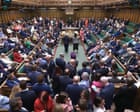
The basic annual salary for a Member of Parliament is set to hit £110,000 by 2029, a figure that marks a psychological and fiscal shift in British politics. This represents a nearly £19,000 increase over the course of the current parliament. While the Independent Parliamentary Standards Authority (IPSA) frames this as a necessary adjustment for a job that has become increasingly dangerous and complex, the timing is, to put it mildly, explosive. Chancellor Rachel Reeves is currently preparing a Spring Statement against a backdrop of threatened strikes and a potential energy shock.
For the average voter, a six-figure salary is a distant dream. For an MP, it is now the baseline. This trajectory began with a 5% jump scheduled for April 2026, which will bring the basic pay to £98,599. But the headline numbers only scratch the surface of a much deeper, more structural tension between the cost of democracy and the reality of the public purse.
The Benchmarking Trap
The most significant change in how our politicians are paid isn't the amount itself, but the "benchmarking" logic IPSA is now employing. Historically, pay rises were linked to the average increase in public sector earnings. This year, the watchdog added a 1.5% "adjustment" on top of the 3.5% cost-of-living increase.
This adjustment is intended to bring MPs in line with "other responsible roles" in the public sector and international peers. It is a move toward professionalization that seeks to treat the House of Commons less like a chamber of vocational service and more like a senior management tier. However, this creates a feedback loop. By decoupling MP pay from the raw average of their constituents' earnings, the watchdog risks creating a political class that is financially insulated from the very economic pressures they are elected to solve.
The Taxpayers’ Alliance has already pointed out the friction here. They argue that pay should be linked to GDP per capita, ensuring that if the country suffers a "personal recession," the politicians do too. Instead, we have a system where the "complexity of casework" is cited as a reason for a raise—a metric that, ironically, often increases when government policy fails to stabilize the economy.
The High Price of Abuse
Perhaps the most sobering justification for the £110,000 target is the surge in abuse and intimidation. IPSA’s chair, Richard Lloyd, explicitly linked the pay rise to the growing risks parliamentarians face. A recent survey revealed that 96% of MPs have experienced some form of abuse. One in six has considered resigning because of it.
From a human resources perspective, this is "danger money." If a role involves a high probability of being harassed, stalked, or threatened, the market rate for that role naturally rises to attract talent. But there is a dark irony in the taxpayer paying a premium to compensate for the toxicity of the national conversation. We are essentially taxing ourselves to pay for the consequences of our own political polarization.
The £100k Tax Trap
Crossing the six-figure threshold isn't all upside for the 650 individuals in the Commons. Once an MP's salary hits £100,000, they enter one of the most punitive brackets in the UK tax system.
- Personal Allowance Withdrawal: For every £2 earned over £100,000, £1 of the tax-free personal allowance is lost.
- Effective Tax Rate: This creates a "60% tax trap" between £100,000 and £125,140.
- Childcare Cliff: High earners lose eligibility for tax-free childcare and the 30 free hours of childcare for three- and four-year-olds.
For an MP with young children, moving from £98,000 to £102,000 could actually result in a net loss of disposable income. This raises an awkward question: will the "benchmarking" soon require yet another jump to compensate for the tax trap we’ve built for everyone else?
The Staffing Disparity
While MPs look toward £110,000, their staff are operating in a different reality. More than 160 MPs previously signed a letter protesting the gap between their own pay rises and the budgets allocated for the researchers and caseworkers who actually do the "complex casework" cited by IPSA.
The staff often bear the brunt of the abuse—69% reported intimidation—yet their pay awards have frequently trailed behind those of the members they serve. If the justification for the rise is the difficulty of the work, the logic should arguably apply most urgently to the foot soldiers in the constituency offices who earn a fraction of the basic MP salary.
The Global Context
We often hear that British MPs are "underpaid" compared to their international counterparts. It is true that US Congress members earn approximately $174,000 (£137,000), and Italian deputies have historically enjoyed some of the highest salaries in Europe.
However, many of these systems do not have the same level of subsidized expenses or the "Short Money" available to opposition parties in the UK. Comparing base salaries without looking at the total cost of a representative is a shallow exercise. When we factor in the £281.3 million total budget for MP pay, staffing, and business costs for 2025/26, the price of representation looks far more substantial.
A Career or a Calling
The push toward £110,000 is an attempt to answer a fundamental question: who do we want in Parliament? If the pay is too low, the House of Commons becomes the playground of the independently wealthy. If the pay is too high, it becomes a careerist's haven, detached from the lived experience of the working public.
IPSA’s "benchmarking" suggests they have chosen the professional path. They want the "best and brightest" from law, medicine, and business to see Parliament as a viable mid-career move rather than a financial sacrifice. But in doing so, they may be cementing the image of the MP as a member of a remote managerial elite.
The Spring Statement will be the first real test of how this sits with the public. With the war in Iran impacting energy prices and public sector workers across the board demanding parity, a £110,000 salary for those in the voting lobbies will be a difficult sell on the doorstep.
Would you like me to analyze how the projected 2029 MP salary compares to the UK’s top 5% of earners to see how far the "wealth gap" is widening?