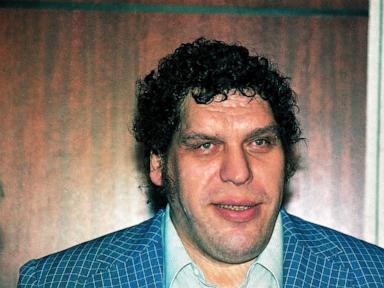
The installation of a roadside marker in Ellerbe, North Carolina, honoring Andre The Giant is not merely a gesture of local pride. It functions as a targeted deployment of cultural capital designed to transform transient vehicular traffic into a stationary economic asset. Small municipalities often lack the fiscal resources to attract major corporate investment; however, they possess the ability to commoditize nostalgia and geographic association. By anchoring a global figure like Andre Roussimoff to a specific coordinate in the Sandhills region, Ellerbe executes a low-cost, high-visibility branding strategy that exploits the human cognitive bias toward pilgrimage.
The Three Components Of Micro-Tourism Monetization
For a town of roughly 1,000 residents, the primary economic challenge is not production, but visibility. The memorialization of Andre The Giant functions through a tripartite framework: site-specificity, narrative authentication, and infrastructure integration.
Site-Specificity And The Geography Of Relevance
The marker’s location is the primary variable in its success. Ellerbe was the physical residence of Roussimoff during the latter stages of his career. This provides the "authenticity index"—a metric measuring the distance between a cultural claim and historical reality. Unlike a generic statue placed in a theme park, the Ellerbe site possesses a high authenticity index because it is grounded in the subject's private domestic life rather than his public theatrical performance. This distinction is critical for niche tourism; audiences prioritize locations that offer an intimacy unavailable in mass-market entertainment centers.
Narrative Authentication
The storytelling mechanism here relies on the juxtaposition of the "Giant" persona and the mundane nature of a small-town retirement. This contradiction generates curiosity. When tourists travel to a site, they are not seeking a lecture; they are seeking a tangible connection to a myth. By codifying his residency in a formal historical marker, the town validates the visitor's desire to participate in that myth. The marker acts as a verification device, turning a vague piece of pop-culture trivia into a quantifiable geographic fact.
Infrastructure Integration
A marker alone is an insufficient economic driver. Its success depends on the "frictionless transition" from the highway to the point of interest. Ellerbe benefits from proximity to U.S. Route 220 and Interstate 73/74. Without this transit artery, the site would remain unreachable to the target demographic: regional travelers who view roadside attractions as interruptions to routine travel. The marker operates as a conversion tool, pulling motorists off the high-speed transit line and into the local economic sphere where fuel, food, and peripheral retail transactions occur.
The Cognitive Economics Of The Roadside Attraction
The appeal of the Andre The Giant marker is governed by the "curiosity-convenience tradeoff." Modern travelers optimize for efficiency. A destination that requires significant time investment must provide high utility. A roadside historical marker requires near-zero time investment but provides a high-density "hit" of cultural information.
The efficiency of this model rests on three distinct factors:
- Low Barrier to Entry: The marker is accessible 24/7 without tickets, queues, or digital reservation systems.
- Viral Capability: In the age of social media, the marker serves as a visual prop. The photograph of the marker acts as proof of participation, which the user then broadcasts to their network. This creates a distributed marketing loop where the town incurs zero advertising costs; the visitors perform the marketing function on behalf of the municipality.
- Sunk Cost Fallacy and Ancillary Spending: Once a traveler exits the highway to view the marker, they have expended time and effort. This increases the likelihood that they will perform secondary activities, such as purchasing a coffee or a meal, to "rationalize" the deviation from their original travel path.
The Scaling Problem In Regional Branding
While Ellerbe has successfully utilized this marker to stake a claim on cultural relevance, the strategy faces a volatility risk. A single marker is a static asset. If the municipality fails to develop a surrounding ecosystem—a dedicated exhibit, themed retail, or a local history tour—the "novelty decay" occurs rapidly.
Novelty decay is the mathematical rate at which the interest in a roadside attraction diminishes once the photograph has been taken and shared. To mitigate this, a municipality must transition from a "point-source" attraction to a "networked" attraction. This involves creating a circuit where the Andre The Giant marker is one stop among several points of interest.
The strategic failure of many towns lies in treating the marker as an end-state rather than a lead-generation tool. The marker is the hook; the town must provide the subsequent bait. Without local businesses aligned to convert the foot traffic into revenue, the town collects only the negative externalities of tourism—traffic congestion and infrastructure wear—without realizing the fiscal benefits.
Operational Execution And Future Yield
The long-term value of this project is tied to the management of "brand consistency." Andre The Giant’s likeness is a registered trademark of WWE, but the historical facts of his life in North Carolina remain in the public domain. The town must navigate the legal boundaries of using his name and image for municipal promotion.
To maximize the yield from this asset, the town must treat the marker as a data-collection node. By monitoring the frequency of social media check-ins and cross-referencing this with local sales data from nearby retail outlets, officials can quantify the return on investment of the physical installation. If the data shows that traffic spikes on weekends but revenue remains flat, the intervention should shift toward "dwell time optimization"—creating physical spaces where visitors are compelled to linger, thereby increasing the probability of financial transaction.
The strategic play for any municipality aiming to replicate this outcome is to identify a dormant, high-equity cultural figure with a verifiable local connection. They must then construct a permanent, free-access installation that facilitates user-generated content. This strategy converts the town from a passive transit point into a destination of choice, shifting the local economy from a dependence on through-traffic to a reliance on intentional visitation.