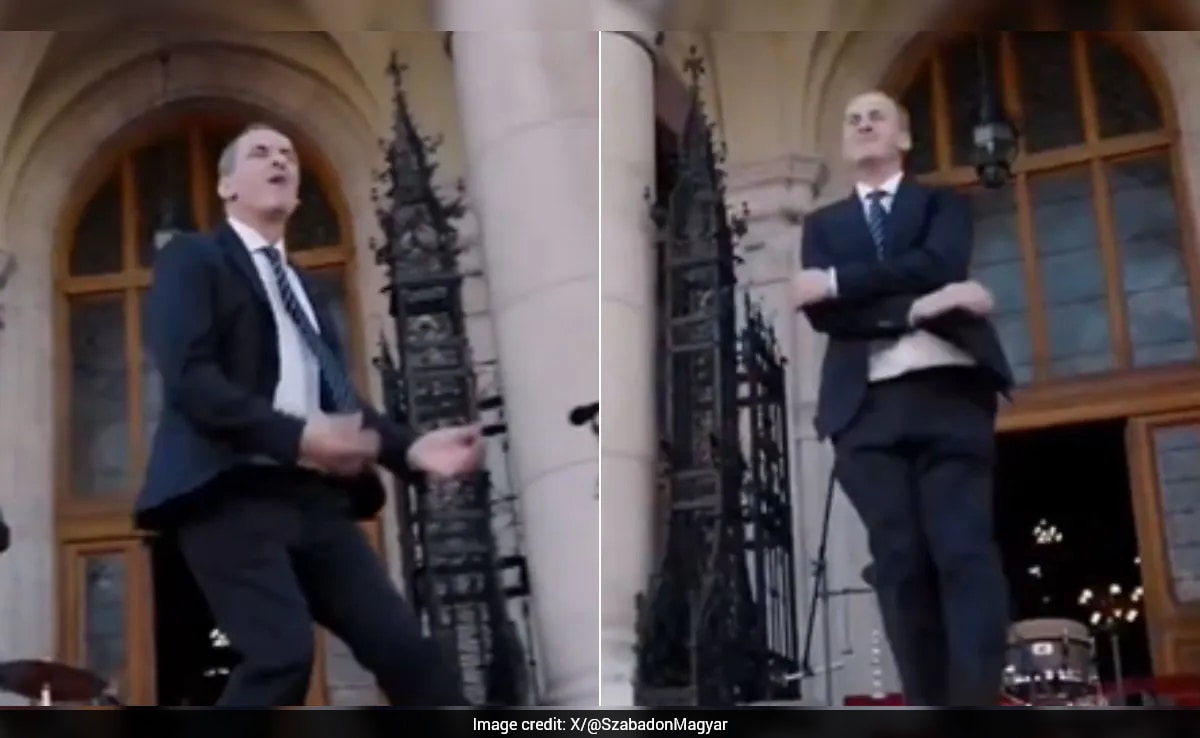
Politics usually feels like a stiff, choreographed theater performance where nobody knows their lines but everyone pretends they do. Then a video drops of a Hungarian politician absolutely letting loose at Peter Magyar's inauguration, and suddenly, the internet loses its mind. You've probably seen the clip by now. It’s grainy, it’s loud, and it features the kind of "dad dancing" that usually stays confined to wedding receptions after the third glass of champagne. But in the context of Hungary’s current political pressure cooker, those dance moves aren't just entertainment. They're a signal.
People are sharing the video because it’s "cool" or "relatable," but there’s a much deeper layer here about how the opposition is trying to humanize itself. For years, the ruling party has painted their rivals as out-of-touch elites or stiff bureaucrats. Seeing someone from the Magyar camp dancing like nobody is watching—even though everyone is—breaks that mold. It’s a middle finger to the polished, sterilized image of traditional politics.
The viral moment that caught the government off guard
The inauguration of Peter Magyar wasn’t supposed to be a party. It was a serious political pivot point. Magyar has been shaking up the Hungarian landscape by pulling back the curtain on the inner workings of the system he used to be part of. When the formal speeches ended and the music started, the atmosphere shifted.
The video shows a level of genuine joy that you simply don’t see in state-sponsored events. State events in Hungary are often massive, expensive, and meticulously planned to show strength. This was different. It felt raw. It felt like people who actually like each other were celebrating a win they didn't think was possible a year ago.
Viral moments like this don't happen because the dancing is "good." In fact, it's better that the dancing is a bit awkward. If it were a professional routine, it would feel fake. The charm lies in the lack of self-consciousness. It tells the public that these politicians are people first and power-seekers second. That’s a powerful narrative when you're trying to build a grassroots movement from scratch.
How Peter Magyar changed the rules of the game
Magyar didn't just show up; he exploded onto the scene. His rise is tied to a specific kind of digital-first campaigning that bypasses traditional media outlets, which are often heavily influenced by the state. By leaning into social media, he’s created an environment where a 30-second clip of a supporter dancing can reach more people than a three-hour televised debate.
Think about the numbers. Traditional political ads have a conversion rate that would make most marketers cry. But a viral video? That’s free Earned Media. It bypasses the "this is an ad" filter in our brains. You aren't being told what to think; you're being shown how people feel. That's a massive distinction.
Magyar’s inauguration was the culmination of weeks of protests and public rallies. He’s tapped into a specific vein of frustration among the youth and the disillusioned middle class. To them, the dancing politician isn't just a meme. It’s a sign that the movement is alive and energetic. It’s the antithesis of the "gray man" politics that has dominated the region for decades.
Why the old guard is terrified of relatable content
If you're an incumbent leader, you want your opponents to look like extremists or bored intellectuals. You don't want them to look like the guy you'd grab a beer with. This "cool" dance video is a nightmare for traditional political strategists because it can't be easily attacked.
How do you criticize someone for being happy? If the state media tries to mock the dancing, they look like bullies. If they ignore it, they miss out on the cultural conversation. It’s a "damned if you do, damned if you don't" scenario. We've seen this before in other countries—politicians like Alexandria Ocasio-Cortez or Sanna Marin used similar tactics to bridge the gap between the legislative chamber and the TikTok feed.
In Hungary, this is especially potent. The political divide is deep. Using humor and "vibe-based" content is a way to reach across that chasm. It’s a low-stakes entry point for people who are tired of the constant shouting matches on the news.
The psychology of the political party atmosphere
Most political events feel like funerals. The air is sucked out of the room by jargon and heavy-handed symbolism. Magyar’s team did something different. They made it feel like a festival. When you look at the footage, you see a crowd that isn't just there to listen; they're there to participate.
The "cool" dance was the peak of that participation. It wasn't just one person on a stage; it was the energy of the room captured in a single person's movements. From a psychological standpoint, this creates a "social proof" loop. If these people are having fun, the movement must be winning. Humans are hardwired to want to be part of a winning, happy tribe.
What happens when the music stops
While the dance is great for engagement, Magyar still faces a mountain of challenges. You can't dance your way through a legislative session or a budget crisis. The real test will be whether this "cool" factor can translate into actual policy and sustained voter turnout.
However, don't underestimate the power of the "vibe shift." In 2024 and beyond, politics is as much about culture as it is about economics. If Magyar can keep this energy going, he’s not just a politician; he’s a brand. And in the current attention economy, a strong brand is worth more than a hundred white papers.
Look at the way the video has been edited and re-shared with different soundtracks. It’s become a template. People are putting their own favorite songs over the politician’s moves. This is decentralized campaigning at its best. The supporters are doing the work of the PR department for free because they actually care about the content.
Breaking down the optics of the inauguration
Every detail of that event was scrutinized. The clothes, the guest list, and yes, the playlist. By choosing music that resonated with a younger demographic, the organizers signaled exactly who they were courting. They weren't looking for the approval of the old political elite. They were looking for the people who spend their time on YouTube and Instagram.
The politician who danced probably didn't think he was going to become a focal point of the international press. He was likely just caught up in the moment. But that’s exactly why it worked. Authenticity is the rarest commodity in the modern world. You can't fake the way someone's shoulders move when they're actually enjoying a beat.
Stop ignoring the cultural impact of memes
Critics will say this is trivial. They'll argue that focusing on a dance video distracts from "real" issues. They're wrong. In a world where most people get their news from scrolling through feeds, the "trivial" stuff is the only thing that actually breaks through the noise.
If a 15-second clip can make a teenager in Budapest or a grandmother in the countryside stop and smile, it has done more for the movement than a thousand-page manifesto. It starts a conversation. It gets people asking, "Who was that?" and "Why were they so happy?"
That curiosity is the first step toward political engagement. Once you have their attention, then you can talk about the economy, corruption, and the future of the country. But you have to get them to look at you first.
Moving beyond the viral clip
If you want to understand the future of Hungarian politics, don't look at the official press releases. Look at the comments sections of these viral videos. Look at the people who are defending the "cool" dance against trolls. That’s where the real political organizing is happening.
The next steps for the Magyar movement aren't about more dances. They're about infrastructure. They need to turn this digital energy into a physical presence in every town and village. But they’ve already won the first battle: they’ve made politics interesting again.
Keep an eye on how the ruling party responds in the coming weeks. If they start trying to act "cool" too, you'll know they're truly worried. There is nothing more cringeworthy than a government official trying to manufacture a viral moment. It usually backfires spectacularly.
The lesson here is simple. Stop overthinking the optics and start being human. It's the one thing the "old system" can't figure out how to do. If you're following the Hungarian situation, watch the rallies, but pay closer attention to what happens when the cameras are supposed to be off. That’s where the truth usually lives.