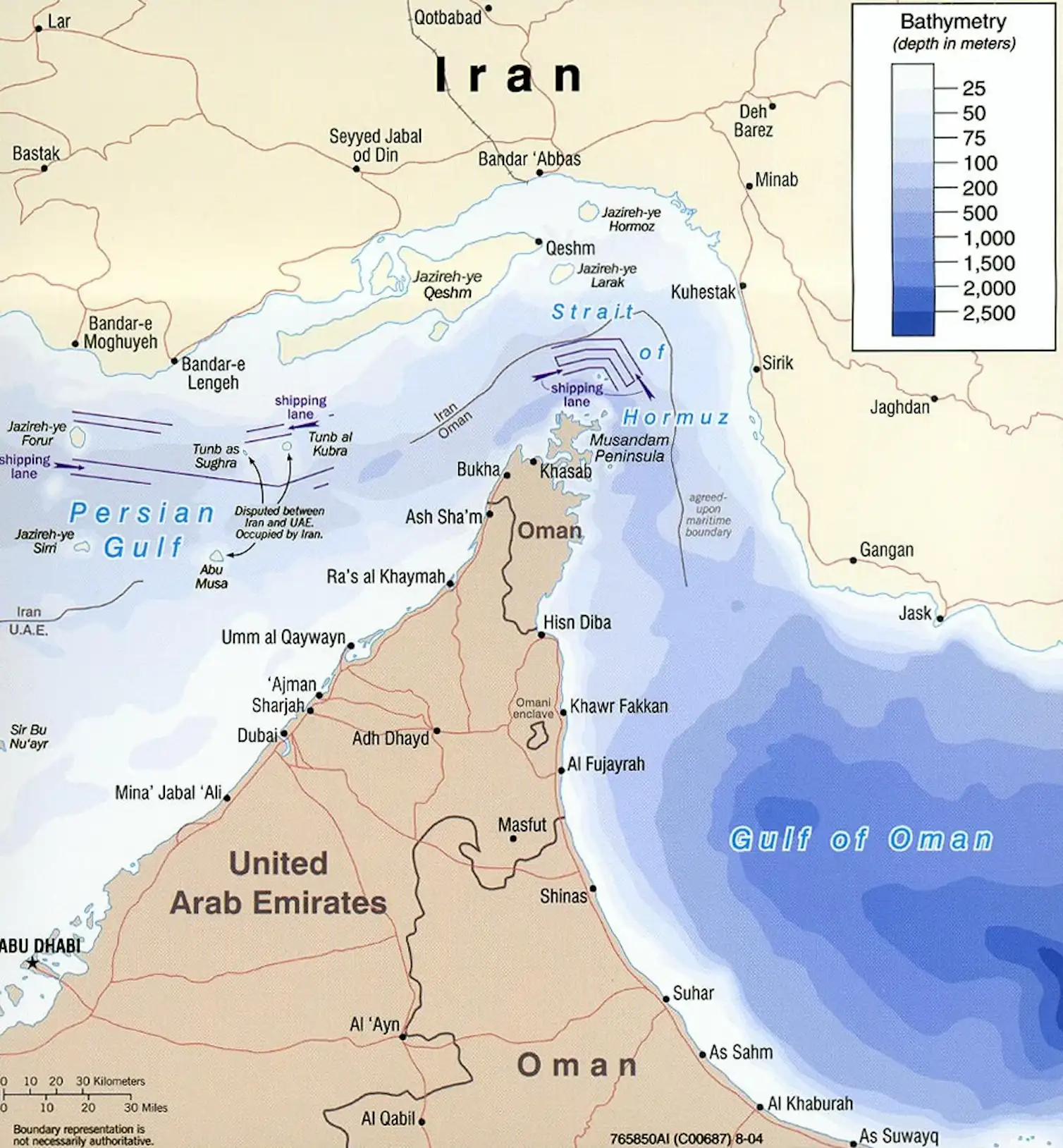
Western media loves a predictable script. Whenever tensions flare in the Persian Gulf, the foreign policy establishment rushes to publish the same tired headline: Iran is tightening its grip on the Strait of Hormuz. The latest catalyst for this collective panic is Tehran’s announcement of a new "regulatory" body for the strait, complete with a shiny new X account to project its digital authority.
Mainstream analysts look at this bureau and see a terrifying escalation in maritime control. They see a state consolidating power over a choke point that handles 20% of the world's petroleum.
They are looking at it completely wrong.
This isn't a show of strength. It is a confession of bureaucratic desperation. Creating a committee and launching a social media profile is what a government does when it realizes traditional military leverage is slipping through its fingers. The real battlefield in the Strait of Hormuz has migrated from the water to the network layer, and the West is misreading the entire theater.
The Lazy Consensus of "Maritime Dominance"
Standard geopolitical analysis treats naval choke points like medieval toll roads. The assumption is simple: whoever has the biggest guns near the narrowest water wins. For decades, this logic dictated that Iran’s primary leverage was its ability to physically mine the strait or sink tankers with anti-ship missiles.
But physical disruption is a self-defeating strategy. If Tehran actually blocks the strait, it cuts off its own economic lifeline and triggers an overwhelming global kinetic response. They know this. The Islamic Revolutionary Guard Corps (IRGC) isn't suicidal; they are asymmetric strategists.
The creation of a "regulatory body" is an attempt to institutionalize gray-zone warfare. Gray-zone operations are about friction, not destruction. By pretending to act as a legitimate administrative authority, Iran is trying to weaponize bureaucracy. They want to tie up global shipping in legal knots, insurance disputes, and digital red tape.
I’ve spent years analyzing how state actors manipulate trade infrastructure. Governments do not build new administrative facades when their military posture is sufficient. They build them when they need a shield to conduct deniable operations. The X account isn't for public relations; it’s an operational tool designed to establish a paper trail of "sovereign enforcement" before they seize the next Western-flagged vessel.
The Flawed Premise of Digital Sovereignty
Commentators are fixated on the irony of a regime that bans its own citizens from using Western social media platforms launching an official account on X. They call it hypocrisy.
Calling a adversarial state hypocritical is a mid-witted observation. It ignores the actual utility of the platform.
X is the global Bloomberg terminal for geopolitical risk. Ship captains, insurance underwriters, commodity traders, and naval commanders watch those feeds in real time. By injecting "regulatory updates" directly into the information ecosystem, Tehran can spike oil prices or trigger massive maritime insurance premiums with 280 characters.
Consider the mechanics of maritime insurance. Lloyd’s of London Joint War Committee doesn't wait for a missile to hit a ship to adjust risk premiums. They adjust based on perceived threat levels. A single tweet from an official-looking Iranian regulatory body claiming a tanker is "violating environmental protocols" can instantly alter the risk calculus for an entire fleet.
This isn't public relations. It is digital economic warfare. It costs Iran nothing, yet it forces Western shipping conglomerates to bleed capital through increased premiums and rerouted vessels.
The Mechanics of Asymmetric Friction
To understand why a regulatory body is a more dangerous weapon than a fast attack craft, you have to look at the vulnerabilities of modern commercial shipping.
Global trade runs on razor-thin margins and automated systems. A modern VLCC (Very Large Crude Carrier) is a floating data center. It relies on GPS for navigation, AIS (Automatic Identification System) for collision avoidance, and automated logistical networks to coordinate port arrivals.
When Iran introduces a "regulatory body," it creates a pretext for electronic interference.
- AIS Spoofing: Projecting false coordinates to make a ship appear inside Iranian territorial waters.
- GPS Jamming: Forcing crews to rely on legacy navigation, slowing down transit times through a treacherous strait.
- Administrative Detentions: Holding a ship for "inspecting documentation," disrupting just-in-time supply chains without firing a single shot.
Imagine a scenario where thirty tankers are lined up to pass through the strait. The new regulatory body issues a digital directive demanding all vessels transmit sensitive cargo manifests to a localized server before transit. Do the shipping companies comply and risk violating Western sanctions regimes, or do they refuse and risk detention?
That is the trap. It’s a cognitive bottleneck, not a physical one.
Why the West's Response is Failing
The standard Western response to Iranian maneuvers in the Gulf is to deploy more hardware. We send carrier strike groups, establish multi-national naval coalitions like Operation Prosperity Guardian, and conduct visible patrols.
This is an expensive, industrial-era solution to an information-era problem.
Deploying a billion-dollar destroyer to escort a commercial tanker against a swarm of cheap drones and bureaucratic edicts is financially unsustainable. It costs hundreds of thousands of dollars to maintain a continuous naval presence per day. Iran’s new regulatory body costs them the salary of a few mid-level bureaucrats and a starlink connection.
By treating this as a purely military challenge, Western planners are playing directly into Iran’s hands. The goal of asymmetric warfare is to force your opponent to spend maximum resources to counter a minimal threat. Every time a Western navy spends a multi-million dollar missile to down a drone, or alters a patrol route because of a regulatory threat, Iran wins the economic calculus.
Dismantling the De-escalation Myth
The most dangerous narrative surrounding this new development is the idea that institutionalizing Iran's presence could lead to a predictable, rules-based framework for the strait. Foreign policy think tanks love this idea. They argue that a formal regulatory face allows for back-channel communication and crisis management.
This is dangerous naivety.
Iran does not build institutions to join the international rules-based order; it builds them to exploit its loopholes. A formalized regulatory body gives Western bureaucrats an excuse to engage in endless diplomatic dialogue while the actual coercion continues unabated on the water. It legitimizes a hostile actor’s right to interfere with international shipping lanes under the guise of "port state control."
If you accept the premise that Iran has a legitimate administrative role in dictating the flow of global commerce through an international strait, you have already lost the strategic argument.
Stop looking at the Strait of Hormuz through the lens of twentieth-century naval warfare. The missiles are just the backup plan. The real weapon is the administrative friction, the digital spoofing, and the weaponized bureaucracy designed to make global trade too expensive, too legally complex, and too risky for Western nations to sustain. Tehran didn't just open a social media account; they launched a low-cost, high-yield offensive against the friction points of global capitalism, and the West is still looking for a fleet to fight.