The air in the West Wing smells like old wood, expensive coffee, and a distinct, metallic tang of suppressed panic. It is a scent that doesn't show up on television. When the cameras roll, everything looks marble-cold and steady. But behind the heavy oak doors, in the spaces where the carpet is worn thin by the frantic pacing of people who have spent their lives studying power, there is a new, vibrating silence.
It isn't the silence of a productive workspace. It is the silence of a crew realizing the captain is no longer looking at the charts.
Whispers carry weight here. Usually, they are about policy shifts or leaked memos. Now, they are about the man at the center of the orbit. Staffers—people who have served multiple administrations, who have seen crises from the Brink to the Breakdown—are using a word they never thought they would apply to the Commander in Chief. Insane. Not as a schoolyard insult, but as a clinical, terrifying diagnosis of a reality they can no longer manage.
The Weight of the Black Leather Bag
Think about the "football." Not the game played on Sunday, but the black satchel that follows the President everywhere. It is heavy. It contains the tools for the end of the world. For decades, the American public has operated under a collective, silent agreement: the person holding that bag is a rational actor. We believe in a system of checks, balances, and steady hands.
But the system was never designed for a break in the psyche.
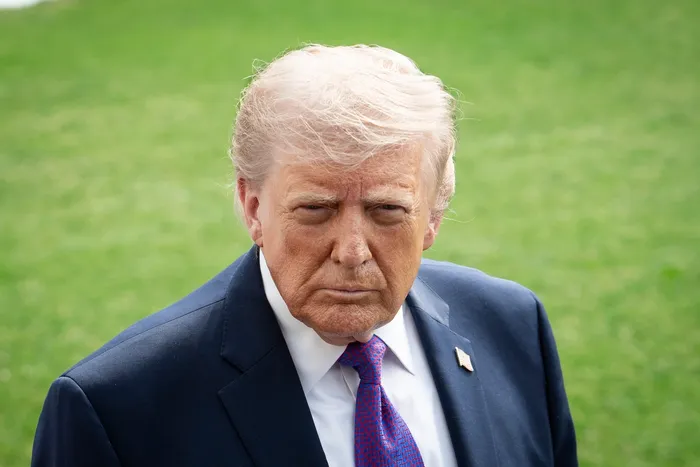
In the hallways of the White House, the proximity to that bag has changed. It used to be a symbol of ultimate responsibility. Now, for the aides watching Donald Trump, it feels like a live grenade with a loose pin. They watch him in briefings. They see the eyes wander. They hear the rhetoric shift from aggressive posturing to something untethered—a dire nuclear warning issued not as a strategic deterrent, but as a flickering impulse.
The fear isn't just about a single bad decision. It’s about the erosion of the guardrails. Imagine a hypothetical staffer—let’s call him Robert. Robert has spent twenty years in national security. He knows the protocols. He knows that if a launch order is given, there is no "undo" button. There is no supreme court stay. There is only the execution of a command. Robert sits in meetings now and watches the President’s temper flare at perceived slights, his focus darting toward the ultimate power as a way to soothe a bruised ego.
Robert doesn't sleep anymore. He stares at his ceiling and wonders if he is the one who will have to say "no" to a man who technically cannot be told "no."
When the Mirror Cracks
The human mind is a fragile thing, even when it isn't burdened by the fate of eight billion people. When we talk about "insanity" in the context of the Oval Office, we aren't talking about foaming at the mouth. We are talking about the loss of proportionality.
When the President begins to suggest that nuclear capability is just another card in a high-stakes real estate deal, the foundation of global stability cracks. The deterrence theory—the "Madman Theory" famously attributed to Nixon—only works if the opponent thinks you are crazy enough to do it, while your own team knows you are sane enough not to.
The current alarm ringing through the West Wing suggests the team no longer has that certainty.
There is a specific kind of dread that comes with realizing your boss is disconnected from the consequences of his words. Staffers report a man who is increasingly isolated, surrounded only by those who nod, while the veterans who understand the gravity of the nuclear triad are pushed to the periphery. The rhetoric regarding "fire and fury" or "complete destruction" has moved from the campaign trail into the Situation Room.
It feels like a fever.
The Invisible Stakes
We often treat news like a spectator sport. We watch the headlines flicker across our phones, we see the pundits argue, and we go back to our lives. But the stakes of a leader losing his grip are not abstract. They are personal. They are as real as the skin on your arms and the air in your lungs.
If the internal reporting is accurate—if the people closest to the President are truly terrified of his mental state—then the very nature of our democracy is being tested in a way the Founders never anticipated. They built a system to stop a tyrant. They didn't necessarily build one to stop a man losing his sense of objective reality.
Consider the mechanics of a nuclear strike. It is a process designed for speed. From the moment the President decides to act, the missiles can be out of their silos in minutes. There is no debate. The Secretary of Defense is required to verify the order, but he does not have the legal authority to veto it.
The only thing standing between us and the unthinkable is the mental health of one individual.
When that individual begins to issue warnings that sound less like statesmanship and more like a cry for attention, the people in the room notice. They see the hands shake. They hear the circular logic. They realize that the person they are sworn to serve is no longer the person who was sworn in.
The Architecture of a Crisis
This isn't a political disagreement. It isn't about taxes, or borders, or trade. It is about the fundamental cognitive fitness required to hold the keys to the kingdom.
The "insanity" reported by the staff isn't a sudden break. It's a slow leak. It’s the way he reacts to a polling dip by mentioning the "big weapons." It’s the way he treats the nuclear arsenal like a toy he can use to get a better headline. The aides who are leaking these fears aren't doing it out of spite; they are doing it because they are desperate. They are trying to signal to the world that the pilot is no longer looking at the horizon.
One official, speaking under the heavy shroud of anonymity, described the atmosphere as "living in a house where the gas is left on." You can’t see it, but you know that one spark—one bad tweet, one perceived insult from a foreign leader—could blow the whole thing apart.
The warnings coming out of the White House are a flare sent up in the middle of a dark ocean.
We want to believe that someone is in control. We want to believe that there is a "Deep State" or a "Cabal of Adults" who will step in. But the reality is much lonelier. The reality is a group of exhausted men and women in suits, sitting in a windowless room, watching a man who doesn't seem to understand that the buttons he’s playing with are connected to real lives.
The Loneliness of the Guard
There is a specific tragedy in being the one who sees the truth while the world watches the show. The staffers who fear for the President's sanity are in a prison of their own making. If they speak out publicly, they lose their access and their ability to mitigate the damage. If they stay silent, they are complicit in whatever comes next.
They are the ones who have to look the President in the eye when he asks why we can’t just "use them."
They have to find ways to distract him, to delay him, to manage his moods as if he were a volatile weather system rather than a head of state. It is a exhausting, soul-crushing labor that leaves no mark on the public record, but leaves deep scars on the people doing it. They are the human buffers between a fragmenting mind and a world that assumes everything is fine because the sun came up today.
But the sun comes up every day until the day it doesn't.
The warnings are no longer subtle. The "insanity" is no longer a private joke among the elite. It is a documented fear held by those who stand three feet away from the seat of power. They are watching the clock. They are watching the moods. They are watching the man.
In the quiet of the residence, far from the flashbulbs, a man sits alone with his grievances. Down the hall, a young officer holds a bag. And in the offices surrounding them, the people who know the truth are holding their breath, waiting to see if the world survives the next few hours of a mind that has forgotten how to be still.