The Myth of the Random Tragedy
Mainstream media loves a blood-soaked postcard. Every time a firearm discharges near a turquoise wave in Tulum or Playa del Carmen, the headlines follow a weary, predictable script: "Paradise Lost," "Safety in Shambles," and the inevitable "Is it still safe to visit?" This narrative is lazy. It’s profitable for clicks, but it’s intellectually bankrupt.
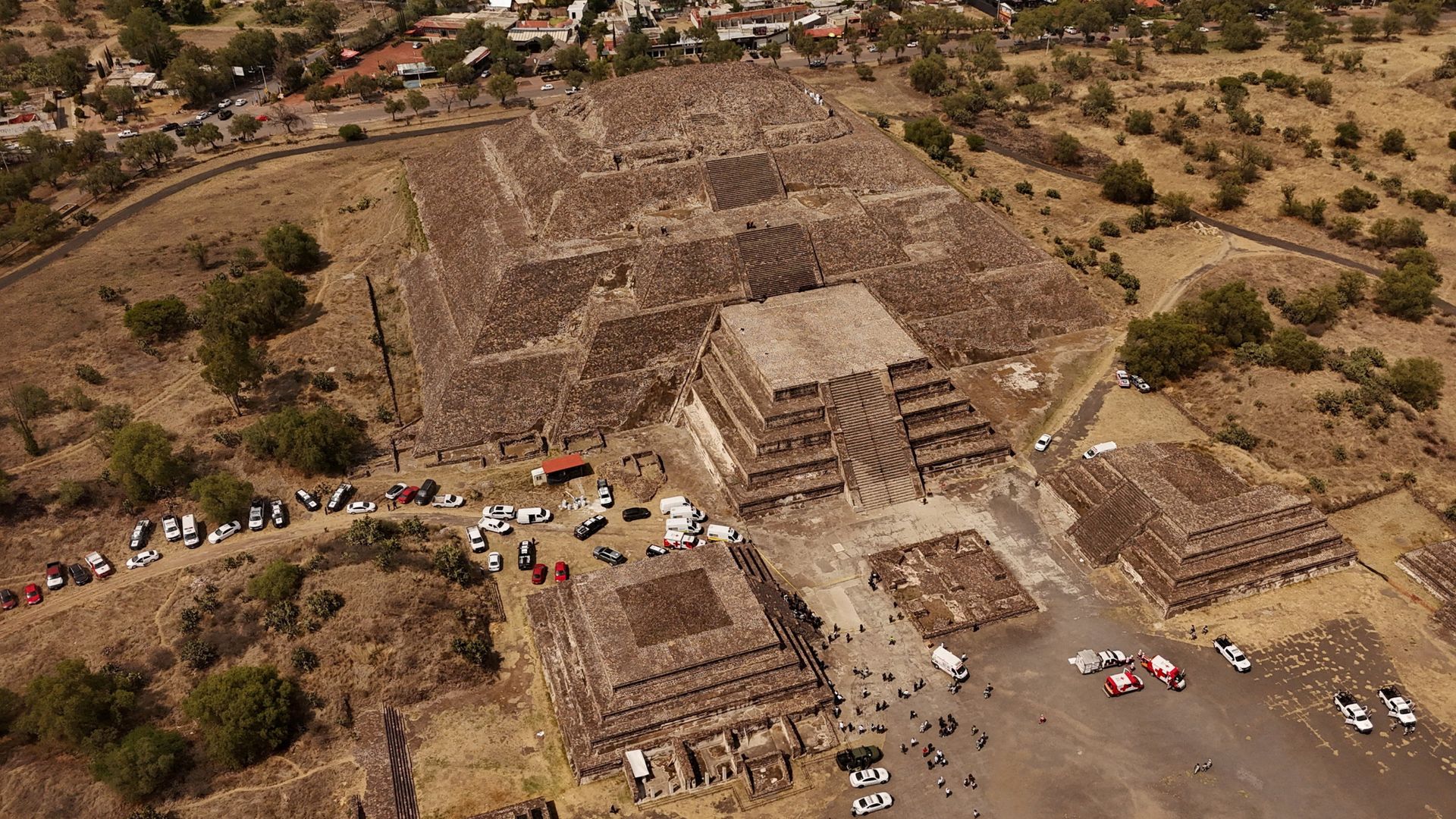
The recent shooting at a high-profile Mexican tourist site isn't a sign that the country is collapsing into chaos. It is a sign of a high-stakes, hyper-localized business dispute. When you see a headline about a "deadly shooting at a famous tourist site," the subtext screams that tourists are being hunted. They aren't.
If you want to understand travel safety, stop looking at body counts and start looking at market share. The violence we see is surgical, predictable, and—counter-intuitively—proof of how valuable these zones are to the people fighting over them.
The Cartel as a Customer Service Provider
Here is the truth nobody wants to admit: The groups controlling these territories have a vested interest in your safety.
Mexico’s tourism industry accounts for roughly 8.5% of the national GDP. The organizations operating in the shadows are not stupid. They are sophisticated, multi-billion-dollar entities. They know that if tourists stop coming, the economy they tax—both legally and illegally—withers.
The violence isn't directed at the sunbather from Ohio. It’s directed at the competitor trying to sell a bag of white powder on the same stretch of sand. When a shooting happens in a "tourist zone," it’s almost always a failure of local management or a breach of a territory agreement.
- The "Random" Fallacy: People ask, "What if I'm caught in the crossfire?"
- The Statistical Reality: You are statistically more likely to die from a jet ski accident, a contaminated buffet, or a rip current than a stray bullet in a Mexican resort town.
We fixate on the "deadly shooting" because it’s cinematic. We ignore the 30 million people who visited last year and returned home with nothing worse than a sunburn and a hangover.
Why "Safety Ratings" are Useless
The State Department’s travel advisories are built on a foundation of bureaucratic CYA (Cover Your Assets). They categorize entire states—territories the size of European countries—under blanket warnings. This is like telling a traveler to avoid New York City because there was a gang shooting in Buffalo.
The Micro-Geography of Risk
Risk in Mexico is measured in meters, not miles.
- The Gold Zone: High security, heavy federal presence, and a "tax" paid by everyone to keep the peace.
- The Grey Zone: Two blocks behind the main strip. No cameras. No federales. This is where the friction happens.
- The Red Zone: Industrial outskirts where the product is moved. You have no reason to be here.
The competitor article you read likely failed to mention that the "famous tourist site" shooting took place in a specific venue where rivalries were already simmering. Travel "experts" tell you to check the news; I’m telling you to check the specific street corner.
Stop Asking "Is it Safe?"
That is the wrong question. It’s a binary question for a non-binary world. Chicago isn't "safe." London isn't "safe." Paris isn't "safe." They are managed risks.
When you ask if Mexico is safe, you’re asking for a guarantee that doesn't exist anywhere on earth. Instead, ask these three things:
- Who owns the conflict in this specific neighborhood?
- Is the violence targeted or indiscriminate? (In Mexico, it is almost exclusively targeted).
- What is the proximity of the "hot zones" to the actual infrastructure of tourism?
The "lazy consensus" says that violence in a tourist town means the town is a war zone. The reality is that violence in a tourist town is usually a localized enforcement action. It is brutal, yes. It is tragic, certainly. But it is not an existential threat to the traveler who isn't looking for trouble.
The Economics of the Stray Bullet
Let’s talk about the business cost of a dead foreigner.
When a local is killed, the news cycle lasts forty-eight hours. When a tourist from the Global North is killed, the Mexican federal government sends in the National Guard. They shut down businesses. They squeeze the local cartels. They ruin the "plaza."
The cartels know this. Killing a tourist is the fastest way to destroy their own revenue stream. This is why, despite the terrifying headlines, the rate of intentional homicide against foreign tourists in Mexico is astronomically low.
I’ve spent years analyzing risk in emerging markets. I’ve seen what happens when a region actually becomes "unsafe"—the flights stop, the hotels board up, and the power goes out. That isn't happening in Cancun. It isn't happening in Tulum. The occupancy rates are climbing. The smart money isn't leaving; it’s just buying more insurance.
The Moral Hypocrisy of Travel Warnings
There is a staggering level of cognitive dissonance in how we consume news about Mexican violence. We read about a shooting in Playa del Carmen and cancel our honeymoon. Yet, we see reports of a mass shooting in a US mall or a drive-by in a major American city and don’t give it a second thought before heading out to dinner.
Why? Because we’ve been conditioned to view "foreign" violence as systemic and "domestic" violence as an anomaly.
In reality, the violence in Mexico’s tourist hubs is a direct byproduct of the demand for illicit goods from the very countries issuing the travel warnings. We are financing the conflict and then complaining about the noise it makes.
The Real Danger You’re Ignoring
If you want to be a contrarian traveler, stop worrying about the cartels and start worrying about:
- Unregulated Alcohol: Methanol poisoning kills more tourists than gunmen do.
- Road Safety: Mexican highways at night are far more lethal than any "hitman."
- The Ocean: The flag system on beaches is often ignored, and the lack of lifeguards is a genuine threat.
Navigating the "New Normal"
The status quo media wants you to stay home and be afraid. They want you to think the world is a series of traps. It isn't. It’s a series of markets.
If you choose to visit these areas, you aren't "brave." You’re just a consumer in a high-demand market. The trick isn't to avoid the country; it’s to understand the rules of the game.
- Don’t be a customer of the shadow economy. If you aren't buying what they’re selling, you aren't part of their inventory.
- Stay in the light. The infrastructure of tourism is a shield. The moment you step off the grid to "find the real Mexico" in a high-conflict state, you’ve dropped your guard.
- Ignore the sensationalism. Look at the data. Look at the numbers. The violence is a tragedy, but for the traveler, it’s a statistical ghost.
The headline said "Deadly Shooting." The reality is "Business Dispute Settled Violently in a High-Value Zone." One makes you stay home; the other makes you realize that your vacation was never the point of the conflict.
The beach is still there. The sun is still shining. The business of tourism—and the business of conflict—will both continue, side by side, as they always have.
Stop reading the headlines and start reading the room.