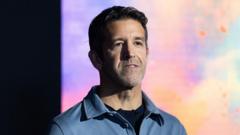
The air inside Apple Park has a specific, filtered stillness. It feels expensive. It feels like the future is being curated behind glass curved so perfectly you forget it’s there. For over a decade, that stillness was anchored by one man’s measured, rhythmic breathing. Tim Cook did not lead with the jagged lightning of his predecessor; he led with the steady, relentless pressure of a glacier. He turned a boutique of beautiful objects into a multi-trillion-dollar sovereign state.
Now, the glacier has stopped moving.
The announcement came without the pyrotechnics the world expected. There was no smoke, no lights, just the heavy, tectonic shift of a name on a press release. Jeff Williams—the man long whispered to be the "Tim Cook to Tim Cook"—is stepping into the light. Or perhaps it is more accurate to say the light is finally finding him.
The transition marks the end of the post-Jobs era. It is the moment Apple stops being a company defined by its mourning and starts being a company defined by its survival.
The Architect of the Invisible
Imagine standing in a factory in Zhengzhou at three o'clock in the morning. The humidity is a physical weight. Thousands of components are moving in a synchronized dance that would make a Swiss watchmaker weep. This is where Jeff Williams lived. While the world obsessed over the curve of an iPad’s corner, Williams was obsessed with the pulse of the machine that built it.
He is not a showman. He is a master of the invisible.
As the Chief Operating Officer, his job was to ensure that the impossible happened on time, every time, at a scale that defies human comprehension. When Apple decided to launch the Watch, it wasn't just a design challenge. It was a biological one. It was a supply chain nightmare. Williams steered that ship. He took a device that many critics laughed at—calling it a solution in search of a problem—and turned it into a health platform that literally monitors the heartbeats of millions.
He understands the stakes of the wrist. He knows that if a phone fails, you miss a call. If a watch fails, you might miss a stroke.
The Shadow of the Black Turtleneck
Every CEO of Apple is forced to inhabit a haunted house. The ghost of Steve Jobs doesn't just linger in the products; it lingers in the expectations of every teenager with an iPhone and every shareholder with a retirement fund.
Tim Cook’s brilliance was his ability to be a caretaker. He was the perfect executor. He took the blueprints left on the desk and built a skyscraper so tall it touched the clouds. But there is a ceiling to execution. Eventually, the skyscraper is finished. You cannot simply keep adding floors forever.
The question facing Williams isn't whether he can keep the trains running on time. He invented the tracks. The question is whether he can decide where the trains are going.
Silicon Valley is currently obsessed with Artificial Intelligence, a term that feels increasingly like a buzzword used to hide a lack of soul. Apple’s approach has been different—slower, more deliberate, and focused on "Intelligence" rather than just "Generative." They want the AI to live in your pocket, not in a data center a thousand miles away. They want it to be private. They want it to be Apple.
Williams inherits a company at a crossroads between being a hardware manufacturer and being a lifestyle guardian. We don't just buy their glass and aluminum anymore. We trust them with our sleep cycles, our bank accounts, and our memories.
The Hypothetical Monday
Consider a hypothetical morning in the life of Sarah, a 34-year-old designer in London. She wakes up to the haptic tap of her Watch. Her phone has already curated her schedule, adjusted her home’s temperature, and screened her emails. She doesn't think about Apple. She doesn't think about Jeff Williams.
That is the ultimate victory for a CEO.
When the technology becomes an extension of the self, the company behind it disappears. But for that disappearance to happen, thousands of microscopic decisions must be made correctly. What sensor goes into the next lens? How much RAM is sacrificed for battery life? Which supplier is squeezed to keep margins high?
Williams is a man of these microscopic decisions. Those who have worked with him describe a quiet intensity. He doesn't raise his voice; he asks questions until the weakness in a plan is exposed like a raw nerve. He is a mechanical engineer by trade. He looks at the world as a series of systems to be optimized.
But a company cannot be run by math alone.
The Burden of the New
The "Next Big Thing" is a weight that eventually crushes everyone in the tech industry. For Cook, it was the Vision Pro—a daring, expensive bet on a world where we strap computers to our faces. It is a product that is technically miraculous and socially awkward.
Williams now owns that awkwardness.
He also owns the reality of a world that is cooling on the idea of the "upgrade." We no longer queue around the block for a slightly better camera. The cycle has slowed. The magic has become mundane. To move the needle for a company worth three trillion dollars, you can’t just launch a product. You have to launch a movement.
There is a tension in the halls of Cupertino right now. It’s the tension between the safety of the known and the terror of the new. Williams represents the ultimate safety. He is the steady hand. He is the continuity candidate. But the history of technology is littered with the corpses of companies that chose continuity over chaos.
Blackberry chose continuity. Nokia chose continuity.
Apple’s DNA is supposed to be different. It is supposed to be the company that "Thinks Different," even if that thinking breaks the very systems that made them rich.
The Soul in the Silicon
The transition from Cook to Williams is more than a change in leadership; it is a test of the culture. Can a culture of perfectionism survive without a singular, charismatic visionary at the top?
Williams has spent his career in the background, making sure the visionaries didn't run the company into a ditch. He was the friction that allowed the wheels to grip the road. Now, he is the driver.
He faces a world that is increasingly skeptical of Big Tech. Regulation is closing in from the European Union. China is a volatile partner. The very concept of the "App Store" is being challenged in courts across the globe. The walls of the garden are being picked at by a thousand chisels.
In his first address to the staff, Williams didn't talk about stock prices. He talked about the people who use the tools. He talked about the "humanity" of the hardware. It was a classic Apple move—framing a cold business transition as a spiritual passing of the torch.
But look closely at his eyes in the official portraits. There is a weary kind of brilliance there. It is the look of a man who knows exactly how many things can go wrong at any given moment. It is the look of a man who has spent twenty years preventing disasters before they happen.
The era of the "celebrity CEO" is dying. We are entering the era of the "Integrator."
We don't need another Steve Jobs to tell us what we want. We need a Jeff Williams to make sure what we have actually works, stays private, and doesn't break the world in the process.
The glass hallway is long. The shadows of the past are tall. Jeff Williams is walking down that hallway now, his footsteps echoing in the silence. He isn't looking at the portraits on the wall. He is looking at his watch.
He knows exactly what time it is.
It’s time to prove that the soul of Apple wasn't just in the man who started it, or the man who grew it, but in the discipline of the people who refuse to let it fail.
The stillness in Apple Park remains. But the pulse has changed. It is faster now. It is more clinical. It is the sound of a machine that has realized it no longer needs a ghost to tell it how to run.
It just needs a master who knows where the heart is hidden in the code.
The transition is complete. The future is no longer a dream being sold on a stage; it is a logistical reality being managed from a desk. The magic hasn't left the building. It just went to work.