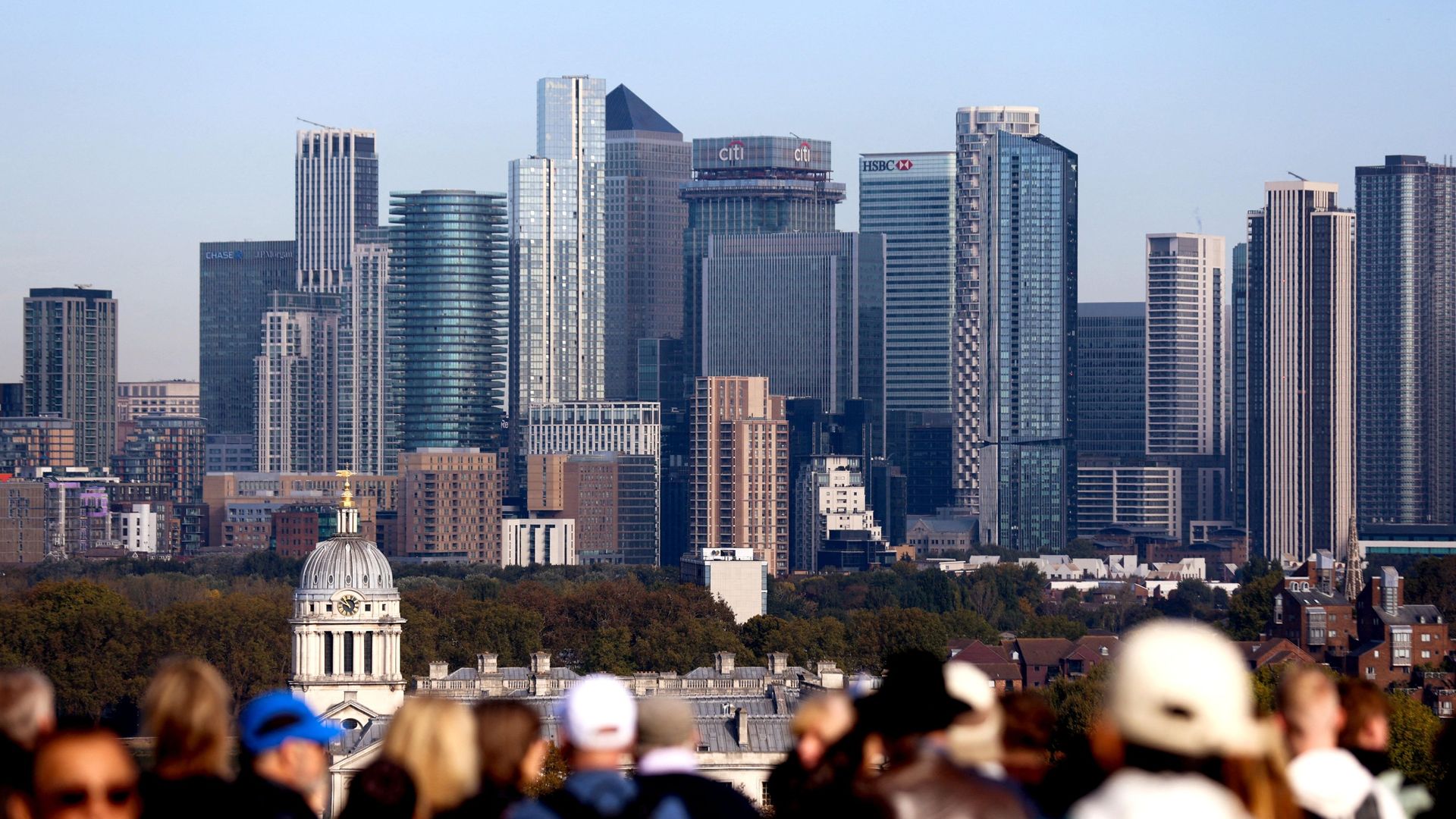
The United Kingdom is currently grappling with a bond market seizure that has pushed government borrowing costs to levels not seen in decades. This is not a mere technical flutter or a brief moment of volatility. It is a fundamental reassessment of the British state’s creditworthiness by global capital. When the yield on benchmark 10-year gilts breaks past psychological barriers, it does more than just stress the Treasury; it resets the price of debt for every mortgage holder and business in the country. We are witnessing the end of an era of cheap credit and the beginning of a brutal fiscal reckoning.
While political figureheads often point to global inflationary pressures as the primary culprit, the "UK premium"—the extra cost Britain pays compared to its peers—suggests a deeper, domestic rot. Investors are no longer giving the UK the benefit of the doubt. They are looking at a combination of sluggish growth, persistent labor shortages, and a fiscal trajectory that seems decoupled from reality. Learn more on a similar subject: this related article.
The Mechanics of a Gilt Market Rout
To understand why your mortgage is getting more expensive, you have to look at the plumbing of the financial system. Government bonds, or gilts, are the bedrock. When investors sell gilts, their prices fall and their yields rise. Because these yields serve as the "risk-free rate," they dictate the pricing for everything else.
The current spike is driven by a lack of buyers. Usually, pension funds are the reliable gluttons for these bonds. However, the scars from previous liquidity crises have made them cautious. They are no longer willing to soak up supply at any price, especially when the government’s appetite for spending shows no sign of waning. Further journalism by Business Insider delves into related views on this issue.
The Ghost of 2022
The market is still haunted by the 2022 "mini-budget" disaster. Even though the faces in the Treasury have changed, the institutional memory of the bond market is long and unforgiving. Trillions of pounds in global capital are managed by algorithms and traders who prioritize stability above all else. When they see a projected deficit that lacks a credible plan for growth, they sell. This creates a feedback loop. Higher yields mean the government must spend more on interest payments, which increases the deficit, which leads to more gilt issuance, which further drives up yields.
It is a trap.
Why This Crisis is Different from the Past
In previous decades, the UK could rely on the Bank of England to step in with quantitative easing—essentially printing money to buy bonds and keep rates low. That tool is now broken. With inflation still a lingering threat, the Bank is actually doing the opposite: quantitative tightening. They are selling bonds back into a market that is already choked with supply.
- The supply-demand mismatch: The Treasury needs to sell a record volume of debt to fund public services.
- The disappearance of the "Big Buyer": Central banks are retreating, leaving price discovery to private investors who demand higher returns for higher risks.
- The inflation hangover: Unlike the post-2008 era, we are in a high-cost environment where "real" yields (adjusted for inflation) must remain positive to attract any interest at all.
This isn't just about spreadsheets in the City. For the average person, this translates to a "stealth tax" on existence. Every pound the government spends on interest is a pound not spent on the NHS, schools, or infrastructure.
The False Promise of Growth
The standard political response to a debt crisis is to promise "growth." It is a convenient word that offends no one. But the bond market is cynical. It has heard the word "growth" from every Prime Minister for fifteen years while witnessing stagnant productivity and a shrinking workforce.
Investors are looking at the structural headwinds. The UK’s exit from the European single market has created permanent friction in trade. The energy transition, while necessary, requires massive capital expenditure that the state cannot currently afford. The aging population is a demographic time bomb that increases the demand for state spending while reducing the tax base.
When you add these factors together, the "spike" in borrowing costs looks less like an anomaly and more like a correction. The market is finally pricing the UK for what it is: a mid-sized economy with high debt, low growth, and a political class that is afraid to tell the public that the math no longer adds up.
The Myth of the Independent Bank
There is a growing friction between the Treasury and the Bank of England. While the Bank’s mandate is price stability, it cannot ignore the fact that its interest rate hikes are blowing a hole in the government’s budget. On the flip side, the Treasury's fiscal decisions are making the Bank's job harder.
This tension creates uncertainty. Markets hate uncertainty more than they hate bad news. If investors suspect that the Bank might be pressured to keep rates lower than necessary to help the government's balance sheet, they will demand an even higher "inflation risk premium." This would send gilt yields into a vertical climb, mirroring the debt spirals seen in emerging markets.
The Real Impact on Business Investment
Large corporations do not invest in a vacuum. They calculate the "hurdle rate"—the minimum return they need to justify a project. As the cost of government borrowing rises, that hurdle rate climbs. Projects that made sense two years ago are being scrapped today.
- Infrastructure delays: Private finance for bridges, tunnels, and green energy vanishes when debt costs 5% instead of 1%.
- SME stagnation: Small businesses that rely on floating-rate loans find their margins evaporated by interest payments.
- Capital flight: If the return on a "safe" UK bond isn't high enough to offset the falling value of the Pound, international investors simply move their money to the US or the Eurozone.
The Inevitable Fiscal Squeeze
The government is running out of road. There are only three ways out of a debt crisis of this magnitude, and none of them are pleasant.
Option one is austerity. Cutting spending deeply enough to balance the books. Given the state of public services, this is politically radioactive. Option two is tax hikes. With the tax burden already at a multi-decade high, further increases risk killing off what little growth remains. Option three is "inflating the debt away." This involves allowing inflation to run higher than interest rates, effectively devaluing the debt. The cost, however, is the total destruction of the public's purchasing power and the middle class's savings.
The current spike in borrowing costs suggests the market believes we are headed toward a messy combination of all three.
A Reality Check for the Electorate
The British public has been shielded from the reality of global finance for a long time by the artificial environment of zero-percent interest rates. That shield is gone. The conversation in Westminster remains focused on marginal tax cuts or small spending increases, but these are distractions.
The real story is the $Gilt$ market. It is the judge, jury, and executioner of government policy. If the yield on the 10-year gilt remains at these elevated levels, the "fiscal headroom" politicians love to talk about is a fantasy. It doesn't exist. Every 1% rise in interest rates adds roughly £20 billion to the government’s annual interest bill.
This is the gravity of the situation. We are not just looking at a "spike" in costs; we are looking at the permanent repricing of the United Kingdom. The era of the state being able to borrow its way out of every problem is over.
Banks are already tightening their lending criteria. Mortgage offers are being pulled and repriced within hours. Corporate bond issuance has slowed to a crawl. This is the financial system reacting to the new reality before the politicians have even drafted their press releases. The spike in borrowing costs is a siren. It is telling us that the UK’s current economic model—high consumption funded by cheap debt—is fundamentally broken.
The only way to bring yields back down is to prove to the world that the UK is a place where capital can grow. That requires more than slogans. It requires a radical simplification of the planning system, a coherent energy strategy, and a tax code that rewards investment over rent-seeking. Until that happens, the bond market will continue to punish the UK, and the cost of living will continue to climb.
Stop looking at the polls and start looking at the bond tickers. They are the only data points that actually matter for the future of the British economy.