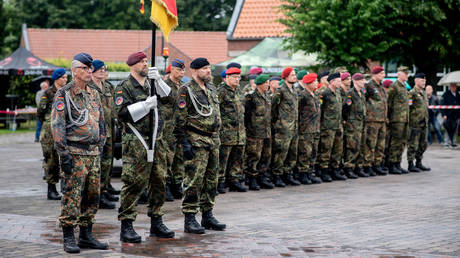
Germany is staring at a map of Europe and realizing the old math doesn't work anymore. For decades, the Bundeswehr was the "peace dividend" piggy bank. It got smaller, slower, and arguably softer. Now, with the security situation in Eastern Europe shifting from theoretical to terrifying, Berlin is scrambling to find boots for the ground. The most surprising solution isn't a new draft for Gen Z. It’s a call to the retirees.
Patrick Sensburg, the head of the German Reservist Association, isn't just suggesting we keep older soldiers around. He's actively pushing to let 70-year-olds serve in the reserves. While most people that age are worried about their golf swing or their garden, Sensburg argues they might be exactly what the military needs to plug a massive gap in national defense. It’s a move that feels desperate to some and brilliant to others. Honestly, it’s probably a bit of both.
The Massive Gap in German Defense
The numbers are pretty bleak. The Bundeswehr currently has about 181,000 active-duty soldiers. That sounds okay until you realize the target is 203,000 by 2031, and recruitment is basically flatlining. Young people aren't exactly lining up at the recruitment offices. The job market is tight, the work is hard, and let's face it, the German military hasn't exactly had the best PR for the last thirty years.
This is where the reserves come in. In a real conflict, you don't just need the elite units. You need the people who can guard a bridge, run a logistics depot, or manage a communication hub. Right now, Germany has roughly 34,000 active reservists who train regularly. Sensburg wants to blow that number up. He’s looking for a total pool of 100,000 reservists who are ready to go. If that means letting a 70-year-old former colonel sit in a command center, he's all for it.
The current age limit for reservists is 65. Pushing that back five years isn't just about adding numbers. It’s about keeping the "institutional brain" alive. When a career officer retires, thirty years of knowledge walks out the door. In a world where high-tech warfare meets old-school logistics, losing that experience is a mistake Germany can no longer afford.
Experience Over Athletics
Let’s be real. Nobody is asking a 70-year-old to kick down doors in a night raid or carry an 80-pound rucksack through the mud for twenty miles. That's a young man's game. But modern warfare isn't just about brawn. It’s about technical skill, psychological resilience, and knowing how to navigate a massive bureaucracy under pressure.
A 70-year-old reservist might be an expert in cyber defense. They might be a doctor who has seen everything. Or maybe they're a master mechanic who knows how to keep a thirty-year-old tank running when the spare parts are nowhere to be found. These are "back-area" roles. If a senior citizen can free up a 22-year-old to go to the front lines, the system works.
Sensburg's logic is simple. If you're fit and you want to serve, why should an arbitrary number on a birth certificate stop you? We're living longer. We're healthier. A 70-year-old today isn't the same as a 70-year-old in 1950. The military needs to stop thinking like it's still the Cold War and start looking at the actual human capital available.
The Shadow of the Past
You can't talk about German military expansion without mentioning the "Volkssturm." In the final, dying months of World War II, the Nazi regime threw old men and young boys into the meat grinder. It was a massacre of the ill-equipped and the untrained. Whenever someone mentions "seniors" and "military" in Germany, those ghosts start rattling their chains.
But this isn't that. Sensburg isn't talking about a mandatory draft for grandpas. He’s talking about a voluntary system for people who have already served. These are people who know the culture, know the equipment, and actually want to be there. It’s about volunteerism, not desperation. Yet, the optics are still tricky. The German government has to walk a fine line between "strengthening defense" and looking like they're scraping the bottom of the barrel.
The Russian invasion of Ukraine changed the vibe in Berlin overnight. The "Zeitenwende" (turning point) speech by Chancellor Olaf Scholz wasn't just talk. It was a realization that the safety of the last three decades was an anomaly. Now, the priority is "Kriegstüchtigkeit"—being ready for war. If that readiness requires older soldiers, the public might just have to get used to it.
Why Young People Aren't Signing Up
If Germany could just recruit 20,000 more 19-year-olds every year, we wouldn't be having this conversation. But they can't. The demographics are a nightmare. Germany has one of the oldest populations in the world. There simply aren't enough young people to go around, and the ones who are there have plenty of other options.
Private companies pay better. They don't ask you to move to a remote base in the middle of nowhere. They don't ask you to potentially die for a country that has spent decades being skeptical of its own military. To fix this, the Bundeswehr has tried everything from slick YouTube ad campaigns to offering better childcare. It hasn't worked well enough.
By looking at the 65-plus demographic, the military is tapping into a group that often has a stronger sense of traditional duty. Many of these people grew up during the Cold War when the threat was clear and service was expected. They don't need to be "convinced" that defense matters. They already get it.
The Logistic Reality of an Older Reserve
Integrating 70-year-olds into the military isn't as easy as just saying "yes." There are massive hurdles.
- Health Insurance and Liability: Who pays if a 69-year-old has a heart attack during a training exercise? The legal framework for military pensions and disability isn't built for seniors.
- Physical Standards: Do you lower the bar? Or do you create a "tiered" fitness system where a desk officer doesn't need to run a 5K?
- Technology Gaps: While some seniors are tech-savvy, the military is moving toward AI-driven systems and drone warfare. Training a retiree on brand-new kit takes time and money.
- Command Structure: Imagine a 24-year-old lieutenant trying to give orders to a 70-year-old who outranked his father. It’s a social minefield.
Despite these issues, Sensburg is adamant. He points out that the current reserve system is "too small and too old" in the wrong ways. It’s old because people stay in, but small because we don't let enough people in. By opening the doors, you create a buffer.
What This Means for the Rest of Europe
Germany isn't the only country watching its population age. Japan, Italy, and even the US are struggling with recruitment. If Germany successfully integrates seniors into its defense strategy, expect others to follow. We might see a future where "military service" isn't a four-year stint in your twenties, but a lifelong commitment that you dip in and out of as your health and career allow.
This is about the total mobilization of society's skills. In a high-intensity conflict, every person who can contribute must contribute. That’s the lesson coming out of Ukraine right now. You see grandmothers making camo nets and retired engineers fixing Western artillery pieces. The line between "civilian" and "soldier" blurs when the threat is at the door.
Germany is just being honest about it earlier than most. They know they can't defend the country with the current numbers. They know the "peace dividend" is spent. The reservist chief’s proposal is a cold, hard look at the reality of 2026.
Next Steps for the Bundeswehr
The proposal still needs to clear several political hurdles in the Bundestag. It's not a law yet. But the momentum is shifting. If you're a former member of the German armed forces or even a civilian with high-level technical skills, keep an eye on the Reservist Association.
Check your old gear. Brush up on your specialized skills. The military might be calling sooner than you think. Defense isn't just a young person's burden anymore. It’s everyone’s. If you’re in Germany, look into the local "Heimatschutzkräfte" (Homeland Security Forces). They're the ones likely to pilot these age-extension programs first. You don't need to be a marathon runner to defend your home. You just need to be there. Germany is betting that the 70-year-olds will show up. They usually do.