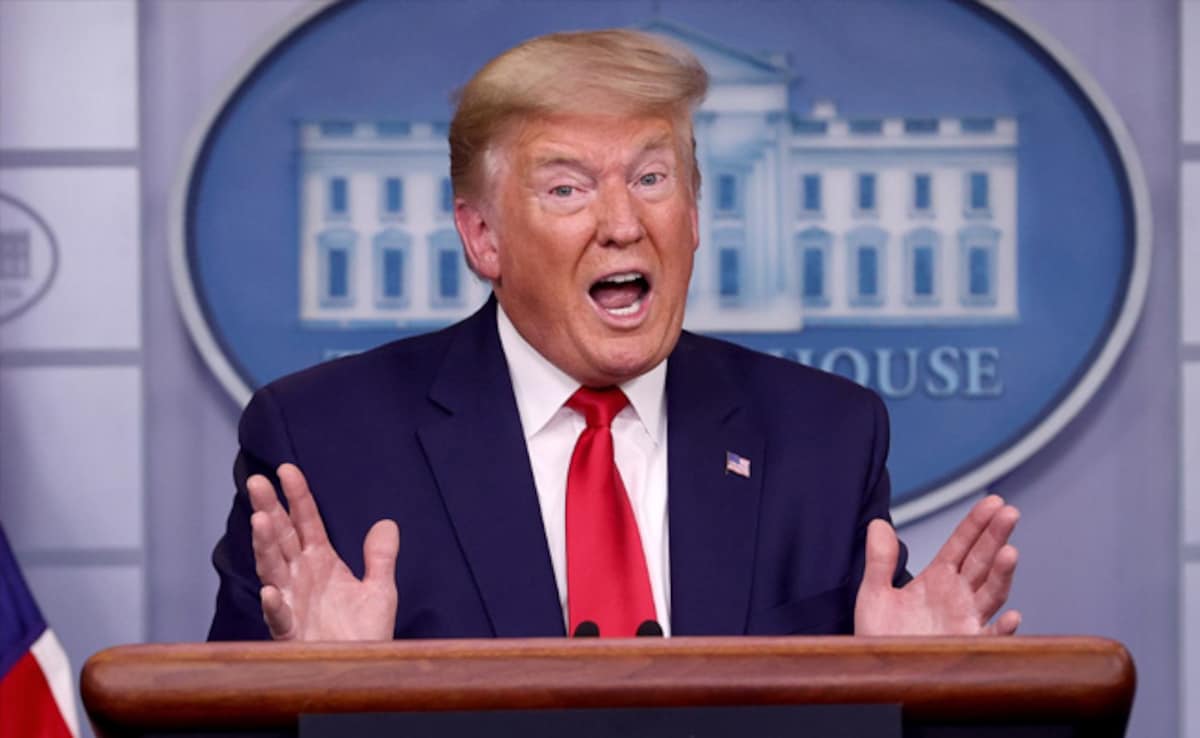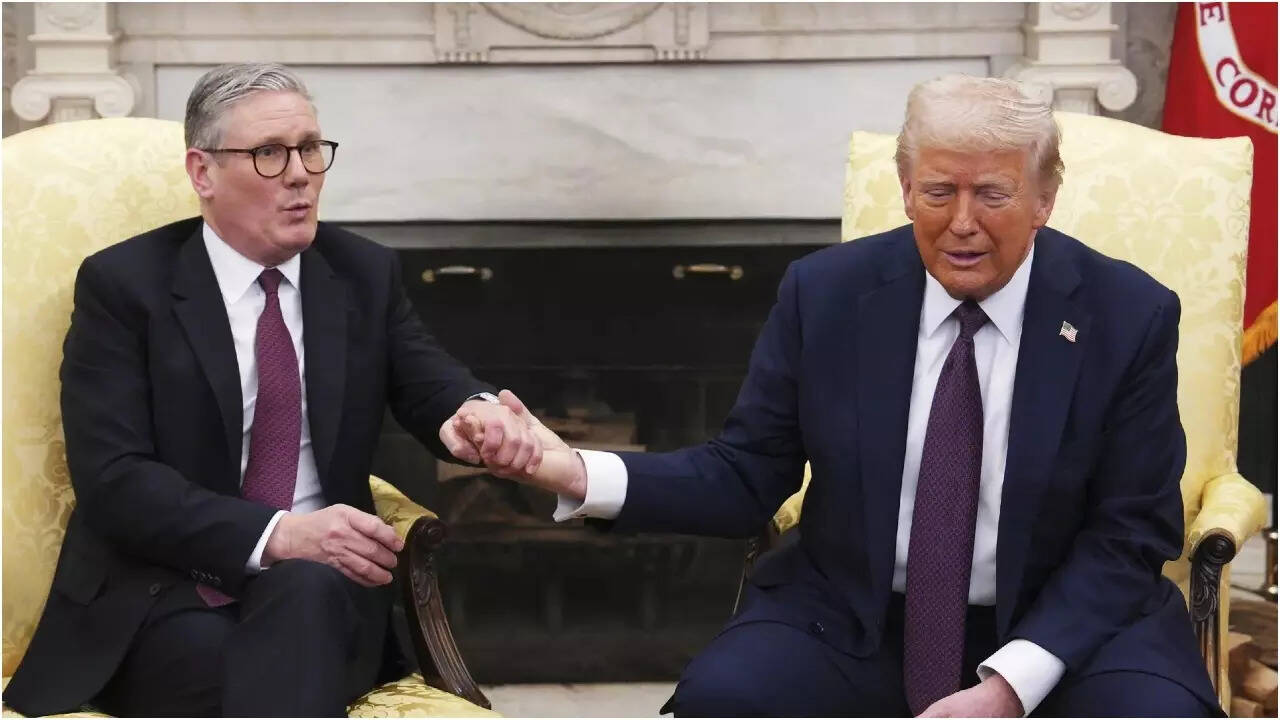
The tension between Donald Trump and Keir Starmer regarding military access is not a dispute over personality; it is a fundamental clash between two incompatible doctrines of alliance management: unilateral hegemony versus integrated sovereignty. When Trump expresses dissatisfaction with the UK's stance on military access, he is signaling a shift in the perceived "cost of protection" within the NATO framework. This friction point emerges specifically at the intersection of logistical footprint, intelligence sharing, and the emerging concept of "technological protectionism."
To understand the breakdown in this relationship, one must quantify the value of the UK as a strategic staging ground and then measure how Starmer’s domestic policy constraints create what the Trump administration views as a "security deficit."
The Triad of Strategic Friction
The current diplomatic strain can be decomposed into three structural pillars. Each represents a specific variable that determines the friction coefficient between Washington and London.
1. The Basing and Logistics Variable
The United States views the United Kingdom as an unsinkable aircraft carrier in the North Atlantic. This isn't merely a geographic advantage; it is a legal and logistical framework that allows for rapid force projection into the European and African theaters.
- Sovereign Veto Power: Under Starmer, the UK government has signaled a more cautious approach to how US assets on British soil (such as RAF Lakenheath or Mildenhall) are used for missions that do not align with UK or UN mandates.
- The Chagos Islands Precedent: The decision to hand over the Chagos Islands—while retaining a 99-year lease on Diego Garcia—is viewed by Trump-aligned strategists as a signal of long-term "territorial retreat." This creates a perception of instability in long-term basing rights.
2. The Defense Industrial Baseline
The second pillar of friction involves the AUKUS agreement and the sharing of sensitive nuclear and underwater drone technology. Trump’s "America First" posture requires a transactional return for high-end technology transfers. If the UK is perceived to be hedging its bets—for instance, by deepening defense ties with the European Union via a new security pact—it triggers a "leakage" concern in Washington.
The US military-industrial complex operates on a closed-loop system. When a partner like the UK attempts to bridge the gap between US-integrated systems and EU-autonomous systems, it creates a technical and legal bottleneck regarding Intellectual Property (IP) and export controls.
3. Intelligence Asymmetry
The "Five Eyes" alliance is the bedrock of the special relationship, but it is currently under stress due to divergent views on data sovereignty and Chinese telecommunications infrastructure. Trump’s criticism reflects a fear that Starmer’s government may prioritize economic stability—potentially involving Chinese investment in green energy or infrastructure—over the total decoupling demanded by a second Trump term.
The Strategic Cost Function of "Non-Access"
In military strategy, access is a binary. You either have the right to launch and recover assets, or you do not. When Trump speaks of being "not happy" with the UK, he is calculating the Opportunity Cost of Restricted Access. We can define this through a simple logic chain:
- Restricted Basing leads to Increased Transit Time.
- Increased Transit Time requires Higher Fuel/Logistical Burn.
- Higher Burn reduces Mission Persistence.
If the UK denies the US the ability to use its territory for specific kinetic operations—perhaps in the Middle East or as a deterrent against Russian naval activity in the GIUK (Greenland-Iceland-UK) gap—the US must rely on more distant bases or carrier strike groups. This shifts the financial and risk burden entirely onto the US taxpayer, which is the core of Trump’s grievance.
The Sovereignty-Security Trade-off
Starmer’s challenge is the Sovereignty Paradox. To maintain the "Special Relationship," the UK must sacrifice a degree of sovereign control over what happens within its borders. Conversely, to exercise full sovereign control, the UK risks being downgraded from a "Tier 1 Partner" to a "Standard Ally."
The Trump administration’s methodology treats alliances as fee-for-service models. In this framework, the UK’s geographic position is its primary currency. If Starmer places conditions on that currency, the value of the alliance devalues in the eyes of a transactional US administration.
Analyzing the "Starmer Doctrine" vs. Trumpism
Keir Starmer’s foreign policy is built on "Progressive Realism." This doctrine attempts to balance international law and multilateralism with hard-power realities. However, this creates an inherent conflict with the "Jacksonian" school of American foreign policy often associated with Trump, which prioritizes national interest and decisive action over institutional norms.
Areas of Direct Policy Collision
- The ICC and Legal Constraints: The UK’s commitment to International Criminal Court (ICC) rulings and international law can block US operations. For example, if the US wants to use UK-based assets for a strike that the UK legal counsel deems a violation of international law, the mission is grounded. This "legal friction" is what Trump interprets as a lack of loyalty or military access.
- Defense Spending Thresholds: While the UK has committed to 2.5% of GDP for defense, the composition of that spending matters. If the funds are directed toward EU-led projects rather than US-compatible platforms (like the F-35 program), it diminishes the "interoperability" that the US demands.
The Economic Component of Military Access
Military access is rarely just about runways. It involves the Integrated Support Network, including:
- Cyber-security protocols on shared networks.
- Pre-positioned stocks of munitions and fuel.
- Legal immunity for US personnel (Status of Forces Agreements).
Any attempt by the Starmer government to renegotiate these technical details—under the guise of "modernizing" the relationship—is viewed by a Trump-led executive as a hostile act of bureaucracy.
Quantifying the Risk of a "Special Relationship" Downgrade
If the friction persists, the US has several levers to apply pressure on the UK, effectively "re-pricing" the alliance.
- Intelligence Throttling: The US could limit the granularity of SIGINT (Signals Intelligence) shared with GCHQ. This would force the UK to increase its independent satellite and surveillance spending by billions to maintain the same level of situational awareness.
- Tariff Linkage: Trump has frequently linked security cooperation to trade. A failure to provide unconditional military access could result in the UK being included in a broad 10-20% "universal baseline tariff" regime, devastating the UK’s export-led recovery.
- Technology Blacklisting: If the UK integrates too deeply with EU defense initiatives (such as the Permanent Structured Cooperation, or PESCO), the US may restrict UK access to "Source Code" level data for joint platforms like the F-35 or the Reaper drone program.
The Mechanism of Alienation
The breakdown does not happen during a single press conference. It occurs through a series of "No" votes in committee rooms. When the US asks for a specific "fly-over" right or a specific "data-sharing" exemption and the UK responds with a "review process," the friction accumulates. Trump’s rhetoric is simply the public expression of this accumulated kinetic friction within the deep-state apparatus.
The Strategic Pivot Required for London
To mitigate this risk, the UK must move beyond the rhetoric of "values" and move toward the language of Operational Utility. The UK cannot compete with the US on scale, but it can provide Niche Indispensability. This involves:
- Specialization in Sub-Surface Warfare: Doubling down on the capabilities the US lacks in the North Atlantic.
- Cyber-Offensive Parity: Becoming the primary Western hub for gray-zone operations that the US may want to conduct at "arm's length."
- Forward Hubbing: Instead of resisting US access, the UK should offer "Access-as-a-Service," where it proactively builds the infrastructure the US needs before being asked, thereby setting the terms of use early.
The failure to do so results in a "Security Vacuum" where the UK is no longer the first phone call made by the White House during a crisis. For Starmer, the goal is to prove that UK sovereignty is not a barrier to US power, but a force multiplier. For Trump, the goal is to ensure that if the US provides the umbrella, it owns the handle.
The immediate tactical move for the UK is to decouple the "Chagos/Diego Garcia" narrative from the broader issue of European theater access. London must present a formalized "Access Manifesto" that clearly defines the red lines while offering expanded logistical depth in areas the US currently finds underserved, such as Arctic surveillance and High-North deterrence. Failing this, the UK risks becoming a secondary theater in the American strategic mind, losing the leverage that has defined its post-war global status.