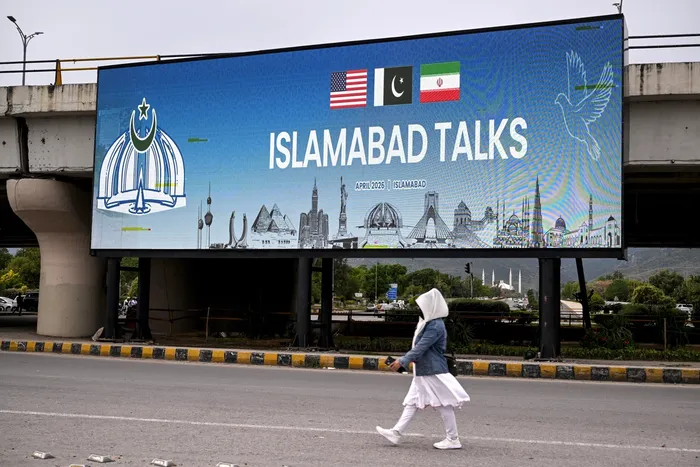
The absence of a formal timeline for US-Iran diplomatic engagement is not a vacuum of activity, but rather a calculated equilibrium where the costs of escalation and the risks of concession currently offset one another. While media narratives focus on the lack of scheduled talks, a structural analysis reveals a complex trilateral friction point involving Washington’s containment strategy, Tehran’s "Forward Defense" doctrine, and Islamabad’s role as a regional stabilizer. Pakistan’s push to sustain diplomacy is driven by an existential need to prevent a two-front security crisis, yet its effectiveness is limited by the diverging internal incentives of the primary actors.
The Triad of Diplomatic Paralysis
The current stalemate is governed by three distinct strategic pressures that dictate why neither Washington nor Tehran has moved toward a formal agenda.
- The Domestic Audience Constraint: In Washington, the political cost of lifting sanctions without total Iranian compliance is prohibitive, particularly in a polarized legislative environment. Conversely, the Iranian leadership views any unilateral concession as a threat to its internal legitimacy and "revolutionary" identity.
- The Proxy Variable: Iran’s influence across the "Axis of Resistance" functions as a non-linear defense mechanism. Until the United States provides a security guarantee that outweighs the deterrent value of these proxies, Tehran maintains a tactical incentive to continue regional disruption.
- The Economic Asymmetry: The "Maximum Pressure" campaign and its subsequent iterations have created an environment where Iran has already adjusted to a baseline of economic isolation. This reduces the marginal utility of further sanctions while simultaneously lowering the incentive to negotiate for only partial relief.
Pakistan as a Rational Intermediary
Islamabad’s involvement is often framed as a gesture of Islamic solidarity, but it is more accurately defined as a risk-mitigation strategy based on the Contagion Principle. A kinetic conflict between the US and Iran would destabilize Pakistan’s western border, exacerbate its energy crisis, and potentially ignite sectarian tensions among its domestic population.
The Border Security Matrix
Pakistan shares a 900-kilometer border with Iran. Any escalation leads to:
- Refugee Influx: A destabilized Iran would trigger a massive westward migration, straining Pakistan’s already fragile social services.
- Insurgency Oxygen: Militant groups in the Balochistan region exploit cross-border chaos. A functional relationship between Tehran and Islamabad is the only mechanism for intelligence sharing required to suppress these non-state actors.
- Energy Deficits: The stalled Iran-Pakistan (IP) gas pipeline represents billions in potential economic value. While US sanctions currently block the project, Pakistan’s diplomatic efforts aim to keep the legal and technical frameworks alive for a post-sanctions environment.
The Mechanics of Backchannel Diplomacy
In the absence of a set date for public talks, communication has shifted to "deniable" channels. These interactions are characterized by a Sequence of Reciprocity rather than a comprehensive grand bargain.
The logic follows a specific path:
- De-escalation Signals: Minor adjustments in maritime presence or a temporary pause in proxy rocket fire.
- Asset Liquidity: Small-scale releases of frozen Iranian funds in exchange for humanitarian or prisoner-related concessions.
- The Pakistani Buffer: Islamabad acts as a "validator" for these signals, confirming to each side that the other’s actions were intentional and not accidental.
This process is inherently fragile because it lacks a formal verification mechanism. Without the "sunlight" of an official timeline, misunderstandings can trigger a Ratchet Effect, where a single tactical error forces a massive strategic response.
Structural Bottlenecks to a Negotiated Settlement
Three specific structural barriers prevent the transition from "keeping diplomacy alive" to "achieving a resolution."
The Nuclear Threshold Problem
The JCPOA (Joint Comprehensive Plan of Action) was based on a "breakout time" of twelve months. With Iran’s current enrichment levels, that window has shrunk significantly. The US now faces a mathematical impossibility: it cannot negotiate a return to the original deal because the technical baseline has shifted irrevocably. Any new deal requires a higher price from Iran, which Tehran is unwilling to pay without a total removal of primary and secondary sanctions.
The Regional Integration Gap
Traditional diplomacy focuses on the nuclear file, but the US security establishment now views Iranian ballistic missiles and drone proliferation as inseparable from the nuclear threat. Iran, however, categorizes its conventional arsenal as a "sovereign defense" issue, creating a fundamental disagreement over the scope of the negotiations.
The Pakistani Sovereignty Trap
Pakistan’s ability to mediate is contingent on its own relationship with the United States. As Pakistan seeks IMF bailouts and military cooperation with Washington, its credibility in Tehran as a "neutral" arbiter is occasionally questioned. This creates a diminishing return on Islamabad’s diplomatic capital.
Quantifying the Cost of Non-Engagement
The "no date set" status quo has measurable economic and security costs that define the limits of this stalemate.
- Global Oil Volatility: The "Risk Premium" on Brent crude remains elevated by 5-10% due to potential disruptions in the Strait of Hormuz.
- Military Overhead: The US Central Command (CENTCOM) must maintain a high-readiness posture in the Persian Gulf, diverting resources from the Indo-Pacific theater.
- Sanctions Evasion Costs: Iran loses approximately 15-20% of its potential export revenue to the middlemen and shadow banking systems required to bypass international restrictions.
The Strategic Play for 2026
The path forward will not be defined by a single "breakthrough" meeting, but by a series of Managed Frictions. Pakistan will continue to serve as a pressure valve, preventing localized skirmishes from cascading into regional war. However, for a formal timeline to emerge, the incentive structure must be forcibly altered.
The most probable catalyst for a change in the US position is the "Nuclear Hedge" scenario. If Iran reaches a point of "technical irreversibility"—where it possesses the components for a weapon but has not assembled one—the US will be forced to choose between military intervention or a new, pragmatic containment treaty that acknowledges Iran’s status as a threshold state.
For Pakistan, the strategic imperative is to diversify its diplomatic portfolio. It must shift from being a mere messenger to a technical partner in border management and regional trade. By formalizing its role as a "Security Guarantor" for the shared border, Islamabad can create a micro-environment of stability that functions independently of the broader US-Iran tensions. This localized de-escalation is the only realistic precursor to broader regional talks.
The immediate move for regional observers is to ignore the lack of a "date" and instead monitor the Enrichment-to-Sanction Ratio. When the economic pain of sanctions exceeds the perceived security value of 60% enrichment, the "no date set" status will evaporate within 72 hours. Until then, diplomacy is not dead; it is merely being conducted through the language of strategic patience and calibrated pressure.