The financial performance of the global defense sector acts as a lagging indicator of geopolitical instability, yet the mechanisms through which "war in Iran" or similar escalations generate private wealth are often obscured by emotive rhetoric. To understand why certain entities flourish while recessionary signals flash, one must analyze the specific economic levers at play: legislative procurement cycles, the price-elasticity of energy futures, and the risk-premium associated with maritime trade routes. The current synthesis of rising interest rates and regional conflict creates a distinct form of geopolitical arbitrage where volatility is not a risk to be mitigated, but the primary asset being traded.
The Architecture of Defense Procurement and Capital Capture
Large-scale military escalations do not merely increase "spending"; they trigger a fundamental reallocation of the federal budget through the Defense-Industrial Base (DIB). This process follows a predictable three-stage capital flow:
- The Authorization Surge: Legislative bodies respond to perceived threats by raising the ceiling on discretionary spending. This provides long-term revenue visibility for Tier-1 contractors (e.g., Lockheed Martin, Northrop Grumman) whose backlogs often span decades.
- R&D Prototyping and Lifecycle Lock-in: Modern warfare relies on proprietary software and high-margin electronic warfare suites. Once a platform is integrated, the government enters a "sunk cost" relationship with the vendor, ensuring recurring revenue through maintenance, repair, and overhaul (MRO) contracts.
- The Consumables Velocity: In a high-intensity conflict scenario, the turnover of munitions and tactical equipment accelerates. Unlike a stealth bomber which takes years to build, missiles and interceptors are high-velocity assets. Companies specializing in the "attrition economy"—the rapid replacement of expended ordnance—realize immediate spikes in quarterly earnings that are decoupled from broader economic headwinds.
The relationship between recession fears and defense stocks is inverse because military spending is largely counter-cyclical. While consumer spending may contract due to inflation or high interest rates, government defense appropriations are driven by threat perception rather than GDP growth. This creates a "safe haven" for institutional capital, which rotates out of tech or retail and into aerospace and defense during periods of macroeconomic uncertainty.
The Energy Volatility Premium and Regional Destabilization
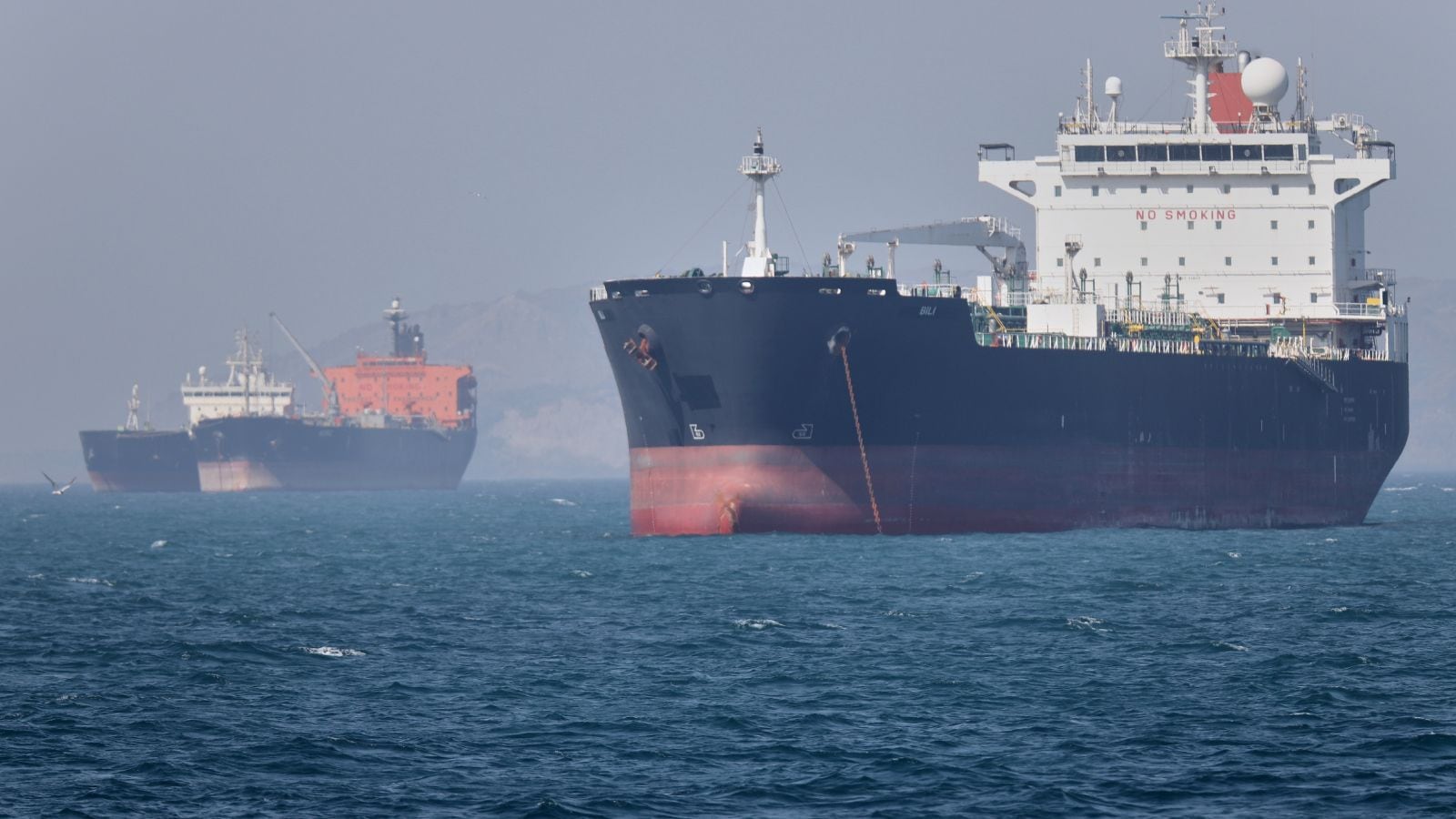
Conflict in the Persian Gulf specifically targets the global energy supply chain's most sensitive bottleneck: the Strait of Hormuz. Approximately 20% of the world’s petroleum liquids pass through this narrow waterway. The mere threat of closure introduces a "risk premium" into oil prices, which benefits specific market actors regardless of whether a single barrel is actually lost.
The Mechanism of Price Inflation
- Speculative Futures Hedging: Commodities traders price in the probability of supply disruption. This drives up the spot price of Brent and WTI crude, benefiting upstream oil producers with low extraction costs.
- Tanker Freight Rates: Escalated war risk increases maritime insurance premiums. Shipping companies with the capacity to operate in high-risk zones can command exorbitant day rates, effectively extracting wealth from the increased cost of logistical friction.
- Alternative Source Valorization: When Middle Eastern supply is threatened, non-regional producers—specifically those in the Permian Basin or the North Sea—see their assets appreciate in value as "secure" alternatives.
The wealth generated here is not a result of increased productivity, but of scarcity-driven rent-seeking. The "rich" in this scenario include not only the oil majors but also the financial institutions that facilitate the complex derivatives used to hedge energy prices.
The Military-Industrial-Technological Convergence
A critical shift in the modern conflict economy is the emergence of the "Silicon Valley Defense" model. Traditional kinetic warfare is now supplemented by cyber-operations and AI-driven intelligence. This has introduced a new class of beneficiaries: venture-backed defense startups.
The Cost Function of Modern Intelligence
- Algorithm-as-a-Service (AaaS): Companies providing real-time satellite imagery analysis and predictive modeling charge on a subscription basis. Unlike hardware, software has near-zero marginal cost, leading to massive profit margins during periods of high demand.
- Electronic Warfare (EW) and Counter-UAV Systems: The democratization of drone technology has forced a rapid spend on defensive electronic countermeasures. This is an "arms race of bits," where the iteration cycle is measured in weeks rather than years.
This shift changes the barrier to entry. While it is difficult to build a new tank factory, it is relatively easy for a software firm to pivot into "defense-adjacent" services. This allows a broader range of tech-heavy firms to capture "war wealth" without ever manufacturing a traditional weapon.
Recessionary Signals and the Defense Hedge
The paradox of the current market is that while the general population faces a "cost of living crisis" and recessionary fears, the defense sector operates under a different set of physics. High interest rates, intended to cool the economy, actually increase the financing costs for government debt used to fund these very conflicts. This creates a feedback loop:
- Government borrows at high rates to fund military expansion.
- Debt servicing costs rise, necessitating further fiscal tightening elsewhere.
- Public services are cut, while the DIB remains insulated by "national security" priority status.
- Capital concentrates in the few sectors—defense and energy—that can guarantee returns in a high-risk environment.
This concentration of wealth is a structural byproduct of how the modern global economy handles risk. When stability is compromised, the systems designed to "manage" that instability—military force, energy security, and intelligence—become the most valuable commodities on the planet.
Strategic Position and Risk Exposure
The "winners" in a Trump-Iran conflict scenario, or any similar geopolitical escalation, are those positioned at the intersection of legislative influence and technical indispensability. However, this wealth is subject to specific systemic risks:
- The Policy Pivot Risk: Sudden diplomatic de-escalation can leave "war stocks" overvalued, leading to rapid capital flight.
- The Supply Chain Bottleneck: Reliance on rare earth minerals or specialized semiconductors means that a conflict that disrupts these global flows can ironically harm the very defense companies meant to profit from it.
- Political Legitimacy Erosion: Extreme wealth disparity during a period of national economic hardship can lead to windfall taxes or increased regulatory scrutiny on "war profiteering."
Institutional investors must weigh the immediate gains of the "attrition economy" against the long-term degradation of the global trade environment. While individual companies and hedge funds get "rich," the underlying global infrastructure faces a net loss in efficiency and stability.
The optimal strategy for capital preservation in this environment involves a heavy weighting toward Tier-2 defense suppliers who provide modular, dual-use technologies—systems that are as useful for border security and civilian infrastructure monitoring as they are for active combat. This provides a hedge against both peace and total economic collapse, ensuring that capital remains productive regardless of the specific kinetic outcome in the Middle East.