The air inside the Palace doesn't move like the air in the street. It is thick with the scent of floor wax, ancient timber, and the heavy, invisible pressure of expectation. When the official confirmation finally trickled out—the King will, after all, make his journey to the United States—it wasn't just a scheduling update. It was a victory of the spirit over the biology of a seventy-seven-year-old man.
History lives in the joints of a monarch. Every step taken down a tarmac ramp or across a gala ballroom is a statement of continuity. For King Charles III, this upcoming American tour represents something far more visceral than a mere diplomatic exchange. It is a gamble against time and a body that has, in recent months, reminded him of its own mortality.
The Silence of the Medical Suite
Behind the grand headlines of "state visits" and "special relationships" lies the quiet reality of a treatment room. We often view kings as symbols, gilded icons that exist only to wave from balconies. We forget the cold touch of a stethoscope. We forget the exhaustion that settles into the marrow after a round of therapy.
Buckingham Palace had been uncharacteristically guarded. The uncertainty hung over London like a persistent fog. Would he go? Could he? To cancel a visit to the United States is to admit a vulnerability that the Monarchy loathes to display. It is a signal to the world that the gears are slowing down.
Then came the decision. The doctors gave the nod. The planners resumed their frantic pacing. This isn't just about politics. It is about a man who has spent seven decades waiting for a job he is now determined to do, even if his pulse isn't as steady as his resolve.
A Tale of Two Sovereignties
Imagine a young staffer in the Foreign Office. Let’s call him Arthur. Arthur has spent the last six months color-coding binders, mapping out motorcade routes through Washington D.C., and debating the optics of a state dinner. For Arthur, the King’s health isn't a medical chart; it’s a logistical nightmare.
"If he can't stand for thirty minutes at the Memorial, we have to rewrite the entire three-day sequence," Arthur might say to a colleague over a lukewarm coffee.
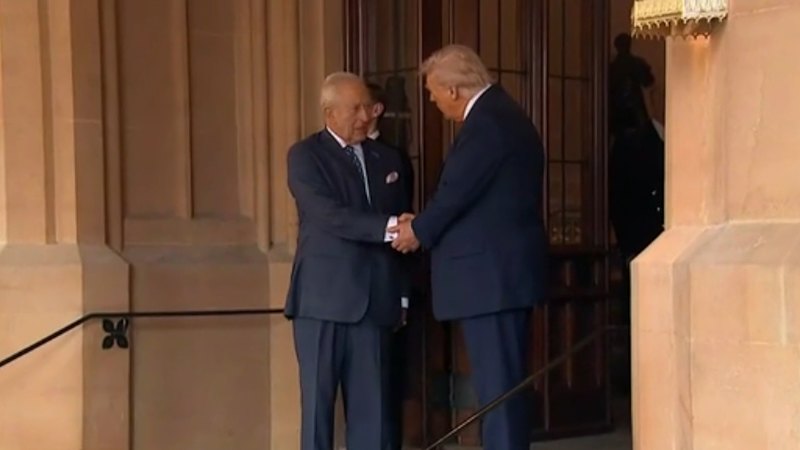
This is where the abstract concept of "The Crown" meets the messy reality of human endurance. The United States is a sprawling, loud, and demanding stage. It does not do "quiet visits." It expects the spectacle. It expects the handshake that firmers the bond between the old world and the new.
The stakes are invisible but massive. The UK is navigating a post-Brexit identity that feels increasingly isolated. A successful US tour acts as a cultural bridge, a reminder that the "Special Relationship" isn't just a dusty phrase from the Churchill era, but a living, breathing connection. If the King appears frail, the bridge looks shaky. If he appears resolute, the bridge holds.
The Ghost of 1939
To understand why this trip matters, we have to look back at the rain-soaked summer of 1939. King George VI, a man with a debilitating stutter and a deep-seated desire for a quiet life, traveled to America on the brink of World War II. He ate hot dogs with Roosevelt. He proved that the British were not just stiff-upper-lipped aristocrats, but allies who could bleed and laugh.
Charles is walking in those footsteps, but the enemy isn't a foreign dictator this time. It’s the perception of irrelevance. In a world of TikTok trends and rapid-fire political upheaval, what use is a King?
The answer lies in the permanence he represents.
When he touches down on American soil, he brings with him a thousand years of history. He is the only person on the planet who can walk into a room and make the present moment feel like a tiny speck in a vast timeline. That is a potent tool for diplomacy. It softens the edges of hard-nosed trade talks. It provides a sense of stability when the rest of the world feels like it’s spinning off its axis.
The Toll of the Long Flight
Long-haul travel is a young person's game. The pressurized cabin, the dehydration, the shift in time zones—it punishes the body. For someone undergoing cancer treatment, it is an act of physical defiance.
There will be no public mention of the fatigue. You won't see it in the photographs. The King will be impeccably tailored, his double-breasted suit shielding the world from the toll of the journey. But the people close to him know. They see the way he leans a little harder on his umbrella when the cameras are turned away. They notice the extra minute he takes to catch his breath before entering a crowded reception.
This is the human element we miss when we read dry news reports. We see a "confirmed visit." We should see a man fighting to remain the person his country needs him to be.
Consider the preparation. A mobile medical unit will likely be part of the shadow entourage. Every meal will be scrutinized for nutritional value. Sleep will be guarded like a state secret. This isn't a vacation; it’s a high-stakes performance where the performer is also the stage manager and the lead investor.
Why the Americans Still Watch
Why does a country that fought a revolution to get rid of a King still care so much when one visits?
It’s a strange paradox. America is a land of the "self-made," yet it is obsessed with the "born-to." There is a deep, subconscious craving for something that doesn't change every four years. The King represents a lineage that survived the Blitz, the Cold War, and the turn of the millennium.
When he meets with the President, it isn't just two heads of state talking shop. It’s a collision of two different philosophies of power. One is earned through the ballot box and can be taken away in an afternoon. The other is a lifelong sentence of service, carried until the very end.
The King knows this. He understands that his presence in the U.S. serves as a mirror. He allows Americans to look at their own history through the lens of the family they once rejected but never quite stopped following.
The Quiet Strength of the Routine
The itinerary will be packed. There will be stops at climate change initiatives—the King’s lifelong passion—and meetings with tech leaders in California or policy makers in the capital. But the real story happens in the transitions.
It’s in the car ride between the airport and the hotel. It’s in the brief moment of silence before the doors to the banquet hall swing open.
In those moments, the King isn't a monarch. He is a father, a husband, and a patient. He is likely thinking about the gardens at Highgrove or the weight of the medals on his chest. He is wondering if his message about the environment will land, or if people will only focus on the color of his tie.
He carries the weight of a crumbling institution on shoulders that are tired.
Yet, he goes.
There is a profound dignity in that choice. It would have been easy to stay at Sandringham. The public would have understood. "The King is resting," the bulletins would say, and the world would nod in sympathy. By choosing to fly, he is rejecting the role of the invalid. He is asserting that the mission is more important than the man.
The Invisible Stakes
If the trip is a success, we won't see a sudden shift in the exchange rate. There won't be a dramatic new treaty signed on the lawn of the White House. The success will be measured in the "vibe"—that intangible sense of mutual respect that keeps the gears of the West turning.
It’s about the photo of a King laughing with a group of American students. It’s about the speech where he acknowledges the shared challenges of a warming planet. These are the small bricks that build the wall of international cooperation.
But if he stumbles? If he has to cut the trip short? The narrative shifts instantly. The headlines move from "Diplomacy" to "Succession." The whispers about Prince William begin to grow louder. The focus moves from what the King is doing to what will happen when he is gone.
The pressure to be perfect is absolute.
The Final Descent
As the plane begins its descent over the American coastline, the King will look out the window at the vast, sprawling grid of lights below. He is entering a country that is currently wrestling with its own soul, a nation divided by ideology and uncertain of its future.
He arrives not as a savior, but as a reminder.
He reminds us that institutions can endure. He reminds us that duty isn't a burden to be avoided, but a purpose to be embraced. And he reminds us that even when the body is tired and the headlines are cruel, there is a certain power in simply showing up.
The ramp will be lowered. The cameras will flash. The King will take a breath, adjust his jacket, and step out into the bright, unforgiving light of the American sun. He will walk down those steps, one deliberate pace at a time, proving to himself and to the world that the Crown is still moving forward.
The rest of us can only watch and wonder at the cost of that walk.