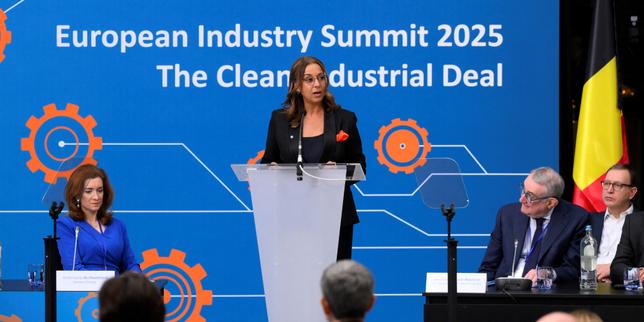
When the financial reports for the chemicals group Syensqo revealed a forty million euro remuneration package for outgoing chief executive Ilham Kadri, the reaction across Belgium was sheer outrage. The payout includes a heavy mix of base compensation, non-compete restrictions, and a massive severance allocation. It stands in stark contrast to the company's declining profitability and falling stock value. Understanding how a firm justifies such an exorbitant payout requires examining the hidden mechanics of executive compensation and corporate governance.
The departure of Ilham Kadri from the helm of Syensqo has become the defining corporate scandal of the decade in Belgium. After taking over the leadership of the spun-off advanced materials company, Kadri oversaw a period marked by sliding profits and market headwinds. Yet the ultimate financial settlement paid out upon her exit was staggering. It exceeded forty million euros. This massive figure sparked an intense public debate regarding corporate greed, the disconnect between executive pay and performance, and the responsibility of boards of directors.
Public opinion in Belgium quickly turned critical. Politicians across the spectrum condemned the payout as an insult to the working class, particularly in light of the country's stringent wage indexation and the general economic strain. Activists and labor unions pointed out the severe disparity between the outgoing executive's golden parachute and the average annual salary of a factory worker.
The media initially covered the number as an isolated incident of extreme compensation. In truth, it reflects a broader, systemic issue within multinational corporations and their remuneration committees.
The sheer size of the payout demands closer inspection. It was not a sudden windfall or an accidental error in accounting.
Instead, the forty million euro package was the result of carefully negotiated contracts. These contracts were structured with the explicit blessing of a board of directors that was overly eager to complete the demerger of Solvay and Syensqo.
To look at this scandal is to understand how modern executive compensation has become detached from the economic reality of the companies.
Anatomy of the Controversial Payout
To understand the exact breakdown of the forty million euro package, we must look at the fine print of the executive contract. Kadri's standard base salary was already substantial, hovering near 7.5 million euros. However, the true escalation came from several distinct clauses written into her agreement when the Solvay demerger took place.
First, a substantial portion came in the form of a departure indemnity. This clause granted her eighteen months of salary upon termination, amounting to roughly 13.1 million euros.
Second, a non-compete clause added nearly 4.4 million euros to the total. This was designed to prevent her from moving immediately to a rival chemical firm.
Third, a retention bonus was structured to keep her through the transition phase. This bonus totaled 7.5 million euros. It was split across two fiscal years, with 3.5 million distributed in 2025 and the remaining 4 million slated for 2026.
When combined with the various other long-term incentives, share options, and equity payouts, the total valuation crossed the forty million threshold.
Critics immediately pointed out the absurdity of awarding such large retention bonuses and exit packages while Syensqo was posting a net loss or struggling with negative corporate impacts from the split.
Defenders of the compensation committee argue that these contracts are drafted years in advance. They are designed to guarantee stability during massive corporate overhauls.
This defense rings hollow to shareholders who have seen their portfolios shrink. The advanced materials unit Syensqo struggled with declining forecasts and geopolitical headwinds throughout 2024 and 2025.
The board of directors defended the decision by citing the successful completion of the demerger. They insisted that Kadri's leadership during the Power of 2 project justified the financial rewards.
However, the question remains whether the demerger itself created true shareholder value or if it simply created two smaller, more vulnerable entities.
The structure of the package also raises questions about the role of the compensation committee. Members of the committee are supposed to align executive interests with long-term shareholder returns.
In this instance, the committee appears to have prioritized short-term retention over long-term corporate health.
The Strategic Split That Splintered Shareholder Value
The genesis of this massive remuneration package dates back to the decision to split Solvay into two distinct entities. The move was dubbed the Power of 2 project. The original Solvay was separated into a traditional essential chemicals business and a high-margin advanced materials unit called Syensqo.
Ilham Kadri championed this demerger. She argued that the separation would generate immense value and allow both entities to pursue independent growth strategies.
The board of directors rewarded her heavily for completing the separation. In 2023, Kadri received a 12 million euro bonus for her work on the demerger alone. This pushed her total earnings for that single year to 17.3 million euros, a record high for the Belgian corporate environment at the time.
However, the reality of the market proved to be far more complicated than the strategic presentations indicated.
Syensqo began its independent life burdened by macroeconomic uncertainty. Supply chain disruptions in the aerospace industry, particularly following the Boeing strike, severely impacted the demand for specialty polymers.
The unit experienced significant headwinds. Profitability declined, and the newly separated company had to lower its forecasts.
The projected value that the split was supposed to unleash never materialized for retail shareholders. Instead, the split generated dissynergies and high corporate overhead costs.
The separation resulted in two companies that each had to maintain separate corporate headquarters, IT systems, and legal teams.
The combined overhead costs of these two separate entities offset many of the anticipated cost reductions.
The corporate structure became more complex, and the operational footprint grew more difficult for analysts to evaluate.
The market punished the stock price of Syensqo as its financial reports consistently fell short of initial expectations.
In this context, the forty million euro payout becomes even more controversial.
The leadership that oversaw the demerger was rewarded for the action of the split, rather than the long-term performance of the resulting entities.
Corporate Governance in the Crosshairs
The approval of the forty million euro package highlights a deep failure within corporate governance structures. The remuneration committee of Syensqo, tasked with representing the interests of shareholders, essentially rubber-stamped a reward structure that bore no correlation to the actual performance of the company.
Institutional investors have begun to push back, although their actions often come too late. Recent annual general meetings have seen significant votes against the remuneration reports of major chemical companies.
Kadri's compensation saw nearly thirty-three percent of shareholders voting against her pay package in prior reporting periods. The board responded by initiating outreach. Yet the contractual obligations remained binding.
The board of directors is often trapped in an arms race for executive talent. They offer astronomical golden parachutes to attract and retain executives whom they believe are irreplaceable.
When the executive fails to deliver the expected growth, the company is left holding the bill.
The primary flaw lies in the metrics used by these committees. They prioritize short-term milestones, such as the completion of a restructuring project, over long-term shareholder value creation.
The board of directors operates within a closed echo chamber of consultants and executive search firms. They benchmark their pay scales against American or global peers. This drives up the cost of leadership far beyond European norms.
The Belgian corporate ecosystem is particularly sensitive to these excesses. Companies rely on a strong relationship with the local workforce, and massive payouts undermine this trust.
Furthermore, the board's lack of responsiveness to shareholder votes indicates that the voting system itself is broken.
Shareholders can express their displeasure at the annual general meeting, but the binding contracts have already been signed.
The compensation committee protects itself by claiming that the contract was necessary at the time of hiring or during the restructuring process.
This dynamic creates a no-fault scenario for top executives. They are rewarded for the creation of a strategy, and then paid again for its execution or its termination.
The Broader Economic Impact on Belgian Industry
The controversy surrounding the Kadri package is not merely a matter of private enterprise. It intersects with the broader social and economic fabric of Belgium.
The country operates under a unique system of wage indexation, which protects the purchasing power of employees against inflation. However, this system has placed a ceiling on average wage growth, leading to a massive wage gap between the executive suite and the factory floor.
While the average Belgian employee earns around forty-seven thousand euros annually, an executive payout of this magnitude represents over eight hundred and fifty years of work for a standard worker.
This gap breeds cynicism. It undermines the social contract that binds corporations to the communities in which they operate.
Moreover, Solvay has a long, storied history in Belgium. It is treated almost as a national institution.
Seeing an executive take tens of millions of euros while the company struggles creates resentment.
Furthermore, the decision to award such packages while cutting jobs or shifting operations abroad damages the public reputation of the chemicals sector.
The Belgian government has occasionally floated the idea of capping executive pay or increasing the taxation on large exit packages. Such policies are difficult to implement without driving multinational headquarters away from Brussels.
The debate has even reached the floor of the Belgian parliament. Politicians are demanding more transparency regarding the variable components of executive pay.
The Kadri package has become the focal point for this political debate. It serves as an example of what critics call the new corporate feudalism.
In this new dynamic, the top management is insulated from the risks faced by the rest of the company.
The economic reality of the Belgian chemical sector is that it must remain competitive on a global scale. However, global competitiveness should not mean the abandonment of basic principles of fairness and accountability.
The Mechanics of Executive Retention Bonuses
To fully grasp the architecture of this compensation, one must understand how retention bonuses are negotiated. In the corporate world, these sums are often tied to the departure or the transition of a CEO during a major transformation.
A hypothetical example illustrates the mechanism. Consider an executive who is asked to oversee the division of a major industrial conglomerate into two smaller units.
The board fears that the executive might leave before the split is completed. The departure would disrupt the entire transformation process and send the wrong signals to the stock market.
To prevent this, the remuneration committee designs a multi-year retention plan. The plan promises a significant payout regardless of whether the post-split company performs well.
The flaw in this logic is the lack of a clawback provision. If the company's valuation drops, the executive should not be entitled to the full bonus.
Unfortunately, such provisions are rarely included in the final contracts of European executives. The focus remains on guaranteeing the individual rather than the outcome.
The result is a system where the captain is paid forty million euros even as the ship takes on water.
Let's examine how these retention plans are marketed to shareholders. The board frames them as an investment in stability.
They argue that losing a CEO during a demerger would cost the company much more in terms of lost expertise and strategic direction.
However, the magnitude of the forty million euro package defies this logic.
The numbers are simply too high for a company that is reporting a decline in net profit and a decrease in turnover.
In the case of Syensqo, the declining results should have triggered a reevaluation of the retention bonus.
Instead, the board paid out the bonuses exactly as contracted. This shows a lack of flexibility and a disregard for the broader economic context.
The Unanswered Questions and the Path Forward
The fallout from the Syensqo compensation scandal will reverberate through the European corporate sector for years. The debate has moved from the financial press to the floor of the Belgian parliament.
Lawmakers are now demanding greater transparency regarding the variable components of executive pay.
The issue is no longer just the size of the payout. It is the justification.
When Syensqo posts a net loss or experiences shrinking sales, any massive remuneration becomes a political lightning rod.
The chemicals sector is facing unprecedented challenges. High energy costs, regulatory pressure, and the transition to a low-carbon economy require disciplined capital allocation.
Spending forty million euros on an outgoing CEO sends the wrong signal to investors and employees alike.
The ultimate takeaway from this controversy is clear. Shareholder activism and public scrutiny are the only mechanisms capable of forcing corporate boards to align executive pay with actual performance.
The era of unconditional golden parachutes must come under intense scrutiny.
The Syensqo case serves as a warning to other boards of directors.
When a company separates its business units, the compensation committees must ensure that variable pay is truly tied to the success of the new entities.
If the management receives the payout regardless of the outcome, the incentive to create long-term shareholder value is lost.
The debate over the Kadri package is not going to fade away soon. It will continue to shape the discussion around executive remuneration in Belgium and across the European Union.
The next few years will see increased pressure from institutional investors demanding stricter alignment between pay and performance.
The board of directors must learn to say no. They must resist the pressure to match the excessive compensation packages of their American counterparts.
If they fail to do so, they risk alienating their employees, their shareholders, and the public.