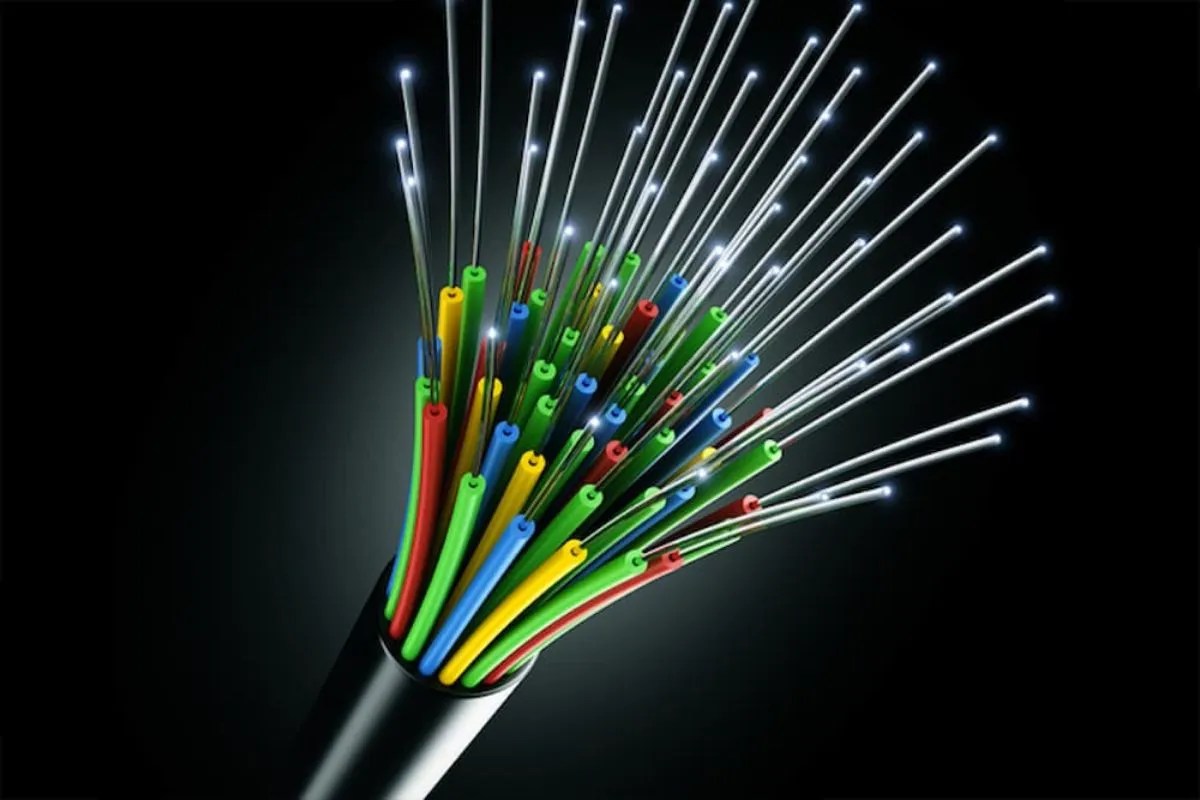
You probably think your fiber optic internet cable is just a glass tube moving light at incredible speeds. You're mostly right. But researchers are proving that these same cables, buried under our streets and running into our homes, can act as accidental microphones. This isn't science fiction. It's physics. It’s called Distributed Acoustic Sensing (DAS), and it’s changing how we think about privacy in a world wrapped in glass threads.
If you’re worried about your smart speaker or your phone listening to you, you’ve been looking at the wrong hardware. The very infrastructure that brings you Netflix and Zoom calls can pick up the vibrations of your voice. This happens without a single traditional microphone being installed.
How Fiber Optic Cables Turn Into Microphones
The concept is surprisingly simple if you understand how light behaves. A fiber optic cable carries pulses of laser light. When sound waves—like your voice or a car driving by—hit the ground or a wall near the cable, they create tiny vibrations. These vibrations cause the fiber to stretch or compress by nanometers. It's a microscopic change, but it’s enough to distort the light bouncing inside the cable.
Scientists use a device called an interrogator to send light pulses down the fiber and measure the "backscatter." That’s just the light that bounces back to the source. By analyzing the timing and phase shifts of this returning light, they can pinpoint where a vibration occurred and what it sounded like.
Imagine a guitar string. If you touch it, the sound changes. Fiber is the same. It reacts to the environment. Researchers at institutions like Stanford University and the University of California, Berkeley, have used existing "dark fiber"—unused cables already in the ground—to monitor earthquakes and city traffic. The problem is that the tech has become sensitive enough to detect much more than just a passing truck.
The Research That Should Wake You Up
A few years ago, researchers demonstrated that they could recover speech from these cables. They weren't even inside the room. By monitoring the vibrations on a fiber optic cable nearby, they could reconstruct audio with enough clarity to recognize words.
This isn't just about high-end lab equipment anymore. The hardware needed to "interrogate" a fiber line is getting smaller and cheaper. We aren't talking about a hacker in a basement just yet, but state-level actors or well-funded corporate spies? That’s a different story.
One specific study showed that a fiber cable running through a building could pick up conversations from several rooms away. The cable acts like a giant, sensitive diaphragm. Since the cable is often hard-wired into the building's skeleton, it picks up every structural vibration. Your private office isn't as private as you think if there's a fiber line in the ceiling.
Why Encryption Doesn't Protect You Here
People often get confused. They think, "My data is encrypted, so I'm safe." You're wrong. Encryption protects the digital bits traveling inside the light pulses. It doesn't do a damn thing about the physical vibrations of the cable itself.
The spy isn't "hacking" your data stream. They’re "reading" the cable's physical reaction to your voice. It’s a side-channel attack. You can have the strongest VPN in the world, and it won't stop the cable in your wall from vibrating when you speak.
We’ve spent decades securing the software layer. We’ve almost entirely ignored the physical layer. This is a massive blind spot in modern cybersecurity.
The Scale of the Threat
Think about the sheer amount of fiber optic cable in a modern city. It's everywhere.
- Under every major street.
- Inside every office building.
- Connecting every cell tower.
- Running directly into millions of homes.
If an adversary gains access to one end of a fiber line—say, at a local exchange or a junction box—they can potentially "listen" to any point along that line for kilometers. It turns the entire city into a massive, interconnected nervous system.
Real World Uses vs Privacy Risks
It's not all bad news. DAS technology is actually incredibly useful for things that don't involve spying.
- Earthquake Detection: It can detect tremors long before traditional sensors because the network is so vast.
- Infrastructure Health: It tells engineers if a bridge is cracking or a pipeline is leaking.
- Traffic Management: Cities use it to see where traffic is backing up without using cameras.
But the line between "monitoring traffic" and "monitoring people" is thin. If the system can hear a car, it can hear a person. If it can hear a person, it can hear a conversation.
The tech is currently being marketed to border security agencies to detect footsteps. If it can detect a footstep in the desert, it can certainly detect a meeting in a glass-walled conference room in Manhattan.
Can You Actually Stop This
You can't exactly rip the fiber out of your walls. We need the bandwidth. But there are ways to mitigate the risk if you're in a high-stakes environment.
First, physical isolation matters. In high-security government facilities, they use "TEMPEST" shielding and acoustic isolation. They don't just run fiber lines through the walls of a secure room. They encase them in specialized conduits designed to dampen vibrations.
For the average person or a standard business, that's overkill. But you should be aware of where your cables are. If you have a fiber ONT (Optical Network Terminal) in your conference room, you're effectively putting a microphone on the table. Moving that hardware to a utility closet with acoustic damping can help.
We also need to push for "sensing-aware" network design. This means building fiber networks that can detect when someone is trying to "interrogate" the line. If the light signal changes in a way that suggests a DAS device has been attached, the system should trigger an alert.
What Happens Next
The "listening cable" problem is only going to get more relevant as fiber replaces copper everywhere. Copper doesn't have this specific vulnerability because it doesn't use light backscatter in the same way. We are trading one set of problems for another.
Researchers are currently working on "acoustic-proof" fiber. This involves changing the cladding of the cable to make it less sensitive to external vibrations. But that's expensive. Most of the fiber being laid today is the standard, sensitive stuff.
Don't wait for the government to regulate this. They’re likely the ones most interested in using it. If you're handling sensitive information, assume the walls—and the cables inside them—really do have ears.
Check your office. See where the fiber enters. If it's exposed and running along a wall where you hold private meetings, move it. It sounds paranoid until you see the waveforms of a reconstructed conversation. Then it just sounds like common sense. Get your cables into dampened conduits or keep your sensitive talk away from the hardware. It's that simple.