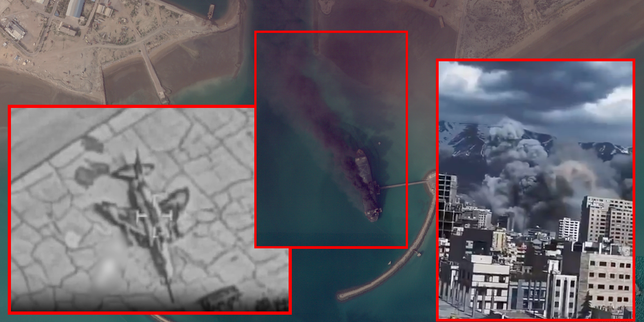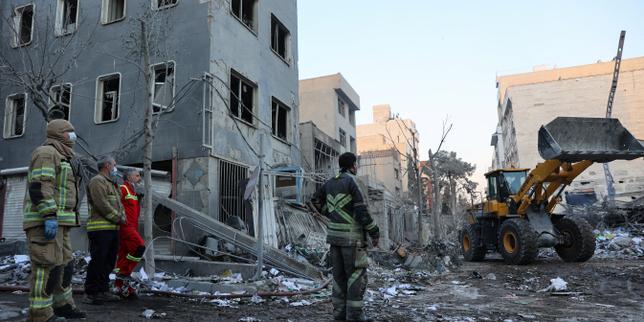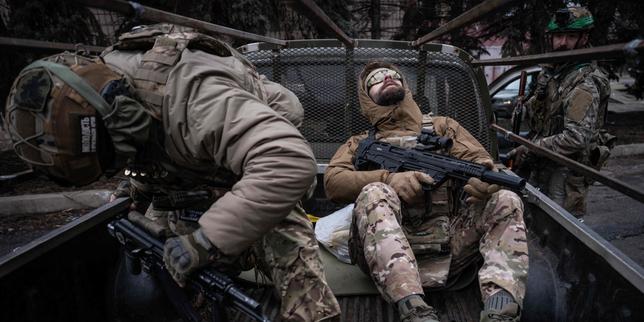
European capitals are currently operating in a state of high-octane anxiety that hasn't been seen since the energy shocks of 1973. While the headlines focus on the tactical movements of US and Israeli assets against Iranian targets, the real story is the silent, violent fracturing of the European Union’s collective security and economic strategy. The continent is not just "on edge." It is witnessing the systematic dismantling of its post-Cold War neutrality and the sudden, forced realization that its energy and maritime security are hostage to a conflict it cannot control.
The immediate fallout is visible in the shipping lanes of the Red Sea and the insurance premiums in the City of London. But the deeper, more corrosive impact is the widening chasm between the "Atlanticist" hardliners in the East and the "Strategic Autonomy" proponents in the West. This isn't a mere diplomatic spat. It is a fundamental disagreement over whether Europe can afford to follow Washington into a protracted regional war that threatens to incinerate the last remains of European industrial competitiveness.
The Ghost of the 1970s Returns to Brussels
For decades, European prosperity was built on a simple, if fragile, tripod: cheap Russian energy, high-end Chinese exports, and an American security umbrella that didn't require much maintenance. That tripod is now firewood. The escalation between the US-Israeli coalition and Iran has effectively severed the final leg.
When US and Israeli strikes hit Iranian-linked infrastructure, the reaction in Paris and Berlin is one of calculated dread. Unlike the United States, which has achieved a degree of energy independence through shale, Europe remains an island of consumption. Any disruption to the Strait of Hormuz is not an abstract geopolitical event for a factory owner in Stuttgart; it is a direct threat to their power bill.
We are seeing a re-run of the stagflation era, but with a modern, more dangerous twist. In the 1970s, the social safety net was robust and the population was younger. Today, an energy-induced recession hits an aging, debt-ridden Europe that is already struggling to fund its own green transition. The "Green Deal" is now being quietly traded for "Security at Any Cost," as coal plants are kept on standby and defense budgets are cannibalized from social programs.
The Secret Diplomacy of Survival
Behind the closed doors of the Berlaymont, the conversation has shifted from "how do we support our allies" to "how do we mitigate the blowback." There is a growing, unvoiced resentment toward the Biden administration's inability—or unwillingness—to restrain the escalation.
European intelligence agencies are reporting a sharp uptick in "gray zone" threats. These aren't traditional military strikes. Instead, they are cyberattacks on Mediterranean ports, suspicious underwater cable "accidents," and the weaponization of migration flows. Iran has long understood that it doesn't need to defeat a European navy to cause chaos; it only needs to make the cost of doing business in the region unbearable.
The Mediterranean Under Siege
The Mediterranean is no longer a lake of European influence. It has become a front line. Italian and Spanish officials are particularly alarmed by the potential for Iranian proxies to destabilize North Africa. If the conflict spills over, the migration routes that have defined European politics for a decade will become even more volatile.
- Italy’s Gamble: Rome is attempting to position itself as a bridge between the Gulf states and the EU, hoping to secure bilateral energy deals that bypass the broader volatility.
- France’s Frustration: Macron continues to push for a "European third way," but his calls for strategic autonomy are ringing hollow as French frigates find themselves dependent on US intelligence for missile defense in the Red Sea.
The Economic Meat Grinder
The math is brutal. For every week that the shipping routes around the Cape of Good Hope remain the only viable path for Asian goods, the European consumer pays a "chaos tax." It isn't just about the price of oil. It's about the entire supply chain of intermediate goods—chips, chemicals, and components—that keep the European industrial heart beating.
The European Central Bank is in a vice. If they cut rates to stimulate a flagging economy, they risk fueling the inflation caused by rising import costs. If they keep rates high, they accelerate the deindustrialization of the continent. Investors are noticing. Capital is fleeing the Eurozone for the perceived safety of the US dollar, further weakening the Euro and making those energy imports even more expensive.
The Tech Gap Widens
While Europe is distracted by the immediate threat of kinetic war, the gap in technological sovereignty is becoming an abyss. Resources that should be going into AI development, semiconductor fabrication, and aerospace are being diverted to buy off-the-shelf American weapons systems. This is the ultimate irony: the more Europe spends to protect itself from the ripple effects of US-Israeli actions, the more dependent it becomes on the American defense industrial complex.
The Political Extremes Gain Ground
Voters do not care about the intricacies of the JCPOA or the tactical advantages of a drone strike in Isfahan. They care about the fact that their heating bills have doubled and their local supermarket is missing basic items. This economic pain is the primary oxygen for populist movements across the continent.
In every major European election cycle, we see the same pattern. Pro-establishment parties are forced to defend a status quo that feels increasingly like a slow-motion decline. Meanwhile, parties on the fringes are successfully framing the US-Israeli-Iranian conflict as a "foreign war" that the European elite has prioritized over the needs of its own citizens. The "Europe of Defense" that leaders in Brussels have dreamed of for years is being born not out of a shared vision, but out of a shared fear. It is a reactive, defensive posture that lacks a coherent long-term objective.
The Failure of the Middle Power Strategy
Europe’s greatest mistake was the belief that it could remain a "Regulatory Superpower" without the hard power to back it up. For years, the EU attempted to use trade agreements and environmental standards as a form of soft-power leverage. The current crisis has exposed this as a delusion. In a world of ballistic missiles and maritime blockades, the ability to write a comprehensive data privacy law is irrelevant.
The "Middle Power" strategy—the idea that Europe could act as a neutral arbiter between Washington, Beijing, and Tehran—is dead. The continent is being forced to choose sides, and every choice carries a ruinous price tag. If they align fully with the US, they lose their energy security and their trade relationship with the East. If they attempt to stay neutral, they lose their security guarantee and find themselves isolated in a world that is rapidly re-arming.
A Continent Without a Map
The real reason Europe is failing to manage this crisis is not a lack of money or intelligence. It is a lack of consensus on what "Europe" actually is. To a policymaker in Warsaw, the threat is existential and requires total alignment with the US. To a policymaker in Madrid, the threat is an economic nuisance that should be solved through de-escalation at any cost.
This internal contradiction is being exploited by every external actor involved. Tehran knows which capitals to pressure. Washington knows which capitals to ignore. The result is a European foreign policy that is nothing more than a series of frantic reactions to events happening elsewhere.
The Maritime Chokepoint Reality
The vulnerability of the Suez Canal has forced a rethink of global logistics that will outlast the current conflict. We are seeing the beginning of a "Near-shoring" movement that is fundamentally different from the one discussed during the pandemic. This isn't about efficiency; it's about survival.
European companies are looking at North Africa and Eastern Europe as the new hubs for production, but these regions are themselves under pressure from the same geopolitical forces. The "Just-in-Time" manufacturing model is being replaced by "Just-in-Case," a shift that adds massive costs to every product manufactured on European soil.
The Insurance Shadow War
The London insurance market, the silent arbiter of global trade, is rerouting the world. By hiking "War Risk" premiums to astronomical levels, insurers are effectively closing off sea lanes more effectively than any navy could. This private-sector blockade is hitting European ports hardest. Rotterdam and Hamburg are seeing volume drops that are traditionally associated with global depressions, not regional skirmishes.
The Sovereignty Trap
As the US-Israeli operations continue, the European Union finds itself in a sovereignty trap. To protect its interests, it must build a military capacity that it currently lacks. But building that capacity requires an economic strength that is being drained by the very conflict it seeks to mitigate.
The path forward is not through more "summits" or "joint statements." It requires a brutal reassessment of Europe’s place in a world that no longer respects the rules-based order. The continent must decide if it is a collection of museum-states protected by a distant superpower, or a unified entity capable of projecting its own will.
The clock is not ticking in Brussels’ favor. Every missile launched in the Middle East is a reminder that Europe’s "strategic patience" is indistinguishable from strategic paralysis. The ripple effects are no longer ripples; they are waves, and the European dam is showing cracks that no amount of diplomatic paint can hide.
Stop waiting for a "return to normalcy" that is never coming. Evaluate your supply chain's exposure to the Mediterranean and the Red Sea today, because the insurance markets won't wait for a ceasefire before they price you out of existence.