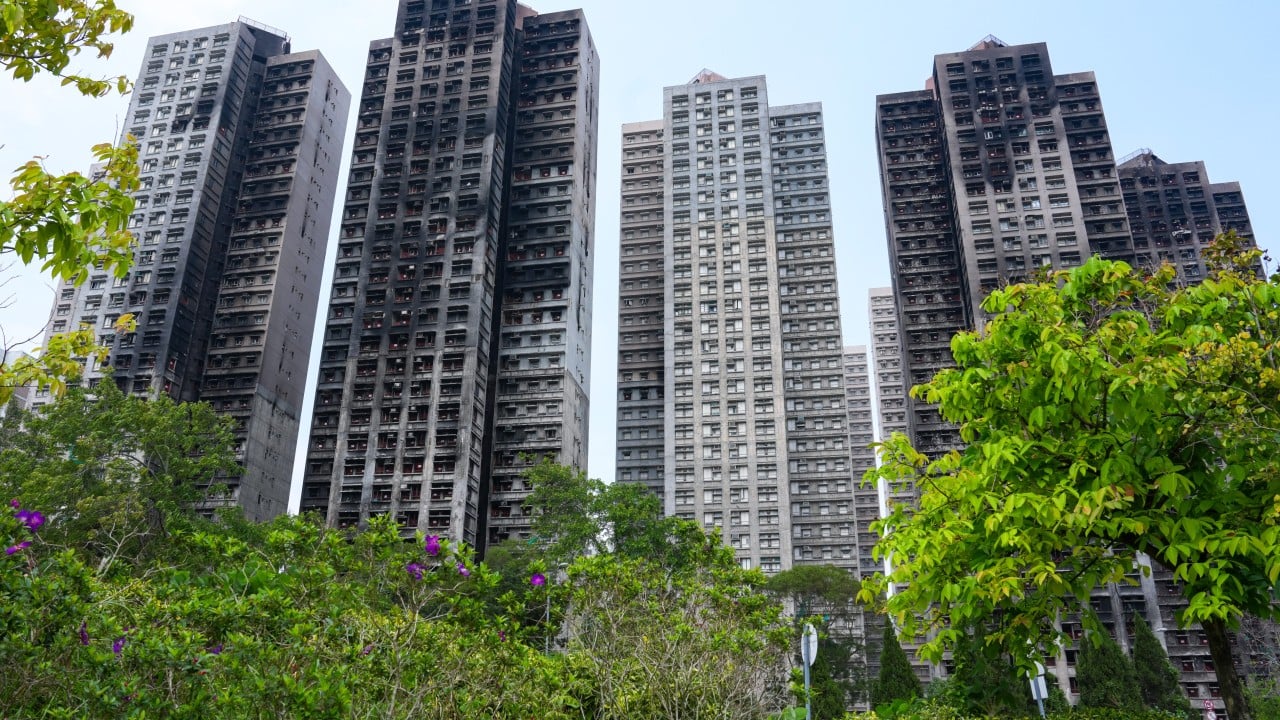
The silence was the loudest part of the Tai Po industrial fire. As thick, toxic smoke billowed from the burning warehouse and drifted toward high-density residential estates, the $150 million Emergency Alert System (EAS) remained dormant. Thousands of residents learned of the danger not through the high-tech government infrastructure designed for this exact scenario, but through the smell of acrid plastic and frantic WhatsApp messages. The failure to trigger the alarm wasn't a technical glitch. It was a calculated choice by officials who feared the political and social cost of "over-alerting" the public.
This is the central tension of modern disaster management. We have built sophisticated digital sirens capable of bypassing silent modes and forcing every smartphone in a specific radius to scream for attention. Yet, when the fire in Tai Po presented a clear and present respiratory threat to thousands, the system stayed dark. To understand why, one must look past the charred remains of the building and into the bureaucratic paralysis that governs Hong Kong’s emergency protocols.
The Barrier of Bureaucratic Discretion
The Emergency Alert System operates on a logic of restraint that borders on the counter-productive. According to the internal guidelines revealed during the subsequent probe, the threshold for a city-wide or district-level alert is not just the existence of a fire, but a "territory-wide" emergency. The Fire Services Department (FSD) and the Security Bureau have created a hierarchy of danger where a massive chemical fire is often treated as a localized nuisance rather than a public health crisis.
Officials argued that the fire was contained within a specific industrial zone. They claimed that the wind direction meant the smoke would dissipate over the harbor rather than settle in the valleys of Tai Po. They were wrong. Micro-climates in the New Territories are notoriously unpredictable. By the time the air quality sensors registered a spike in particulates, the window for an effective evacuation or "stay indoors" order had already closed.
The decision-making process is a bottleneck. It requires a chain of command to verify the threat, assess the impact, and then gain authorization from high-level directors. In a fast-moving fire, this bureaucracy moves at a snail's pace. While the fire grew from a one-alarm to a three-alarm blaze, the people who actually had the power to push the button were stuck in a cycle of "monitoring the situation."
A System Built for Pandemics but Afraid of Fire
The EAS was famously used during the COVID-19 pandemic to notify residents about hospital arrangements. That usage was met with widespread public annoyance because the alert was sent in the middle of the day for a non-life-threatening administrative update. The backlash from that single event seems to have traumatized the departments responsible for the system.
There is a palpable fear within the government of "crying wolf." If they alert the public for a fire and the smoke clears quickly, they face a barrage of complaints about noise and panic. This has led to a culture of extreme caution. The probe heard that officials were worried about causing a "stampede" or unnecessary traffic congestion if a district-wide alert was issued.
This logic is flawed. An emergency system that is only used when the entire city is under threat of annihilation is not a tool for public safety; it is a monument to administrative vanity. The Tai Po fire was the perfect test case for a localized, geo-fenced alert. The technology allows the government to target only those within the immediate smoke plume. They chose not to use it because they lacked the confidence to define what constitutes a "real" emergency.
The Toxic Reality of Industrial Proximity
Tai Po is not just a residential hub; it is a patchwork of industrial estates and high-rise living. When an industrial unit catches fire, the risks go beyond heat and flames. We are talking about the combustion of plastics, lithium batteries, and unknown chemical solvents. The smoke from the Tai Po fire was a cocktail of carcinogens.
Why Air Quality Monitoring Failed the Public
- Sensor Lag: The fixed monitoring stations are often kilometers away from the actual site of the fire.
- Height Bias: Smoke rises and moves through different atmospheric layers, often bypassing the ground-level sensors until it cools and sinks into residential windows.
- Chemical Specificity: Standard government sensors track PM2.5 and NO2, but they aren't always equipped to detect specific industrial toxins in real-time.
Residents reported stinging eyes and throat irritation hours before any official health advice was issued. The government's defense—that no "extreme" air quality readings were recorded—ignores the lived experience of those in the path of the plume. It also ignores the fundamental purpose of an emergency alert: to be proactive rather than reactive. If you wait for the sensors to prove the air is toxic, the damage to the lungs of the elderly and the young is already done.
The Ghost of the Queen Elizabeth Hospital Alert
The shadow of 2022 hangs heavy over this failure. When the EAS was used to announce that Queen Elizabeth Hospital would become a dedicated COVID-19 facility, the public reaction was one of confusion and irritation. It was the first time many had heard the jarring, high-pitched tone of the system.
Since then, the trigger finger of the Security Bureau has gone limp. There is an unwritten rule that the EAS should only be used for "unprecedented" disasters. But "unprecedented" is a subjective term. To a family living in a block 500 meters from a burning warehouse full of electronics, that fire is the most significant disaster in their lives.
The probe highlighted a shocking lack of coordination between the Fire Services Department and the Office of the Government Chief Information Officer (OGCIO). The FSD handles the fire; the OGCIO handles the tech. Somewhere in the middle, the responsibility to protect the public's breath was lost. There was no pre-set template for a "Major Industrial Fire" alert. They were effectively staring at a blank screen while the sky turned black.
Technical Capabilities vs. Human Hesitation
The hardware is not the problem. The system uses Cell Broadcast Service (CBS) technology, which is the global standard for emergency management. It doesn't rely on phone numbers, so it doesn't get bogged down by network congestion. It sends a signal to every cell tower in a specific area, and every phone connected to those towers receives the message instantly.
Technically, the government could have drawn a circle around the Tai Po Industrial Estate and sent a "Close Your Windows" instruction in under ninety seconds. They have the tools to be surgical. Instead, they acted as if the system was a nuclear "red button" that could only be pressed by the highest levels of leadership.
The Missing Protocol for Localized Threats
We need to stop treating the EAS as a city-wide broadcast and start using it as a localized megaphone. The probe revealed that there is no clear delegation of power to the incident commander on the ground. The person who can see the smoke and feel the heat is the one who should have the authority to trigger a local alert.
By requiring the decision to go up to the Security Bureau, the government ensures that by the time an alert is approved, it is no longer useful. In Tai Po, the fire had already been burning for over four hours before the idea of using the EAS was even formally discussed in the command center. By then, the discussion was dismissed as "too late to be effective."
The Psychological Cost of Silence
When the government invests $150 million in a system and then refuses to use it during a visible crisis, it erodes public trust. Residents feel abandoned. They see the smoke, they smell the fire, and they look at their phones—the devices they've been told will keep them informed—and they see nothing.
This silence breeds misinformation. In the absence of an official alert, social media filled the vacuum. Rumors of chemical leaks and impending explosions spread through Tai Po like the fire itself. Some residents fled their homes unnecessarily, causing minor accidents, while others who should have evacuated stayed put because they hadn't received a "formal" notification.
The government's argument that they wanted to avoid panic is a self-fulfilling prophecy. Panic is caused by a lack of information, not by a clear, authoritative instruction. A simple message—"Industrial fire in progress. Close windows. Avoid the area. Monitor official channels for updates"—would have settled the nerves of the district. Instead, the silence forced every citizen to become their own amateur risk assessor.
Reforming the Trigger Mechanism
The Tai Po fire must be the catalyst for a complete overhaul of how we define an emergency. We cannot allow the embarrassment of a poorly timed COVID-19 notification to dictate the safety of our industrial neighbors.
First, the authority to trigger a localized EAS alert must be pushed down the chain of command. Senior divisional officers at the scene of a three-alarm fire should have the autonomy to issue a "shelter-in-place" warning to the immediate vicinity.
Second, the criteria for "public danger" must be expanded to include localized environmental hazards. Smoke is not just an aesthetic issue; it is a health emergency. If the air quality in a residential area is projected to drop below a certain threshold due to an active incident, the alert must be mandatory.
Finally, we need to move away from the binary choice of "No Alert" or "Full Panic." The EAS supports different levels of severity. We can send a "Notice" that doesn't scream, but still provides a prominent notification on the lock screen. The government's failure to utilize these nuances is a failure of imagination and a failure of duty.
The investigation into the Tai Po fire has laid bare a truth that many in the civil service are reluctant to admit: they are more afraid of a negative comment section than they are of a toxic smoke plume. Until the protocol shifts from "protect the department's reputation" to "protect the citizen's lungs," the most expensive emergency system in the city's history will remain nothing more than an expensive paperweight.
Fix the protocol. Empower the incident commanders. Push the button.