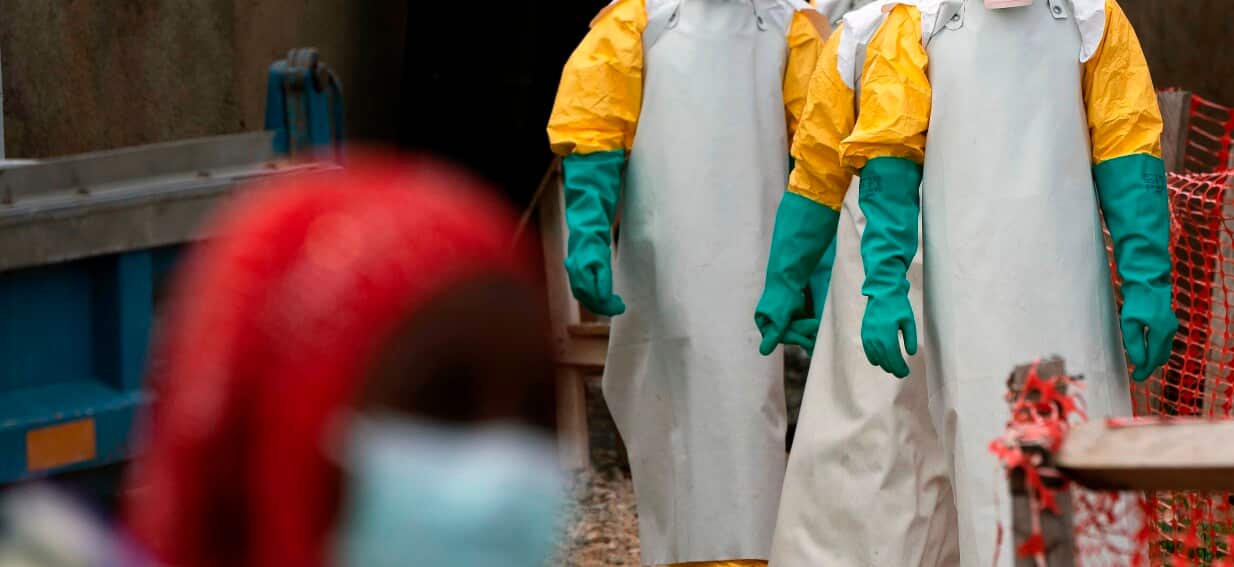
The World Health Organization just triggered its highest level of alarm. Eighty dead from Ebola, and the international community goes into a collective meltdown. Public Health Emergency of International Concern (PHEIC). It sounds authoritative. It sounds necessary.
It is entirely the wrong instrument for the job. You might also find this similar coverage interesting: Inside the Ebola Crisis Nobody is Talking About.
Every time a viral outbreak hits a double-digit death toll in a developing nation, the global health apparatus deploys the exact same playbook. They sound the klaxon. They freeze travel. They issue sweeping declarations designed to mobilize Western capital.
They also utterly destabilize the local economies that are actually fighting the disease on the ground. As highlighted in latest reports by Psychology Today, the effects are worth noting.
Consensus opinion screams that a PHEIC declaration is a vital mechanism to save lives. The reality? It is a blunt, bureaucratic weapon that often inflicts more collateral damage than the virus itself. Eighty deaths is a human tragedy. But treating it as an imminent threat to global civilization reveals a profound misunderstanding of epidemiology, resource allocation, and the economics of the global South.
The Mirage of Mobilization
The underlying premise of the PHEIC framework is that global attention equals effective action. It does not.
When the WHO declares a global emergency, it signals to international markets that a region is toxic. What follows is a predictable, cascading disaster. Border closures. Flight cancellations. Supply chain disruptions. Tourism collapses instantly. Foreign direct investment dries up.
During the 2014–2016 West African Ebola outbreak, the World Bank estimated that the economic impact on Guinea, Liberia, and Sierra Leone exceeded $2.8 billion. The actual cost of the medical response was a fraction of that. The vast majority of the damage came from economic panic induced by international overreaction.
We are repeating the exact same error.
By labeling a localized outbreak of 80 deaths a global emergency, the WHO triggers a defense mechanism in wealthy nations that isolates the affected region. You cannot fight a hemorrhagic fever when your border closures prevent basic medical supplies, PPE, and technical experts from entering the country. The declaration purports to bring aid, but its immediate practical effect is to construct an economic quarantine.
The Epidemic of Misallocated Resources
Public health is a zero-sum game of resources. Every dollar, every epidemiologist, and every cargo plane sent to manage a highly publicized outbreak is stripped away from another deadly crisis.
Consider the baseline mortality data in the regions where Ebola typically emerges.
- Malaria: Kills over 600,000 people annually, predominantly children under five in Sub-Saharan Africa.
- Tuberculosis: Claims roughly 1.3 million lives each year globally.
- Diarrheal Diseases: Kill hundreds of thousands due to lack of clean water and basic sanitation.
When international donors pivot to chase the headline-grabbing horror of Ebola, funding for these persistent killers routinely stalls. Healthcare workers are reassigned. Routine immunization campaigns for measles and polio are suspended.
During previous Ebola interventions, researchers documented a sharp rise in malaria and maternal mortality rates that far outpaced the deaths caused by Ebola itself. The healthcare system collapsed not because of the virus, but because the entire infrastructure was forcibly reoriented to satisfy Western anxieties about a global pandemic.
We are sacrificing thousands of lives on the altar of a single, cinematic disease because it terrifies the affluent West, while ignoring the quiet, preventable slaughter happening every single day.
Understanding the Mechanics of Transmission
The media treats Ebola as if it were airborne influenza, waiting to sweep through a crowded airport terminal in London or New York. This is biologically illiterate.
Ebola requires direct contact with bodily fluids of a symptomatic individual. It does not spread through asymptomatic transmission. It does not hang in the air of a grocery store. In a country with functioning infection control, running water, and basic isolation protocols, the reproductive number ($R_0$) of Ebola drops significantly below 1.
$$\text{Ebola } R_0 \approx 1.5 \text{ to } 2.5 \text{ (in under-resourced settings)}$$
$$\text{Measles } R_0 \approx 12 \text{ to } 18$$
The virus is self-limiting by its very lethality. It kills or incapacitates its host too quickly to sustain massive, unchecked global chains of transmission, provided basic nursing standards are met. The threat is not the intrinsic power of the virus; it is the systemic poverty of the healthcare environment where it takes root.
Declaring a global emergency treats the virus as an invading army that must be stopped at the borders of the West. The true enemy is a lack of localized clinical infrastructure. If the WHO wants to stop Ebola, they do not need a global declaration; they need to fund basic infection prevention and control (IPC) in rural clinics year-round.
The Counter-Intuitive Path Forward
The current framework is broken. To actually protect global health, we must reject the panic-and-neglect cycle.
1. Abolish the Binary PHEIC Declaration
The current all-or-nothing emergency status creates unnecessary panic. The WHO requires a localized, tiered alert system that triggers technical and financial aid without triggering economic sanctions or travel bans from terrified trading partners.
2. Fund Routine Infrastructure, Not Emergency Logistics
Shipping field hospitals via military transport after an outbreak goes viral is the most expensive, least efficient way to deliver healthcare. Shifting just 10% of global emergency response funds into permanent, localized disease surveillance and clean water access would eliminate the conditions that allow Ebola to cross the double-digit threshold in the first place.
3. Guarantee Economic Indemnity
If the international community insists on declaring an emergency that damages a developing nation's economy, it must guarantee financial compensation. If a nation knows that reporting an outbreak will result in an immediate economic blockade, they are incentivized to hide the data. Transparency should not equal economic suicide.
The Downside of Disruption
Let's be clear about the risks of this approach. Rejecting the global emergency framework means accepting that localized outbreaks must be managed locally, without the sudden influx of hundreds of international NGOs. It requires trusting local ministries of health rather than parachuting in Western experts who do not speak the language or understand the cultural landscape. It means the international community must sit with its discomfort, resisting the urge to pass sweeping measures just to appear proactive to voters back home.
It requires a level of restraint that international bureaucracy has rarely shown.
Dismantling the Premise
Look at the questions routinely asked during these panics: How do we stop the virus from reaching our shores? How quickly can we deploy international troops or aid workers?
These are the wrong questions. They assume that the global North is the rightful protagonist of the story, and that the solution is always more intervention.
The right question is: Why did a highly visible, preventable cluster of eighty deaths cause a collapse in local healthcare delivery while billions of dollars in global health aid sit in bureaucratic holding patterns?
The current WHO declaration is not a victory for global health security. It is a confession of systemic failure. Stop applauding the alarm bell and start looking at the house it just set on fire.