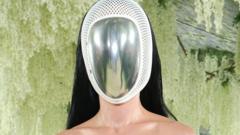
The mystery of the masked figure at the Met Gala is rarely a mystery of identity, but a calculated play for cultural relevance. While audiences scramble to solve a "who is it" puzzle, the industry veterans know exactly who is under the shroud. This year, the recurring trope of the obscured face served as a stark reminder that in the modern attention economy, vanishing is the most effective way to be seen. It is a paradox that defines the current state of celebrity. By removing the face, the star transforms themselves from a person into a pure silhouette, a brand logo that moves.
The recent fascination with full-masking—most notably seen in the trajectory of Kim Kardashian’s Balenciaga era and continued by a rotating cast of designers and muses—isn't about privacy. It is about the commodification of the void. When a star hides their features on the most photographed red carpet in the world, they aren't retreating from the spotlight. They are hijacking it. They force the viewer to engage with the garment, the brand, and the sheer audacity of the silence.
The Architecture of the Anonymous Reveal
The logistics of these masked appearances are a nightmare of engineering and PR coordination. To the casual observer, it looks like someone threw on a hood. In reality, it involves a team of handlers, specialized breathable fabrics that don't bunch under flashbulbs, and a "secret" arrival that is leaked to the press hours in advance.
Consider the mechanics of the 2024 Met Gala’s most discussed obscured figures. These aren't just outfits; they are tactical deployments. A masked celebrity requires a "spotter"—usually a creative director or a high-level assistant—to navigate stairs that were never designed for someone with zero peripheral vision. This dependency creates a secondary visual narrative of a master and their creation, turning the human being into a literal mannequin for the house they represent.
The "mystery" is a manufactured product. The rumors of who will be masked are planted in trade publications and gossip columns days before the event. This ensures that when the blacked-out figure steps onto the carpet, the social media apparatus is already primed to "solve" the case. It is a feedback loop that rewards the celebrity with more mentions than a traditional, open-faced beauty shot ever could.
Why the Mask is the Ultimate Power Move
In a world of overexposure, the mask offers a temporary reprieve from the grueling demand for facial perfection. It is a rebellion against the high-definition camera. When every pore and fine line is analyzed by millions, opting out of the face entirely is a radical act of control.
- Devaluation of the Individual: The mask suggests that the wearer is so famous their face is no longer required for identification. The posture, the gait, and the entourage do the talking.
- The Blank Canvas: It allows the designer to treat the human body as a sculptural element rather than a rack for clothes.
- Viral Longevity: A traditional gown has a shelf life of about twelve hours in the news cycle. A masked enigma generates debate, memes, and "investigative" TikToks for a week.
This trend also signals a shift in how luxury brands perceive their ambassadors. We are moving away from the era of the "face of the brand" and into the era of the "vibe of the brand." If a designer can make a look iconic without showing the person wearing it, they have achieved the ultimate marketing goal: the brand has eclipsed the human.
The Economic Reality of the Shroud
Behind the avant-garde aesthetic lies a cold, hard business strategy. The Met Gala is, at its heart, a fundraising event for the Metropolitan Museum of Art’s Costume Institute, but for the brands that pay for tables, it is a global marketing launchpad. A masked appearance is a high-risk, high-reward investment.
If the mask fails to land, the celebrity is mocked, and the brand is forgotten. But when it works—as it did for the Balenciaga-clad figures that defined recent seasons—the Earned Media Value (EMV) is astronomical. Data from fashion analytics firms suggests that "mystery" looks generate up to 40% more engagement than standard evening wear. This engagement translates directly into brand search volume and, eventually, retail sales of ready-to-wear accessories.
The mask also serves as a convenient tool for "stealth" guesting. It allows celebrities who may be under restrictive contracts or dealing with personal PR crises to fulfill an appearance obligation without "showing their face" in a literal sense. It is a loophole in the social contract of the red carpet.
The Psychological Toll of the Invisible Star
There is a darker side to this trend that the industry rarely discusses. The psychological impact of being a "non-person" at an event centered on vanity is significant. Celebrities who have spent years curated by stylists find that the mask offers a strange, temporary relief from the male gaze, but it also strips them of their primary currency: their relatability.
The human brain is wired to seek out facial cues. When we are denied them, we feel a subconscious unease. This "Uncanny Valley" effect is exactly what these designers are hunting for. They want the audience to feel uncomfortable. They want the viewer to lean in. But for the celebrity inside the suit, it is a claustrophobic experience that reinforces their status as an object rather than an artist.
We have reached a point where the only way to stand out in a crowd of the most beautiful people on earth is to cease being a person at all. It is a race to the bottom of human identity.
Beyond the Fabric
The next phase of this evolution won't just be about fabric masks. We are already seeing the integration of technology—LED arrays that distort the face in real-time or augmented reality "filters" that only appear on the digital broadcast. The goal remains the same: to remain uncatchable in a world that wants to document everything.
The veteran observer knows that the mask is never about the person wearing it. It is about the space they occupy. When you see a masked star at the Met, don't ask who they are. Ask what they are trying to hide, and more importantly, what the brand is trying to sell you in the silence.
The true "mystery" isn't the name of the actor under the silk. It’s whether the industry can ever go back to being about the humans who wear the clothes, or if we are forever committed to this theater of the hollowed-out icon. The spectacle has officially eaten the star.
Stop looking for the face and start looking at the motive.