The diesel fumes used to be the smell of certainty. For decades, the ritual was as predictable as the sunrise over the Kremlin’s crenelated walls. Every May, the ground in central Moscow would tremble under the weight of T-34 tanks and Topol-M missile launchers, a heavy, metallic heartbeat intended to remind the world—and the Russian people—that the state was indivisible and invincible.
But this year, the silence is loud.
Across Russia, the grand choreography of Victory Day is being dismantled, piece by piece. What was once a sprawling, nationwide display of military might has shrunk into a series of nervous, localized gestures. In at least two dozen cities, the parades have been cancelled entirely. The "Immortal Regiment" marches, where citizens carry portraits of ancestors who fought in World War II, have been moved online or scrapped. The official reason is "security concerns," a phrase so thin it transparently masks a deeper, more jagged reality.
To understand why a regime built on the aesthetics of strength would choose to look small, you have to look at the sky.
The Shadow Over the Steel
In the high-ceilinged offices of the Ministry of Defense, the math no longer adds up. A parade is a promise. It says: We have so much power that we can afford to drive it through the streets for applause. But when your tanks are being reclaimed by the mud of the Donbas and your air defense systems are being picked apart by five-hundred-dollar drones, a parade starts to look like a target.
Consider a hypothetical mid-level regional administrator in a city like Belgorod or Kursk. Let's call him Viktor. For years, Viktor’s biggest May 9th headache was ensuring the veteran seating had enough blankets and the pyrotechnics didn't singe the lime trees. Now, Viktor stares at intelligence briefs detailing the reach of Ukrainian Tochka-U missiles and long-range "cardboard" drones.
If Viktor holds the parade, he risks a catastrophe on live television. A single strike on a column of marching soldiers would shatter the illusion of domestic safety that the Kremlin has spent billions to maintain. If he cancels it, he admits the "Special Military Operation" has brought the front line to his doorstep.
He chooses the silence. It is safer to be quiet than to be broken.
The Shrinking Inventory
The scale of the reduction is not just a matter of nerves; it is a matter of hardware. In previous years, Red Square was a showroom for the "next generation" of Russian engineering. We saw the Armata tanks and the Kurganets infantry vehicles—machines that looked like they belonged in a sci-fi epic.
But those machines are largely absent from the actual battlefield, and increasingly, they are absent from the festivities. The reality is that the Russian military is currently a scavenger. To maintain the meat-grinder offensive in the East, the military has reached deep into "deep storage," pulling T-62 tanks out of Siberian warehouses where they have sat since the Brezhnev era.
There is a profound, almost tragic irony here. Victory Day is meant to celebrate the defeat of 1940s fascism, but the Russian army is increasingly forced to use 1960s equipment to fight a 2020s war. Showing off a lone, vintage T-34 at the head of a parade—as happened in Moscow recently—isn't a tribute to history. It is a confession of the present.
The invisible stakes are found in the eyes of the onlookers. When a citizen sees only one tank where there used to be fifty, they don't need a Western news report to tell them the war is going poorly. They can see the hole in the formation. They can feel the missing weight.
The Reach of the Long Arm
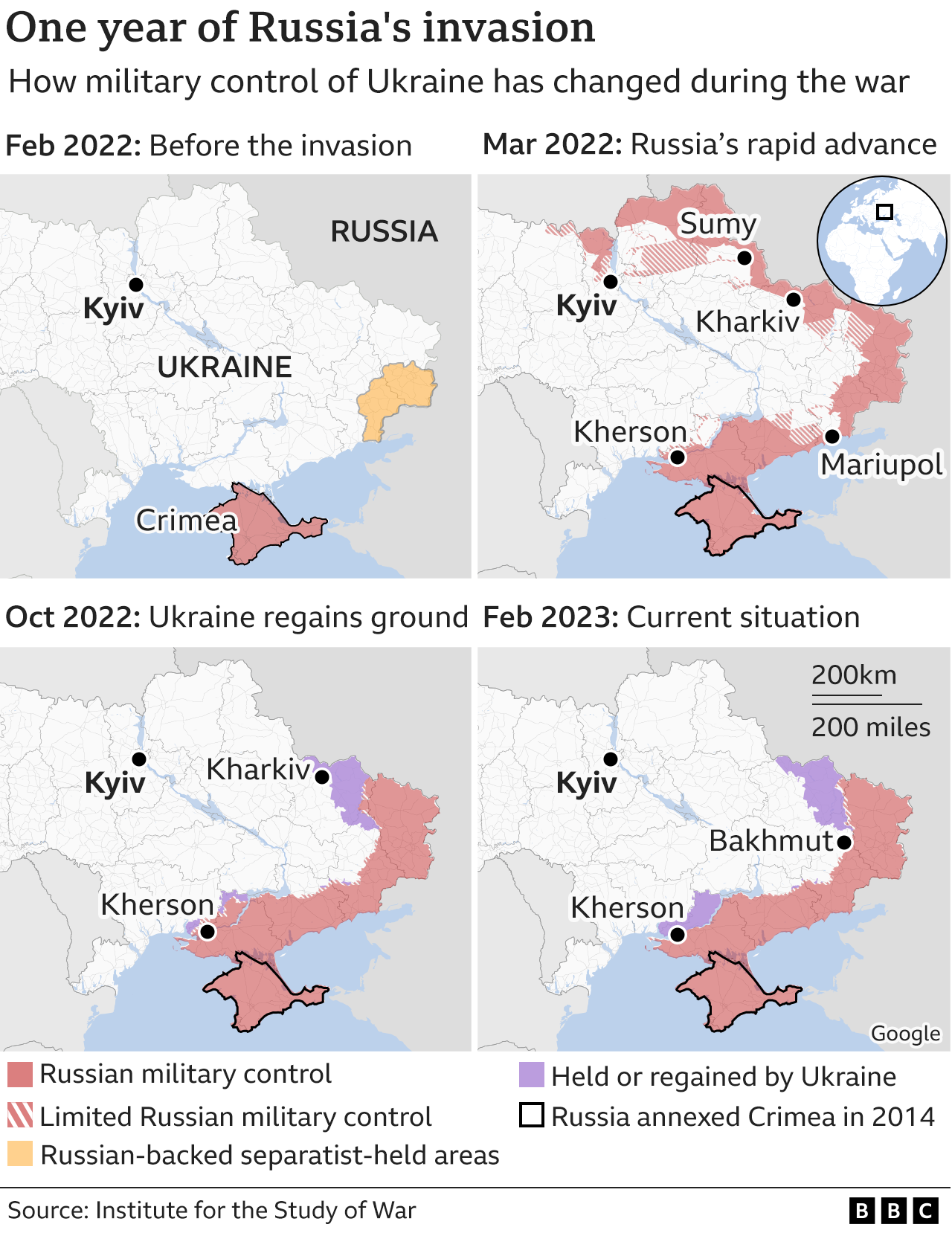
Ukraine’s military reach has expanded not through a single "game-changing" weapon, but through a relentless, asymmetric evolution. While Russia relies on mass, Ukraine has mastered the art of the puncture.
Think of the Russian logistical network as a giant, aging body. Ukraine isn't trying to chop off the head; it is using needles to bleed the feet. By targeting oil refineries, drone factories, and ammunition depots deep inside Russian territory, Kyiv has forced Moscow into a defensive crouch.
This geographical shift has psychological consequences. For thirty years, the Russian public lived under an unwritten social contract: Leave the politics to us, and we will keep the chaos far from your door. That contract is currently being shredded. When a drone hits an oil depot in Yaroslavl—nearly 300 miles from the border—the "special operation" stops being a television show. It becomes a fire on the horizon.
The cancellation of the Victory Day fireworks is perhaps the most symbolic retreat of all. Fireworks are a celebration of controlled explosions. But in cities within drone range, the sound of a bang no longer triggers a cheer. It triggers a rush to the cellar.
The Ghost of the Immortal Regiment
The most human element of this story isn't the tanks, but the portraits. The "Immortal Regiment" was once a genuine, bottom-up movement of remembrance that was eventually co-opted by the state to bolster its own legitimacy.
Imagine a grandmother in Voronezh. She has spent weeks dusting off the black-and-white photo of her father, who died at the Siege of Leningrad. To her, this march isn't about geopolitics; it’s about the only day of the year the world acknowledges her family's sacrifice.
When the government cancels the march, citing "safety," they are telling that grandmother that they can no longer guarantee her protection even while she honors the dead. They are telling her that the current war has effectively cancelled the celebration of the last one.
This is the hidden cost of the expanded military reach. It isn't just about destroyed refineries or downed planes. It is about the erosion of the national myth. If the state cannot protect a parade, can it protect the pension? Can it protect the border?
The Architecture of Anxiety
The Kremlin’s current strategy is a frantic attempt to balance two opposing needs. They need to project enough normalcy to keep the population compliant, but they need to acknowledge enough danger to justify the continuing mobilization and economic hardship.
It is a tightrope walk over an abyss.
By scaling back Victory Day, they are choosing a "managed retreat" of the mind. They are betting that the Russian people will accept a smaller, quieter version of their greatness rather than risk a loud, public failure. They are betting that silence will be interpreted as "prudence" rather than "impotence."
But silence has a way of filling up with questions.
As May 9th approaches, the red stars on the Kremlin towers will still glow. The elite guards will still goose-step with precision. But the gaps between the soldiers will be wider. The roar of the engines will be thinner. And for the first time in a generation, the most important part of the parade won't be what is marching down the street, but what is missing from it.
The diesel fumes are fading, replaced by the scent of ozone and the quiet, persistent hum of a sky that is no longer empty.