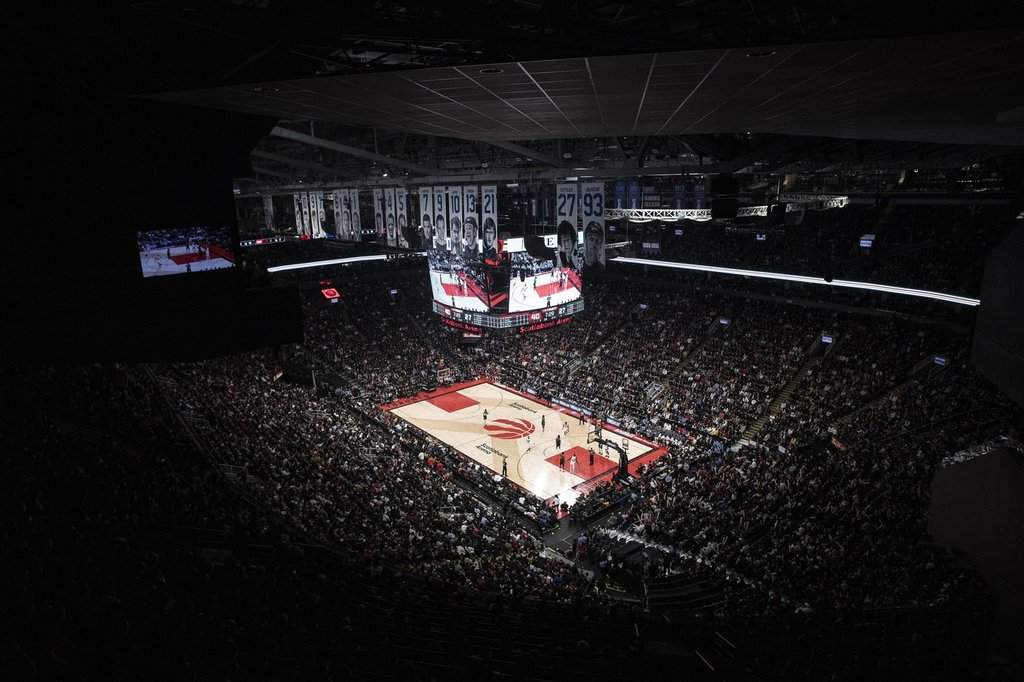
Price ceilings on ticket resales function as a blunt-force intervention in a high-velocity liquidity market. When the Ontario government legislates a cap on the resale price of tickets—restricting them to a percentage of the original face value—they are not merely regulating a transaction; they are fundamentally altering the risk-reward calculus for season ticket holders (STHs). This intervention triggers a cascade of unintended economic consequences that shift value away from loyal consumers and toward clandestine, offshore, or unregulated actors.
The Three Pillars of Ticket Asset Valuation
To understand why a resale cap frustrates the primary investors in sports franchises—the season ticket holders—one must view a ticket not as a service, but as a perishable financial asset. The value of this asset is derived from three distinct components:
- Utility Value: The direct benefit of attending the event.
- Option Value: The flexibility to liquidate the asset if the holder's schedule or interest changes.
- Hedge Value: The ability to offset the total cost of a season package by selling high-demand "premium" games (e.g., season openers or rivalry matchups) to subsidize the attendance of lower-demand "mid-week" games.
Legislative price caps effectively decapitate the Hedge Value. In a free market, a season ticket holder acts as a micro-speculator. They commit capital upfront—often thousands of dollars months before a season begins—accepting the risk of team underperformance or personal scheduling conflicts. When a cap is introduced, the government removes the upside of this risk while leaving the downside fully intact. If the team performs poorly, the ticket value may drop to 20% of face value; however, if the team reaches the playoffs, the holder is barred from capturing the market-driven 500% premium that would have balanced their earlier losses.
The Cost Function of Regulatory Compliance
Price caps introduce significant "friction costs" that the original legislation fails to account for. When the legal resale price is lower than the equilibrium market price, the market does not disappear; it merely migrates to environments with lower regulatory oversight.
The Migration to Dark Liquidity
When a cap is enforced on domestic platforms, the supply of tickets moves to "gray market" offshore exchanges or peer-to-peer social media groups. This migration creates a Verification Gap. In a regulated high-price market, platforms provide authenticity guarantees. In a capped, low-price gray market, the risk of fraud increases because legitimate platforms cannot facilitate the true market clearing price. The buyer may pay the "legal" cap price on the platform and a "consulting fee" or "service charge" via a separate, untraceable e-transfer to the seller.
Erosion of Season Ticket Holder Equity
For many STHs, the "face value" printed on a ticket is an arbitrary accounting figure determined by the team, often divorced from the actual weighted cost of the season seat license. If a team raises face prices to match market expectations, they squeeze the STH's margin further. The price cap, therefore, acts as a hidden tax on the most loyal customer segment, transferring the "consumer surplus" from the person who took the financial risk (the STH) to the person who did not (the last-minute buyer).
Logical Fallacies in Consumer Protection Rhetoric
The stated intent of these laws is usually "affordability" or "accessibility." However, structural analysis reveals that price caps frequently achieve the opposite of their intended effect through two primary mechanisms:
The Professional Scalper Advantage
Counter-intuitively, price caps often favor professional brokers over casual fans. Professional entities operate with sophisticated software (bots) and diversified portfolios. They can absorb the "friction" of a price cap by moving volume across multiple jurisdictions. The individual fan, who simply wants to recoup their costs for a game they cannot attend, lacks the infrastructure to navigate these workarounds. Consequently, the supply of tickets available to the general public at "fair" prices actually decreases as professionals hoard inventory for private, high-dollar transactions.
The Misalignment of Face Value and Market Reality
The concept of "face value" is a static metric in a dynamic environment. A Saturday night game against a defending champion has a vastly different market reality than a Tuesday afternoon game against a bottom-tier team. By tethering resale prices to an inflexible face value, the law ignores the Temporal Value of Money. A dollar spent on a season ticket in October is worth more than a dollar recouped in April due to the opportunity cost of capital. A 10% or 20% cap over face value often fails to even cover the inflation and interest costs of the initial outlay.
Structural Bottlenecks and the Death of Liquidity
Market liquidity requires a high volume of buyers and sellers. When a price cap is lower than the market-clearing price, Excess Demand is inevitable. This creates a "lottery effect" where the fastest bot—not the most deserving fan—acquires the asset.
- The Incentive to Hoard: If an STH cannot sell a ticket for its true value, they may choose to let the seat remain empty rather than go through the logistical hurdle of a capped sale. This leads to "ghost attendance," where stadiums appear half-empty despite being sold out, harming the atmosphere and reducing in-stadium revenue (concessions, merchandise) for the venue.
- The Death of the Secondary Ecosystem: Secondary marketplaces provide data, security, and ease of use. When caps make these platforms unprofitable or legally risky, the infrastructure withers. The loss of this infrastructure makes it harder for fans to find tickets, not easier.
Quantifying the Shift: The Transfer of Wealth
The primary beneficiary of a price cap is rarely the "average fan." Instead, the value is captured by:
- Arbitrageurs: Those who can bypass the cap and resell in dark markets.
- Corporate Entities: Who can afford to buy tickets at any price through "hospitality packages" that circumvent standard ticketing laws.
- The Teams Themselves: Who may respond to resale caps by moving more inventory into "dynamic pricing" models, essentially becoming their own scalpers and eliminating the secondary market altogether.
Tactical Response for Ticket Asset Holders
As the regulatory environment tightens, the strategy for managing ticket assets must evolve from a "passive hold" to an "active management" model.
- Diversify Platforms: STHs should maintain active accounts on at least three different resale platforms, prioritizing those that operate in jurisdictions with more favorable regulatory climates or those that utilize blockchain-based "smart contracts" where the "price" can be decoupled from "utility access."
- Leverage Private Networks: The rise of private, vetted "Supporters Groups" allows for peer-to-peer transfers that bypass the visibility of public exchanges. These networks rely on social capital and reputation rather than purely financial transactions, making them more resilient to price-capping logic.
- Bundling Strategies: To navigate price caps, sellers may begin bundling "tangible goods" with the ticket. If the ticket price is capped, the seller might offer a "signed program" or "commemorative lanyard" for a price that reflects the true market value of the total package. While this creates more logistical friction, it re-establishes the market-clearing price.
The Ontario legislation represents a fundamental misunderstanding of how modern digital marketplaces function. By attempting to legislate "fairness" through price controls, the government has ignored the basic laws of supply and demand. The result is not an increase in affordability, but a decrease in transparency and a direct financial penalty on the season ticket holders who provide the capital that sustains the sports industry.
The final strategic move for any STH in this environment is to treat the season ticket as a declining-value asset. The optimal play is to front-load sales of high-demand inventory before the regulatory apparatus fully catches up with a specific season's schedule, while simultaneously building private distribution channels that do not rely on the centralized exchanges currently targeted by provincial law. Owners of these assets must accept that the era of "easy liquidity" via public exchanges is ending, replaced by a fragmented market that rewards those with the technical and social infrastructure to operate outside of government-imposed price ceilings.